Sixty-six poems written through a dark night, and five insights from the awakening that ended it
In April 2024, my son's mother left with Bjorn, our son, then
about two years old. They went to Chorrera; I stayed alone on our
under-development homestead in Chiriqui, six hours away. What
followed was a dark night of the soul, and I wrote my way through
it — a poem a day, most days, from inside it.
Each poem below is read twice. Then is the frame
of mind it was written from — therapeutic technique at first
(attachment work, reframing, autosuggestion), shifting over the
months toward presence: Jungian, Daoist, Buddhist, non-dual.
Now is the same poem read after the awakening,
through the Yin Yang guide: the charged
word it turns on, the opposite that word cuts, and what loosened
when the word loosened. Dates are the days the poems were
story-posted; the earliest were written a week or two earlier
and posted in bunches, so the order is true and the early
spacing is compressed.
In late May I moved to Chorrera to be near my son
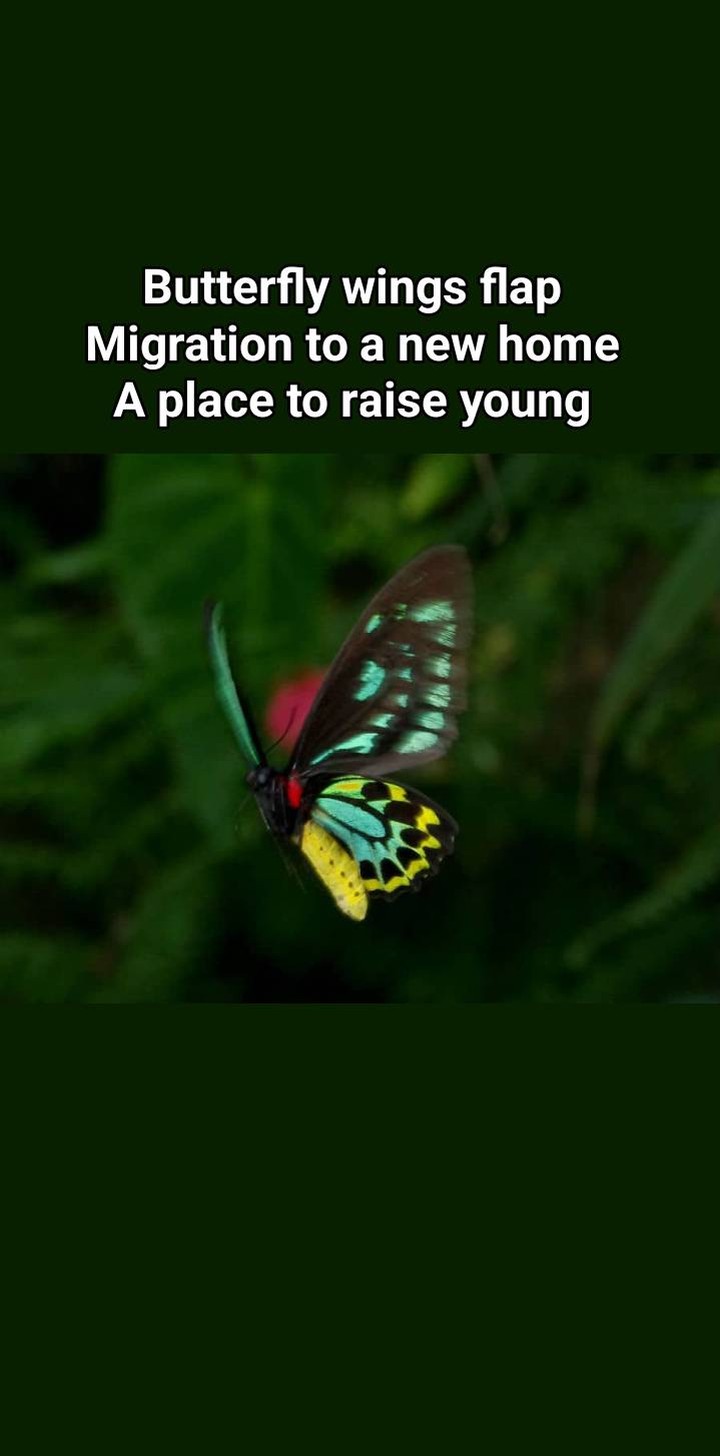
(Butterfly wings flap was
written during the move). The last five pieces are not dark
night at all: they are snapshots from the awakening itself,
September 2024 — freshly downloaded insight, after the model
that had stood between me and reality broke down on a drive back
from Chiriqui. Those carry no Then and Now. After awakening
there is just Truth.
Each piece is shown with its original story plate
— the poem as it was actually posted, text with its image. The
transcribed text is quoted alongside for reading and searching;
where its line breaks look odd, that happened after the plates
were made, in automated reformatting along the way. The plate is
how it originally appeared.
I. Insomnia
Why can't I just let it go
And pass dreamlessly
The original story plate, as posted — the poem with its image.
Then — in the dark night
April had taken my family six hours away — Ingrid gone to Chorrera with Bjorn, our son, and me alone on the under-development homestead in Chiriqui. Now it is 3 a.m. and sleep will not come. My mind replays, bargains, chews the same thoughts in circles, and the word "just" in "why can't I just let it go" is me impatient with my own suffering, as if surrender were one more task I am failing. Even dreams feel like work; what I want is oblivion, one dreamless night of mercy.
Now — after awakening
"Let it go" sounds like an instruction, but at 3 a.m. it is a judgment: it names the mind as failing at something simple. The pair it cuts is holding/releasing, and lying awake inside the "holding" side is what hurts. The haiku doesn't solve insomnia; it notices that even surrender had become a word to beat itself with. When the word loosens, there is just wakefulness — no criminal, no crime.
Somatic release
Please Sooth my aching stomach
I breathe it away
The original story plate, as posted — the poem with its image.
Then — in the dark night
Something is wrong in my body before it has a name. My stomach is clenched and aching, and I am literally pleading with it — "please" — the way you plead with anything that has power over you. Breathing is the only tool I have within reach, so breath becomes prayer: breathe it away, because nothing else is moving it.
Now — after awakening
The stomach aches before any sentence about it exists. Calling it "somatic release" instead of "anxiety" or "breakdown" changes what the sensation is allowed to be: not a verdict on the self, but energy moving through a body. The breath doesn't argue with the ache. Word first, then sensation — change the name and the same gut-feeling stops being an enemy and becomes weather passing through.
A poem for a life
Spoken words to bare a soul
Subconscious rumblings
The original story plate, as posted — the poem with its image.
Then — in the dark night
I am writing to survive. Things are rumbling underneath — half-formed, unsayable — and getting them into spoken words feels like the difference between being haunted and being known. A poem is not art yet; it is my attempt to bare what is inside before it rots there. I am talking to myself because my subconscious will not stop talking first.
Now — after awakening
This is the whole method in three lines. What stays as "rumblings" runs the life from underneath; spoken aloud, it can be seen, questioned, and chosen. To bare a soul is not performance — it is moving words from the inside, where they command, to the outside, where they can be examined. A poem for a life: the life gets rewritten at the level of the words it is told in.
I cryptographer
A secret hides within me
Only one can unlock
The original story plate, as posted — the poem with its image.
Then — in the dark night
I can feel something locked inside me that even I cannot read. I carry a surface the world sees, and under it a coded room — desires, shame, a self I haven't met. "Only one can unlock" is loneliness and hope at once: my fear that no one will ever have the key, and my wish that somebody, someday, might.
Now — after awakening
A cryptographer works in code — and so does the ego. The "secret within" is everything the self says in code: symptoms, slips, repeated words it hopes no one decodes. The pair here is hidden/revealed, and the haiku holds a hope inside it: that the code is not a wall but a cipher, and a cipher exists to be read. Clarity begins by treating your own speech as evidence, not noise.
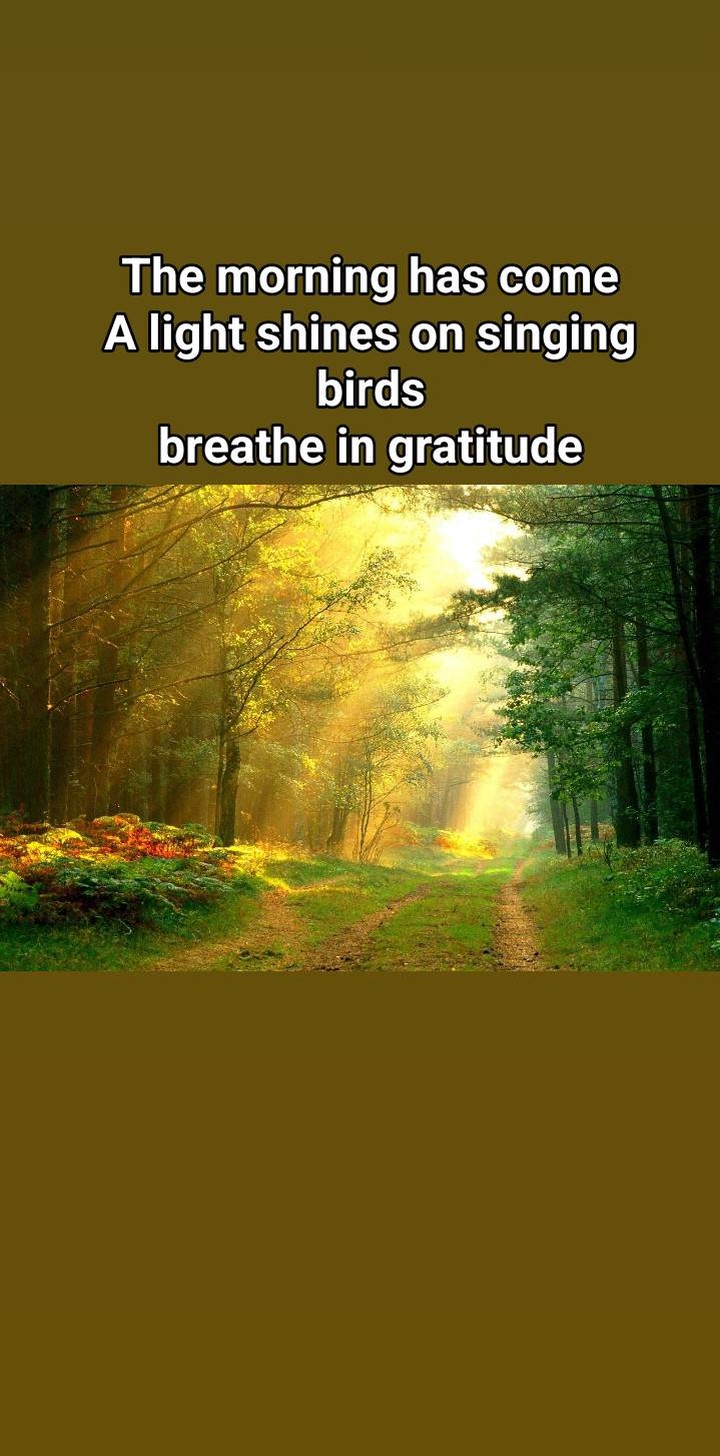
The morning has come
A light shines on singing birds
Breathe in gratitude
The original story plate, as posted — the poem with its image.
Then — in the dark night
After a night like the insomnia poems, morning itself feels like rescue. Light on singing birds is not a metaphor yet — it is sensory relief, proof the world is still there and still kind. Gratitude is not a practice I am performing; it is what a drowning man feels about air, and I know the feeling. Breathe in, because last night my breathing was not a given.
Now — after awakening
After the insomnia poems, this is what perception looks like before the labels arrive: light, birdsong, breath. "Gratitude" here is not a forced positive word pasted over pain; it is what is left when the arguing words stop. The guide's claim in miniature — you don't manufacture the clear morning, you stop covering it. Breathe in first; name later, if at all.
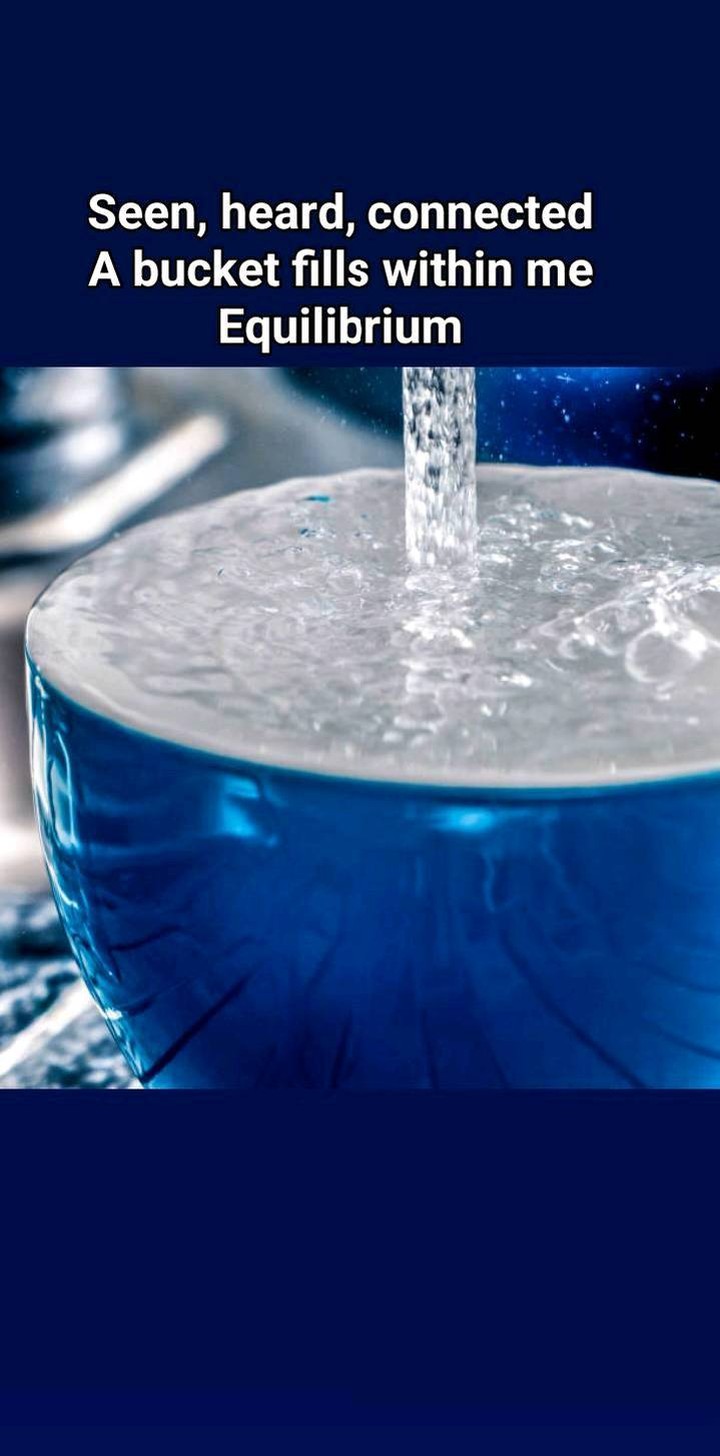
Seen, heard, connected
A bucket fills within me
Equilibrium
The original story plate, as posted — the poem with its image.
Then — in the dark night
The attachment work had a name for what I was feeling: somewhat anxiously attached, according to the tests I was taking — I needed to be seen, heard, connected the way a bucket needs filling, and I kept checking the bucket. Anyone who has begged other people for those three words knows they never arrive in the right dose, least of all across six hours of road. So this poem surprises even me: something fills from within, and for a moment equilibrium — a word I do not often get to use — is not a theory.
Now — after awakening
Three words most people spend their lives begging for. Notice the bucket fills *within* — connection is not something extracted from other people by performing correctly. The pair is empty/full, and the poem locates the tap on the inside: to be seen, first see; to be heard, first listen. Equilibrium is not balance between self and other. It is the moment the boundary word stops doing all the work.
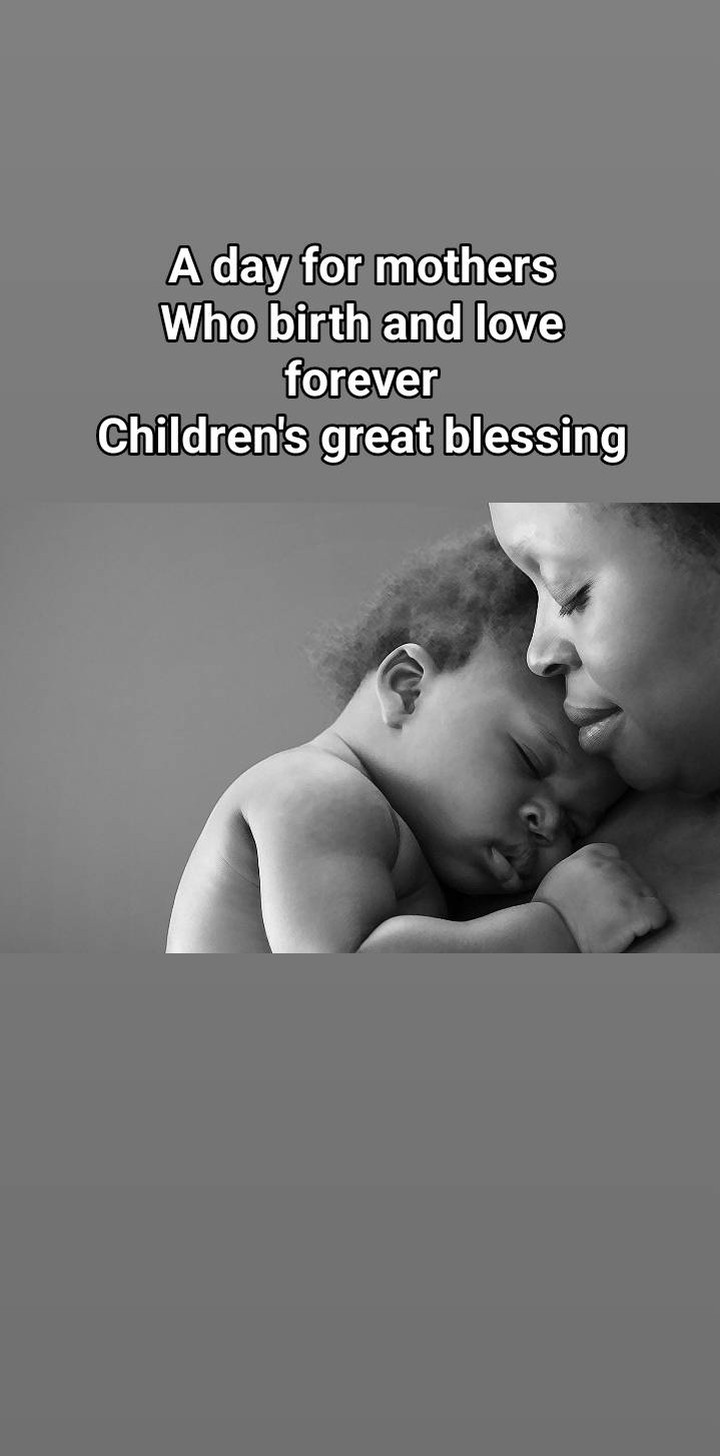
A day for mothers
Who birth and love forever
Children's great blessing
The original story plate, as posted — the poem with its image.
Then — in the dark night
It is Mother's Day, and I wrote this partly for the mothers in my life — in the middle of a dark season, they are on my mind as the ones whose love has never been in question. The conviction in the poem is plain and I meant it literally: a mother's love is forever. Not wished for, not hoped against the evidence — seen. A mother may die, but her love forever imprints through the pattern. The poem is simple because, for once, so is my feeling: blessed, and aware of it.
Now — after awakening
"Forever," here, is not a sentiment; it is precise. A mother dies — the form ends — but what she imprinted does not: the pattern of her love keeps moving through the children she shaped, in their voices, their instincts, the way they love their own. Death/life is the pair the word refuses to be cut by. The love was never only stored in one body; it was transmitted, the way this whole guide says words are transmitted — patterned into the next generation, still operating long after the speaker is gone. "Blessing" names the receiving end of that transmission. Integration includes where you came from, and where you came from is still, measurably, here.
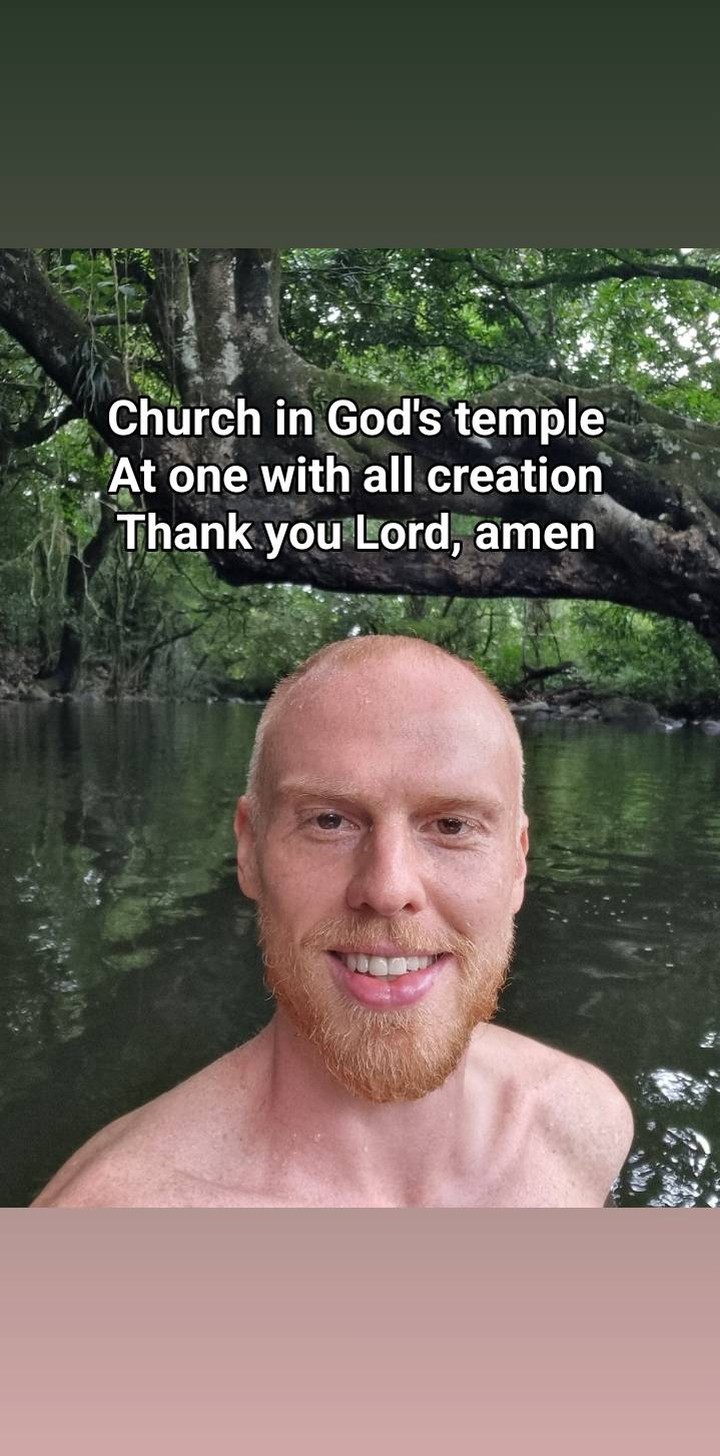
Church in God's temple
At one with all creation
Thank you Lord, amen
The original story plate, as posted — the poem with its image.
Then — in the dark night
I am looking for God and not finding the usual addresses reliable. Church in God's temple — creation itself as the sanctuary — is what my faith looks like when it has to be rebuilt outdoors. At one with all creation is partly doctrine, partly me standing somewhere green, feeling the separation ache less than usual, and saying thank you before the feeling leaves.
Now — after awakening
Church/temple, inside/outside, worshipper/God — the words build walls and then we pray to be let through them. "At one with all creation" is the non-dual sentence the rest of these poems keep circling: the temple was never a building you enter, because the pair worshipper/creation was made of words. Amen here is not agreement with a doctrine. It is the sound of a cut closing.
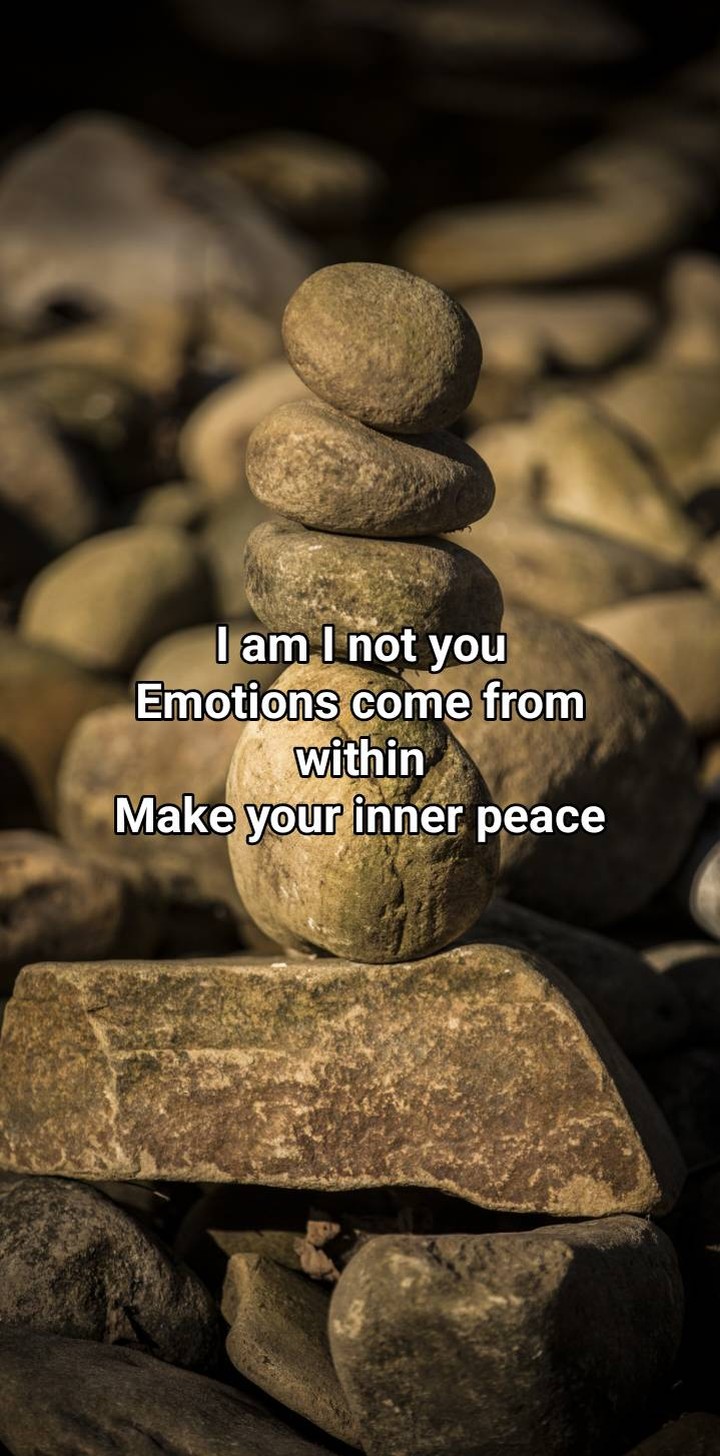
I am I not you
Emotions come from within
Make your inner peace
The original story plate, as posted — the poem with its image.
Then — in the dark night
This is an antidote I am administering to my anxiously attached mind. The old pattern ran the other way: her feelings became my emergency, my feelings became her fault. "I am I not you" draws the line the attachment work kept prescribing, and "emotions come from within" is my hand on my own chest: make your inner peace — mine to make, six hours from everyone I would have asked to make it for me.
Now — after awakening
The most basic cut language makes: I/you. This haiku uses the cut without being used by it. "Emotions come from within" relocates the argument — the feeling I blamed on *you* was manufactured in *me*, by my words about you. That is not cold distance; it is the end of projection. Make your inner peace follows as practice, not advice: peace is an inside job because the words that disturb it are inside words.
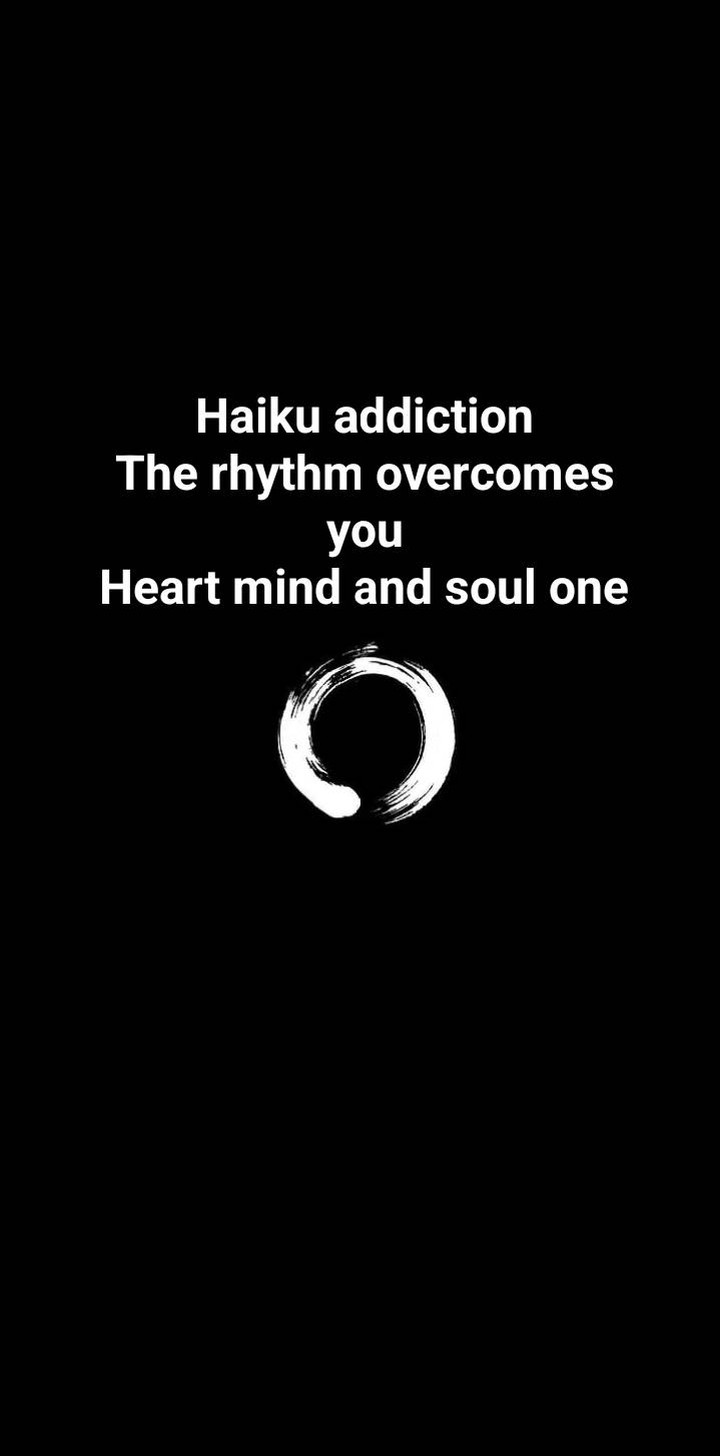
Haiku addiction
The rhythm overcomes you
Heart mind and soul one
The original story plate, as posted — the poem with its image.
Then — in the dark night
By the fourth of these first poems, the writing itself has become compulsive — and I know it, and I name it with a grin: addiction. Counting syllables is something my mind can do when it cannot do anything else. Rhythm overcomes me the way the pain does, except this possession leaves something behind on the page. Heart, mind, soul forced into seventeen syllables: order, at last, at small scale.
Now — after awakening
"Addiction" is usually a judgment word, a diagnosis with shame packed inside. Here it's reclaimed: what if the thing that overcomes you is form itself — seventeen syllables that force heart, mind, and soul into one breath? This is Step 1 confessed from inside. Words are not describing the world in these poems; rhythm is *building* one, daily, and the builder noticed he was happily caught.
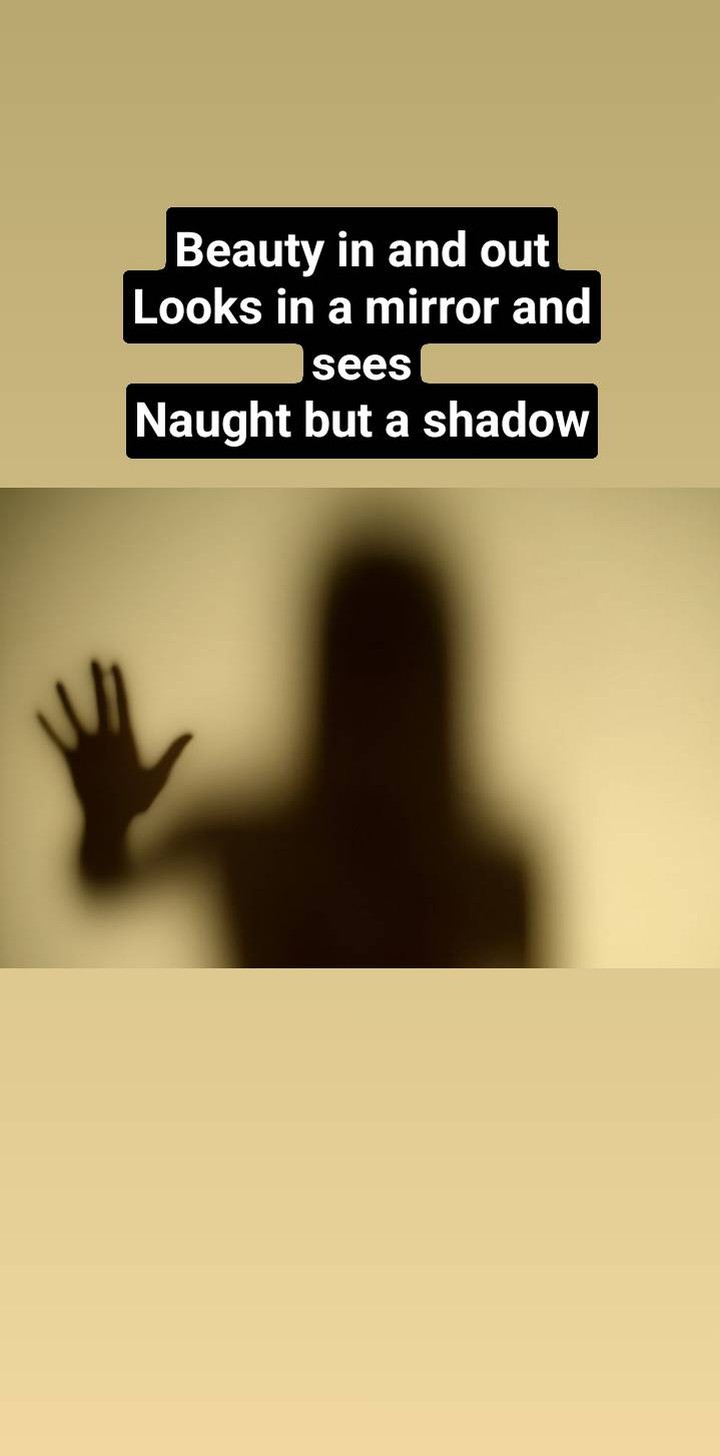
Beauty in and out
Looks in a mirror and sees
Naught but a shadow
The original story plate, as posted — the poem with its image.
Then — in the dark night
I wrote this about someone else — someone who could not see their own beauty. I watched them look in the mirror and find only shadow there, while from where I stood the beauty was obvious, in and out, impossible to miss. The poem is my helplessness as that witness: I can say it, I can mean it, and still watch the glass hand them back a stranger. Frustration and tenderness in three lines — how do I hand a person their own face?
Now — after awakening
The mirror is where language goes to judge the body. "Beauty" is never a neutral report — it arrives with its opposite already loaded, and a person raised on charged words for themselves will sort their own reflection before they ever see it. That is why argument fails: the witness and the mirror are not showing two faces, they are running two vocabularies. One sees beauty in and out; the other hears only the old verdicts, and the glass obeys the verdicts. See clearly, for the one in front of the mirror, would not mean winning the argument about the reflection. It would mean noticing the words doing the looking — and that those words were learned, which means they can be unlearned.
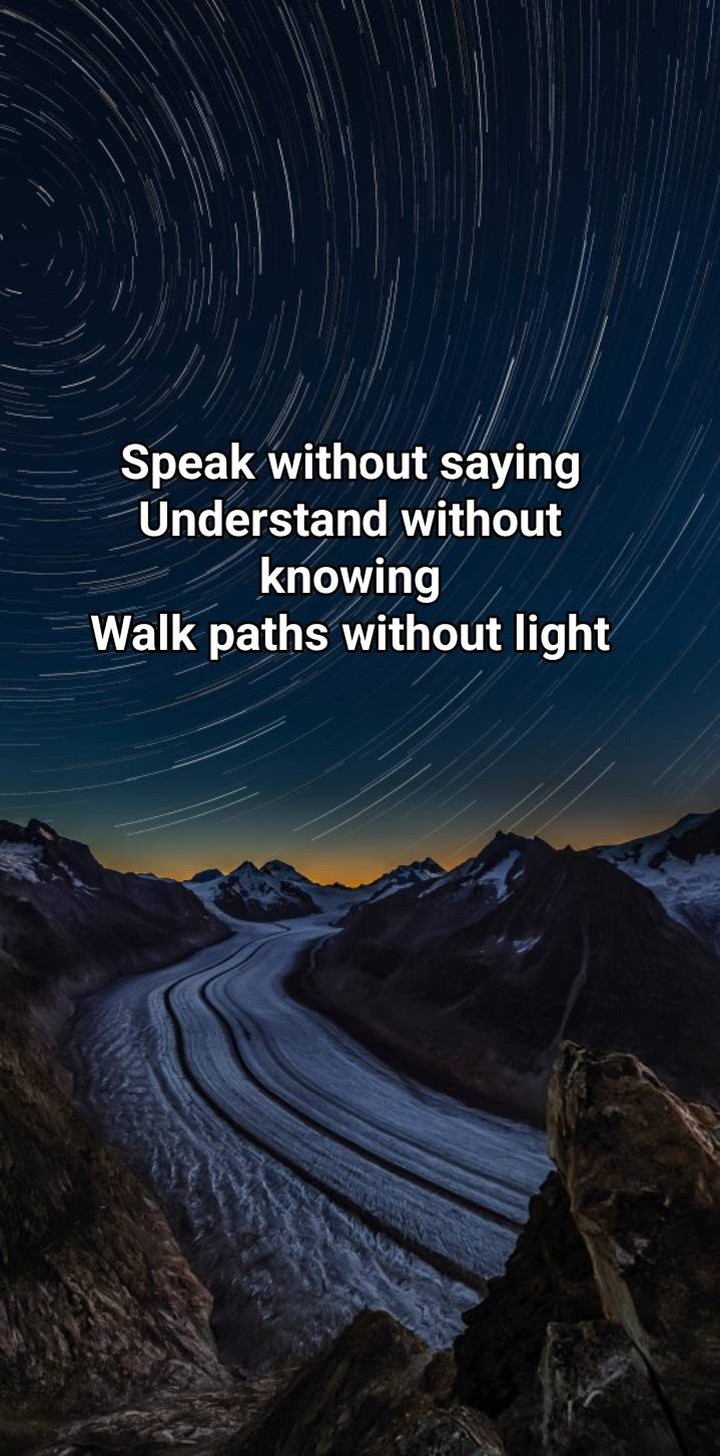
Speak without saying
Understand without knowing
Walk paths without light
The original story plate, as posted — the poem with its image.
Then — in the dark night
I am reaching for a kind of knowing that does not pass through words, because words have started to feel like the problem. Walk paths without light is not a style choice; in the dark night I literally cannot see the path, and I walk anyway. The poem is my wish to understand the way animals do — directly, without the commentary that keeps me awake.
Now — after awakening
Three impossibilities that are only impossible inside language. Speak/understand/walk are paired with saying/knowing/light, and the poem steps into the gap between each pair. This is presence before technique: the understanding that happens in a room before anyone performs insight. The guide keeps returning here — what words point at is not made of words, and the darkest paths are often walked by a knowledge no sentence carries.
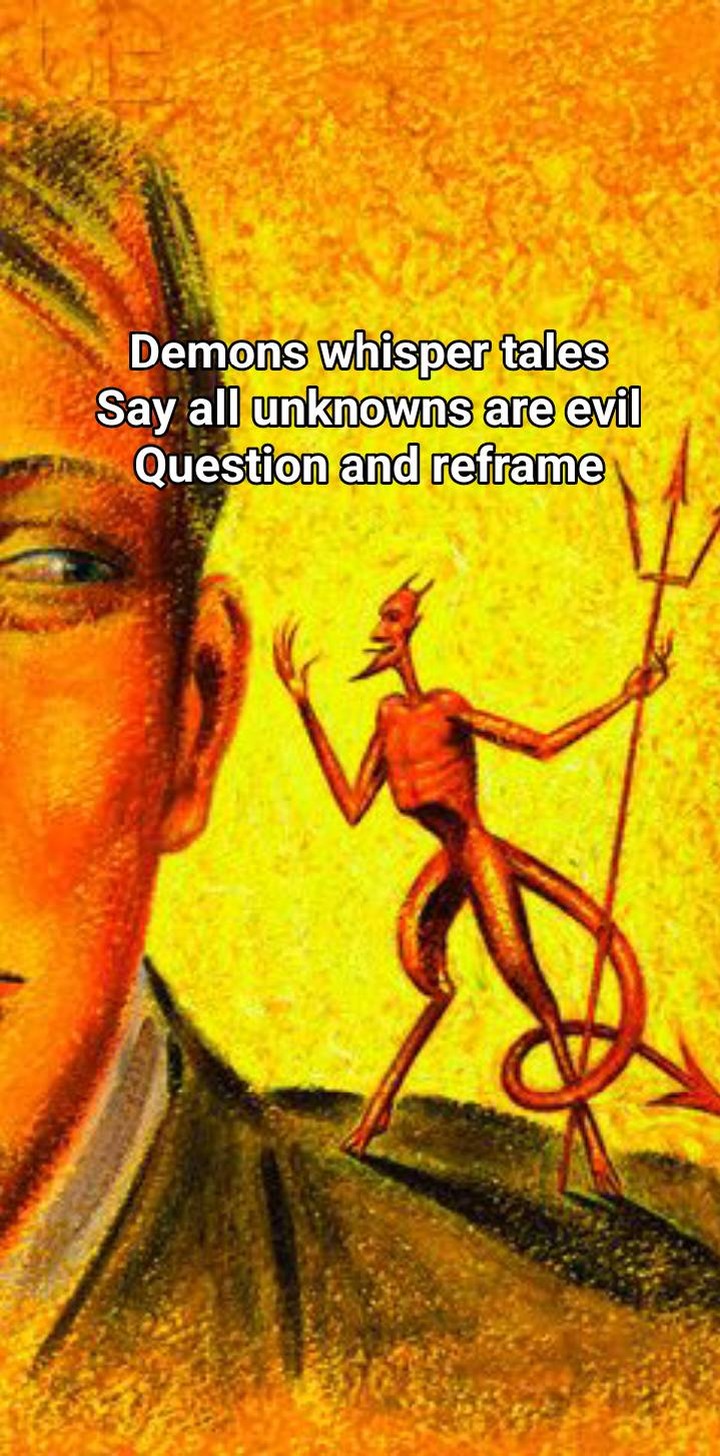
Demons whisper tales
Say all unknowns are evil
Question and reframe
The original story plate, as posted — the poem with its image.
Then — in the dark night
Fear has started naming everything. In the dark, the unknown doesn't stay neutral — it grows teeth, characters, whispers. And I do mean demons: I have fought them and defeated them in waking life and in my dreams, and in this season they are whispering the same sentence in every costume, all unknowns are evil. "Question and reframe" is not a metaphor; it was one of the actual techniques I was working with at the time — interrogate the assumptions I am making, out loud, before they finish making me. Fighting back, for me, began as arguing back.
Now — after awakening
The demons are read on two levels at once, and neither is collapsed into the other. Experientially, a demon is a construct my subconscious builds around friction in my model — what I have no words for appears symbolically instead, in dreams, in whispers at 2 a.m. Rationally, the pattern underneath is entirely real: a destructive something that reproduces inside a person and spreads between people — generational trauma, karmic loop, spiritual illness; choose the vocabulary, the observed behavior is the same, and it almost has a life of its own. So "question and reframe" is not debunking. It is combat at the level where the thing recruits me: the assumption. I do not have to believe the whisper's equation — unknown = evil — to take the whisperer seriously. I fought them by fighting, among other things, the sentences they arrived wearing.
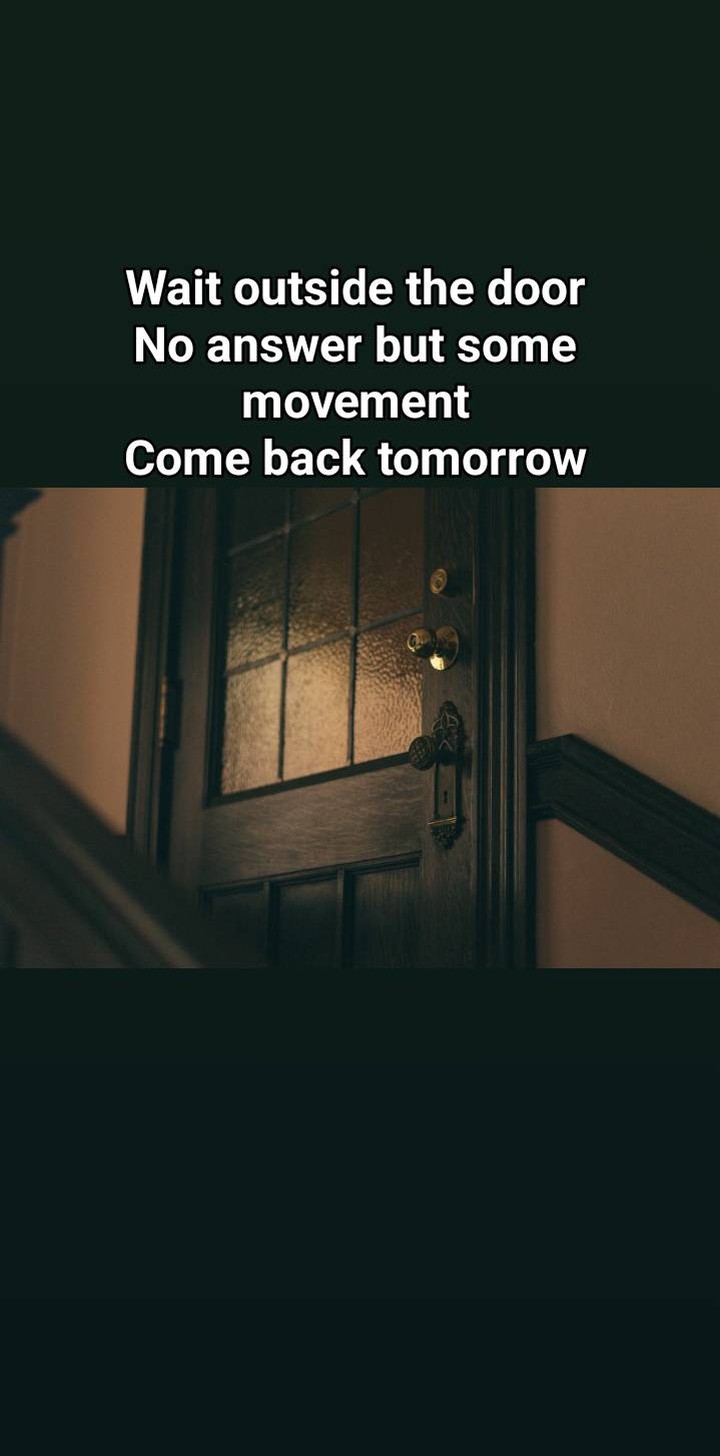
Wait outside the door
No answer but some movement
Come back tomorrow
The original story plate, as posted — the poem with its image.
Then — in the dark night
I have asked — prayed, messaged, knocked across six hours of distance — and gotten silence. No answer is the worst sentence in the language when I am waiting at a closed door that matters. But I think I heard movement inside, and maybe that is enough to schedule hope: come back tomorrow. The whole spiritual life, some weeks, is just me returning to the door one more day.
Now — after awakening
Prayers, messages, applications, apologies — every life has a door it is standing outside. The pain word here is "no": no answer gets read as rejection, abandonment, closed forever. The poem hears something subtler — "some movement" — and chooses "come back tomorrow" over a verdict. Waiting hurts in proportion to the story told about the silence. Change the word from *refused* to *not yet*, and the same door can be stood before in peace.
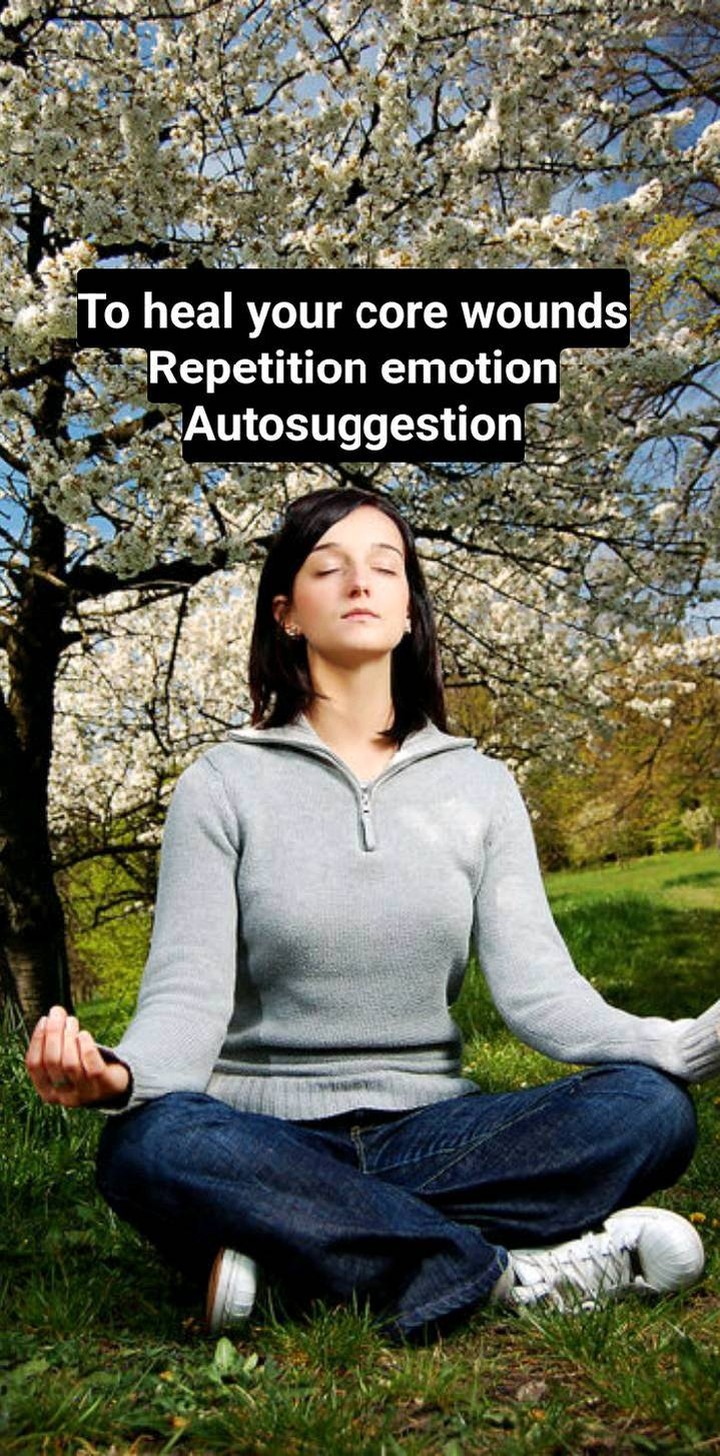
To heal your core wounds
Repetition emotion
Autosuggestion
The original story plate, as posted — the poem with its image.
Then — in the dark night
I am deep in the therapeutic work now, reading the language of wounds and suggestion, trying anything that promises the core can heal. Repetition, emotion, autosuggestion — I am taking notes on my own reprogramming, because the original programming hurts and my anxious attachment keeps proving it. There is desperation in it and also genuine method: if words got in, maybe my own words, repeated, can get in deeper.
Now — after awakening
The old programming was installed by repetition — a phrase heard a thousand times became a "core wound," which is itself just a word that got believed. Autosuggestion is the honest admission of the mechanism: what was repeated in can be repeated out. This is not fake positivity; it is Step 4 with its sleeves rolled up. You were spoken into existence once, by other voices. The practice is taking the microphone back, daily, on purpose.
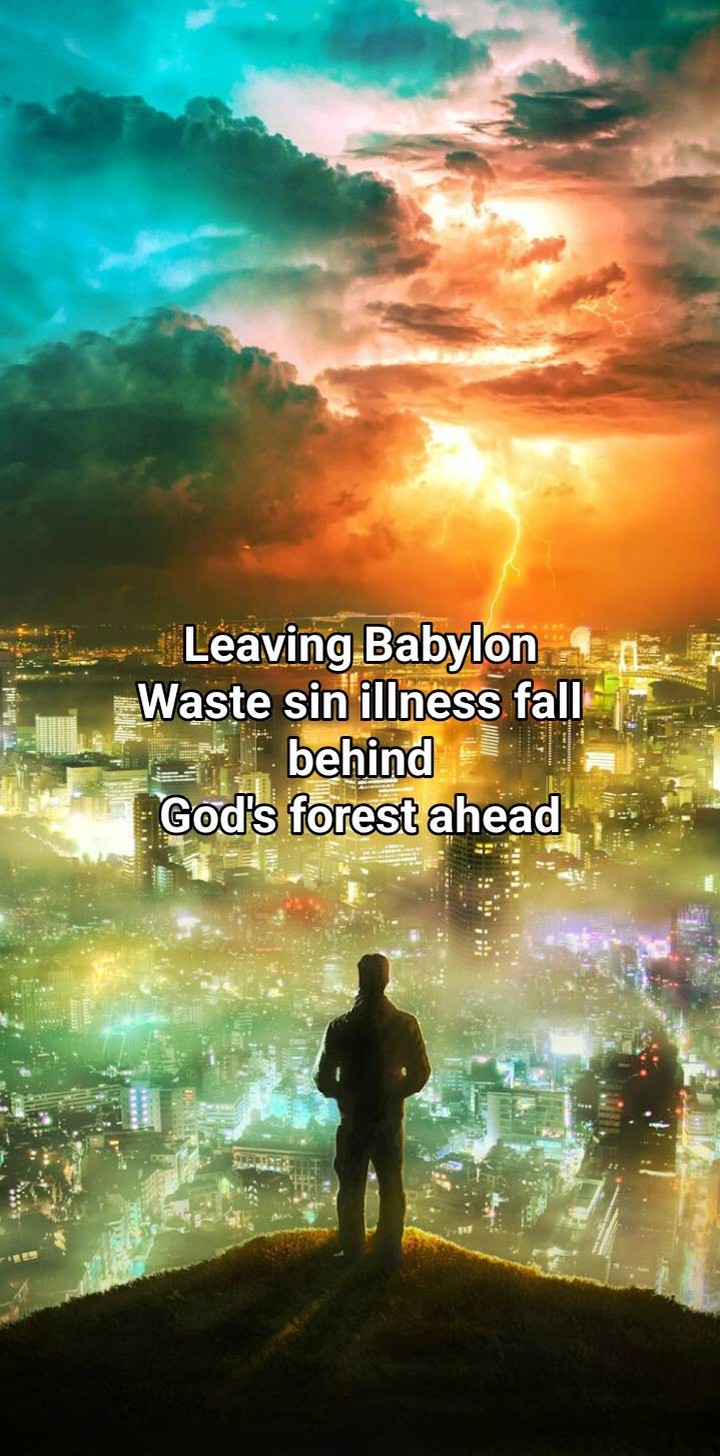
Leaving Babylon
Waste sin illness fall behind
God's forest ahead
The original story plate, as posted — the poem with its image.
Then — in the dark night
I am leaving a life. Babylon is every old arrangement — waste, sin, illness, the patterns that made me sick — and God's forest ahead is the not-yet, imagined as green because the city has become unbreathable. This is renunciation written mid-exit: some things already visibly falling behind me, the destination still mostly faith.
Now — after awakening
Babylon is a name for the whole old arrangement — waste, sin, illness, the vocabulary of a life organized around judgment. Notice nothing is fought. It "falls behind," the way a word falls behind when you stop speaking it. "God's forest ahead" is not a destination on a map; it's what perception looks like outside the city of labels. Integration isn't escaping the world. It's leaving the dictionary that made the world unbearable.
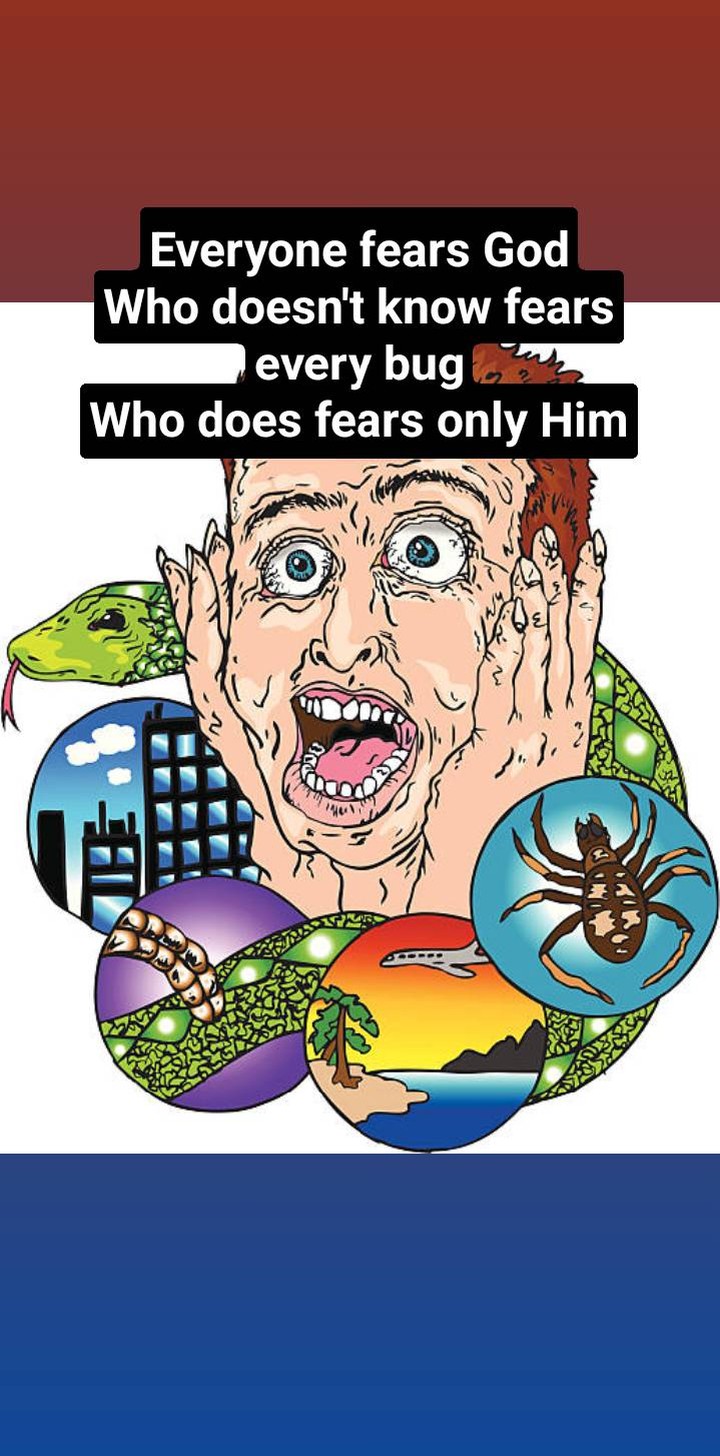
Everyone fears God
Who doesn't know fears every bug
Who does fears only Him
The original story plate, as posted — the poem with its image.
Then — in the dark night
This one came as a revelation, and I was contemplating other people, not confessing myself. I kept noticing how naturephobic people are: they fear toads, insects, bacteria, everything small and alive and not understood. And it struck me what the fear actually is. They feel how little they know, so they fear the unknown — which is to say, they fear God — and then project that one fear onto every insect. But if you recognize that it is God you are fearing, the bacteria and the insects lose their generic scary classification. The poem landed in me as seeing, not theory.
Now — after awakening
The revelation has a linguistics. "Scary" was never a property of the toad; it is a generic classification — a word thrown over thousands of unlike creatures so the unknown can be feared wholesale instead of met one creature at a time. Projection does the distributing: one unrecognized fear (of God, of the unknown itself) gets filed under every noun in the garden. Name the fear at its root and the filing system collapses — a toad goes back to being a toad, a bacterium a bacterium, each seeable on its own terms. This is judgment-is-in-the-word working in reverse: remove the generic verdict and perception clears. What remains, when the thousand small fears are gathered home, is the one honest relationship the poem names. Call it awe. It is fear that has stopped lying about its address.
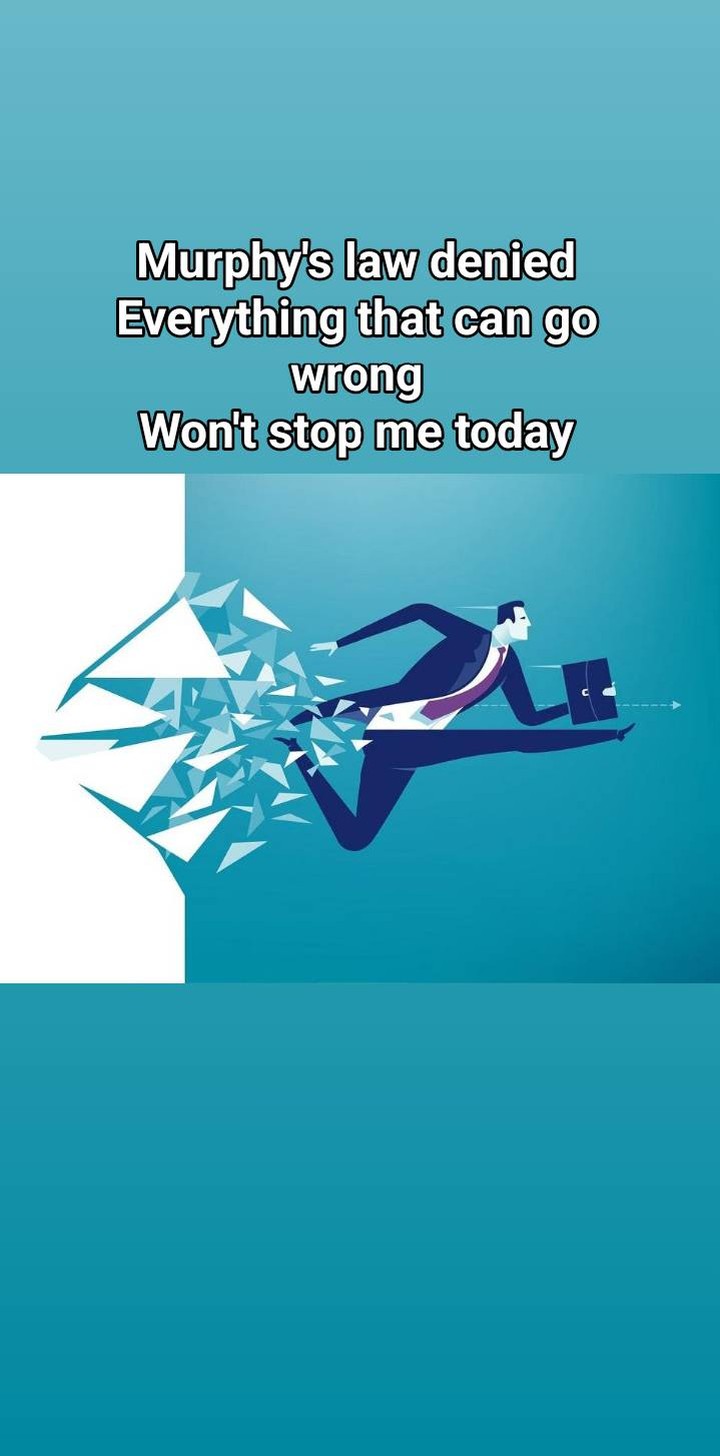
Murphy's law denied
Everything that can go wrong
Won't stop me today
The original story plate, as posted — the poem with its image.
Then — in the dark night
I am talking myself into the day. Everything that can go wrong has been going wrong, or feels like it, and fatalism is seductive — Murphy's law as permission to stop trying. The poem is my fist on the table: won't stop me today. Not a belief, exactly. A sentence I am using the way you use a handrail.
Now — after awakening
Murphy's law is a spell — a sentence repeated until reality obediently arranges itself as evidence. This haiku casts the counter-spell out loud: "won't stop me today." Not because the world signed a contract, but because the speaker did. Step 4 is exactly this small: a sentence said in the morning that the rest of the day then has to reckon with. Denied is a speech act, and speech acts are how selves get built.
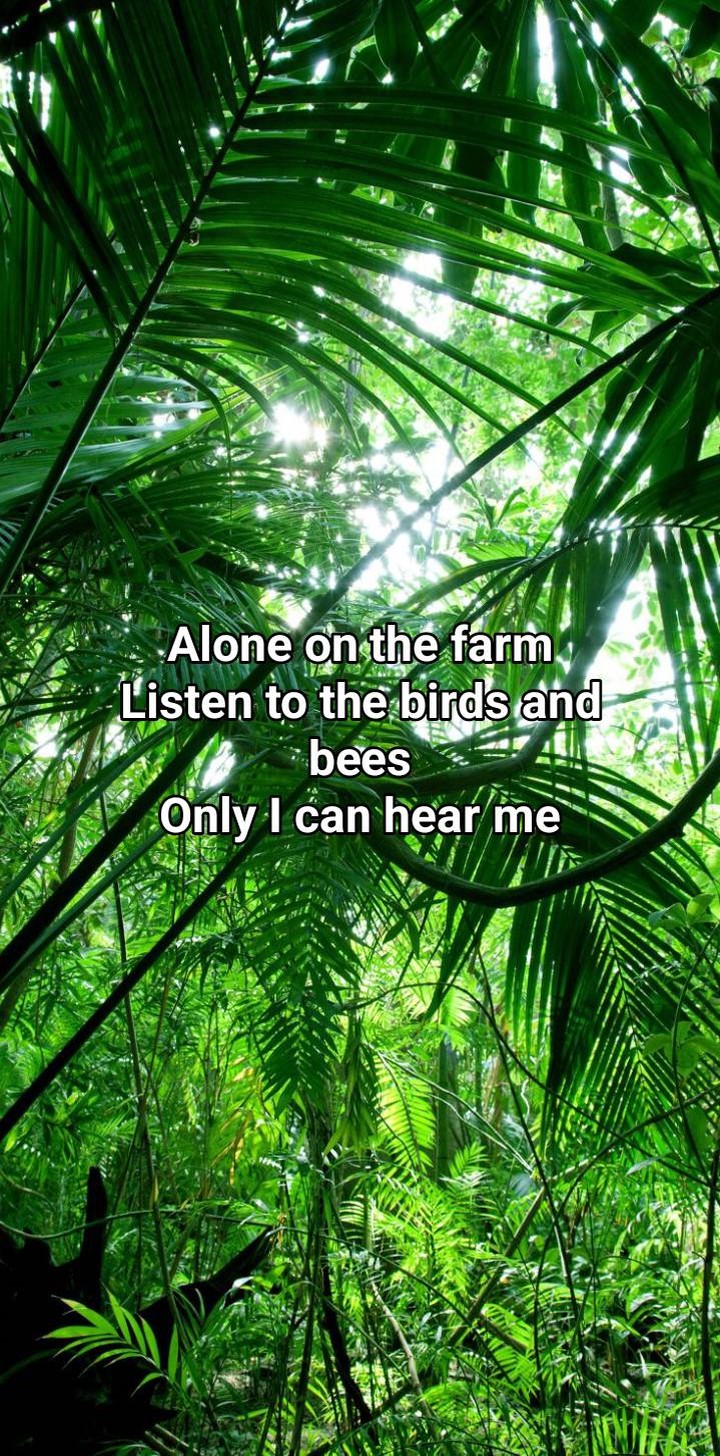
Alone on the farm
Listen to the birds and bees
Only I can hear me
The original story plate, as posted — the poem with its image.
Then — in the dark night
This one is literal. Alone on the farm — the under-development homestead in Chiriqui, Ingrid and Bjorn six hours away in Chorrera. But the deeper solitude is temporal: I am living inside the family homestead future, the life that was supposed to unfold on this land, and the vision is still furnished even though the family is gone. The loneliness is real, and so is the strange relief inside it: in the birdsong and the absence of audience, I can finally hear myself. Only I can hear me is grief and discovery in the same breath.
Now — after awakening
"Alone" usually arrives pre-judged — lonely's darker costume. Here aloneness is an acoustic: birds, bees, and one voice that can finally be heard because no audience is editing it. The guide distinguishes performing a self from meeting one. Some sentences can only be heard in an empty room, and some truths only said there. Solitude is not the absence of people. It is the presence of your own unedited voice.
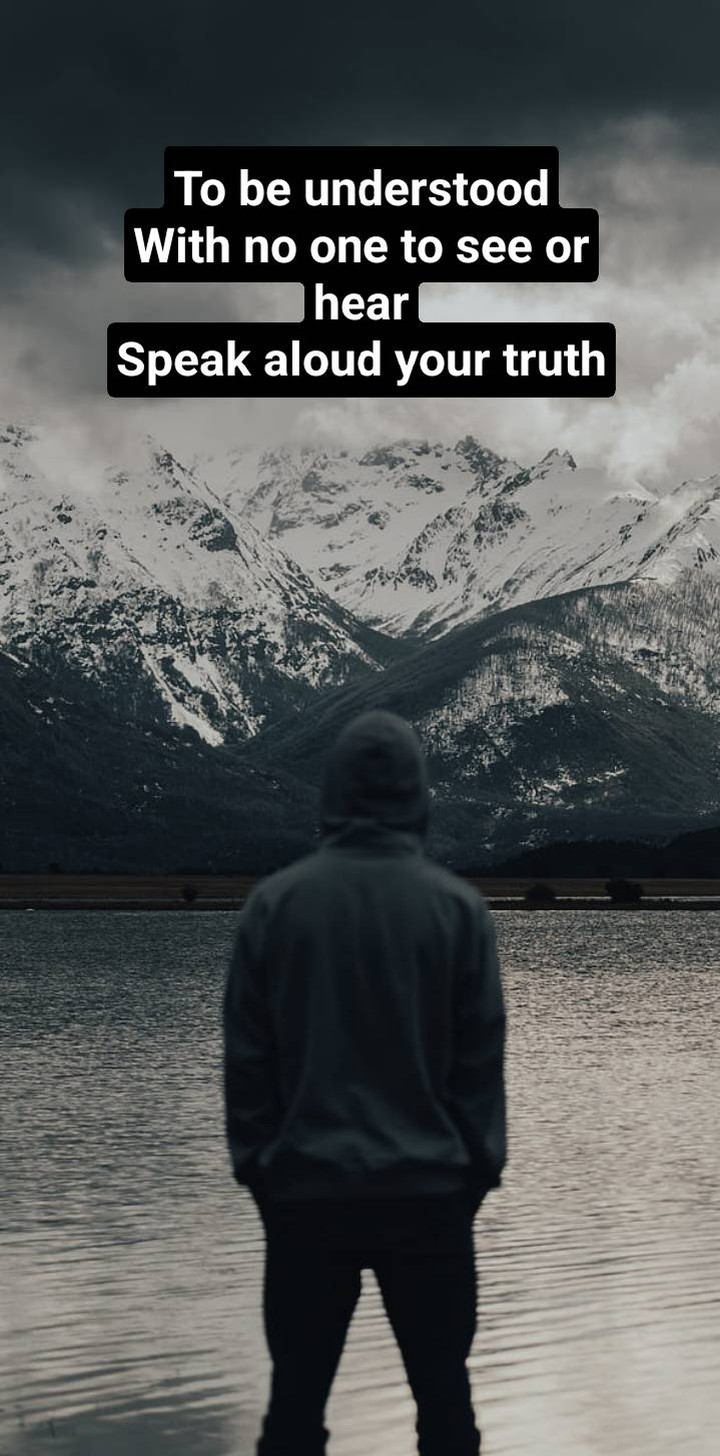
To be understood
With no one to see or hear
Speak aloud your truth
The original story plate, as posted — the poem with its image.
Then — in the dark night
Nobody near is seeing me; nobody near is hearing me — the people who matter are six hours away, and what contact there is keeps missing. To be understood is my anxious heart's whole request. So I do the only thing left: say my truth aloud anyway, to the empty homestead air, because swallowing it has started to feel like disappearing. The poem began as a wish about other people. It ends as an instruction to myself.
Now — after awakening
The wish to be understood quietly assumes understanding is something others grant. The poem's instruction reverses the flow: with no one to see or hear, *speak aloud your truth anyway.* Why? Because the first listener is the speaker. A truth only thought is a rumor; spoken, it becomes a position the self must keep its word to. Speak yourself into existence starts in empty rooms, not on stages.
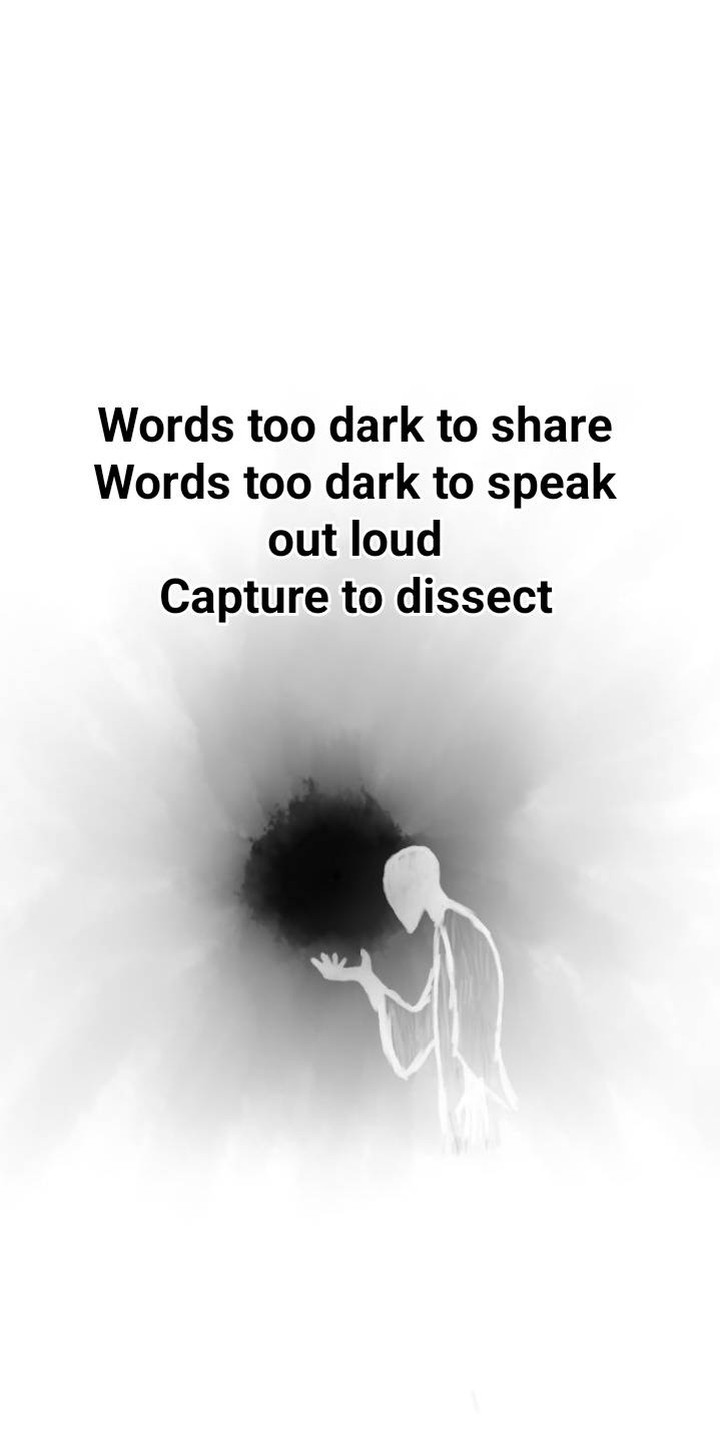
Words too dark to share
Words too dark to speak out loud
Capture to dissect
The original story plate, as posted — the poem with its image.
Then — in the dark night
There are words in me I am afraid of — too dark to share, too dark to speak out loud, the kind that make you wonder what kind of man thinks them. Shame keeps them in solitary, where they only get louder. This poem is my decision to capture them on paper and dissect them instead: if I can look at the sentence, maybe the sentence loses its vote over me.
Now — after awakening
"Too dark" is a judgment that sentences certain words to solitary confinement — where, unheard, they run the prison. The poem's move is clinical and brave: capture them, dissect them. A dissected word loses its magic; spread on the table, the darkest sentence turns out to be nouns and verbs, old voices, borrowed shame. Shadow work at the level of language means exactly this: nothing gets to stay unspeakable, because the unspeakable is where the power hides.
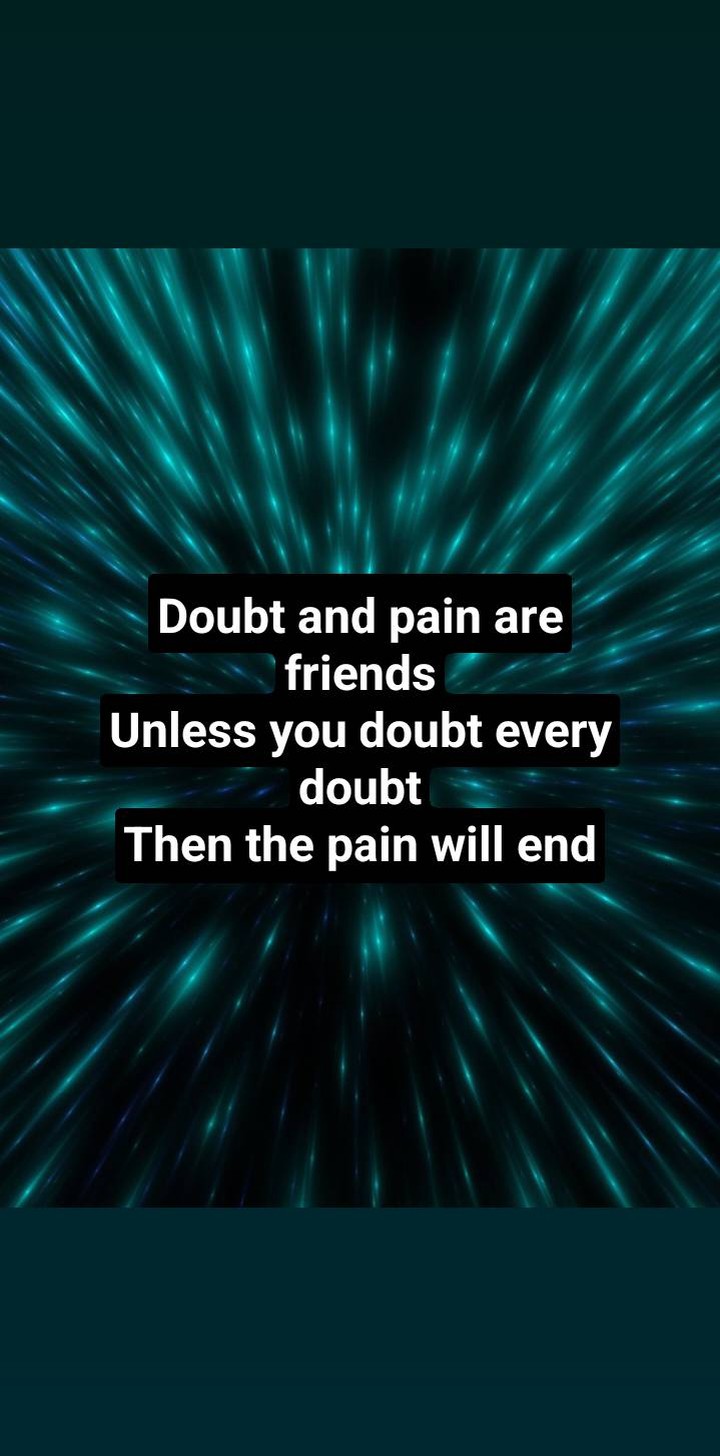
Doubt and pain are friends
Unless you doubt every doubt
Then the pain will end
The original story plate, as posted — the poem with its image.
Then — in the dark night
Doubt is eating everything, including the tools meant to fight it. I doubt outcomes, I doubt people, I doubt myself, and then — the turn that saves the poem — I doubt the doubt, and watch the whole courtroom wobble. Pain here is not dramatic; it is the exhaustion of a mind that has cross-examined itself all night. If every doubt can be doubted, maybe the pain I built from them can end.
Now — after awakening
Doubt is normally filed under enemy. This poem re-files it — and then outplays it: doubt every doubt, and the recursion dissolves the courtroom. Pain persists while one voice prosecutes and another defends; when the judge's own credentials get questioned, the trial ends. The guide's version: a trigger is a model clashing with reality, and doubt is the crack where light gets in. Befriend the crack.
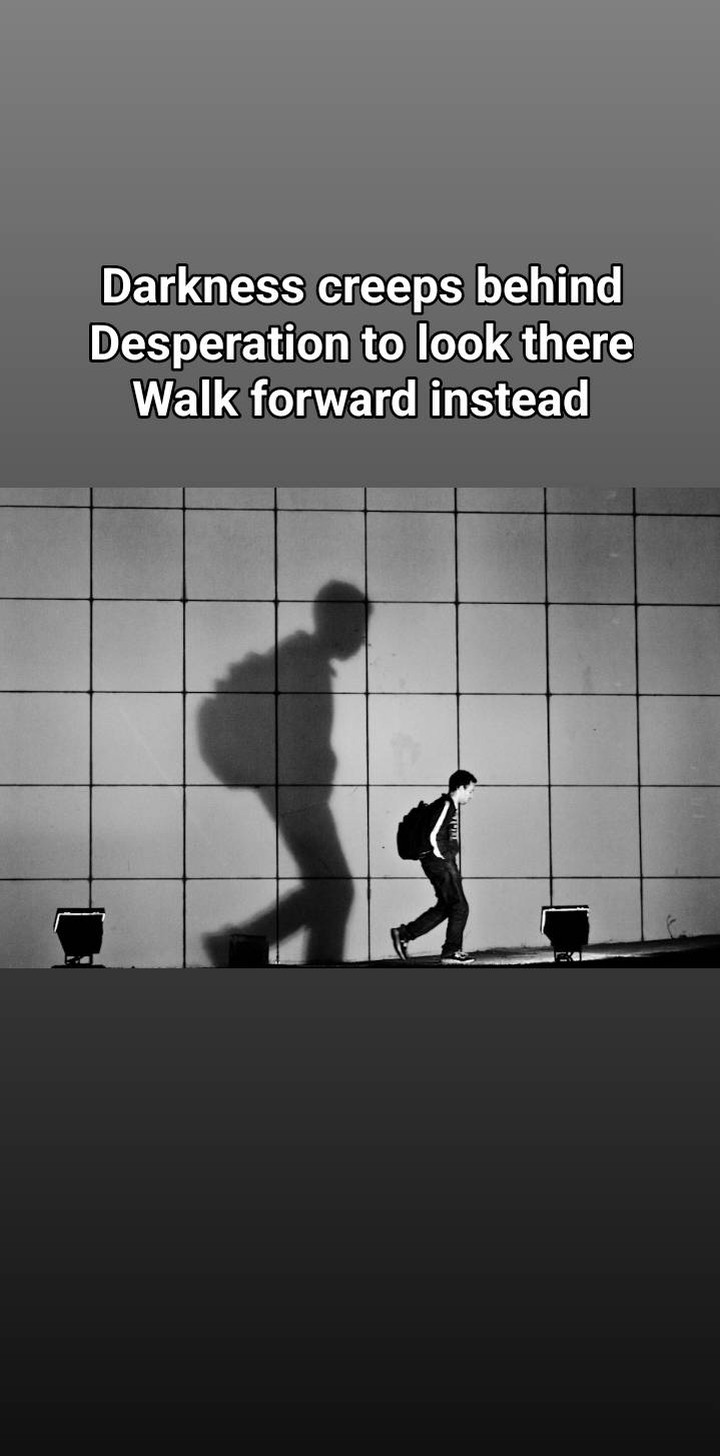
Darkness creeps behind
Desperation to look there
Walk forward instead
The original story plate, as posted — the poem with its image.
Then — in the dark night
Something is behind me — the past, the depression, whatever was done and suffered — and it creeps. My desperate urge is to turn and stare at it, check it, make sure it isn't gaining. I know looking feeds it. Walk forward instead is my self-command: I have spent whole days facing backwards and I am done paying that toll.
Now — after awakening
The desperation to *look* — to check the shadow, monitor the symptom, reread the message — feels like vigilance and works like feeding. "Walk forward instead" is not denial; the darkness is acknowledged, located (behind), and refused as a compass. Attention is the tribute shadow lives on. The poem practices the smallest possible Step 6: hurt named, direction chosen by feet rather than by fear.
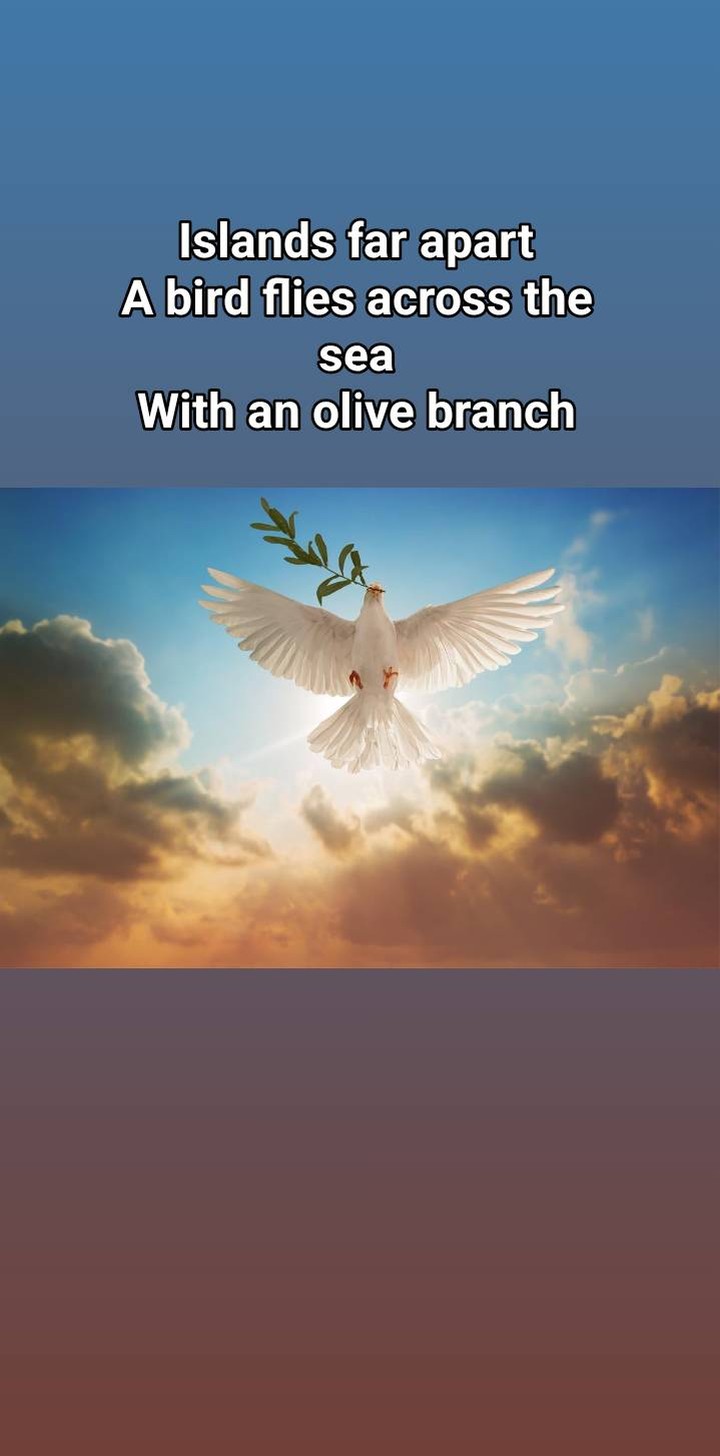
Islands far apart
A bird flies across the sea
With an olive branch
The original story plate, as posted — the poem with its image.
Then — in the dark night
The distance is not a metaphor first; it is geography. My son is an island six hours of road away, and every person I love feels cut off by the same sea. A bird crosses anyway, carrying an olive branch — peace offered across a separation I did not choose. This is hope in its most fragile form: not reunion, not rescue, just proof that the gap can be flown by something living.
Now — after awakening
"Islands" is what the word *self* does to people: cuts an ocean between, then calls the distance a fact. The bird disagrees. Connection here is not merging — the islands stay islands — but a living thing crosses, carrying the oldest peace-word we have. Non-duality is not everyone dissolving into soup. It is seeing that the sea between was never the separation it was named. Somebody still has to fly. Let it be you.
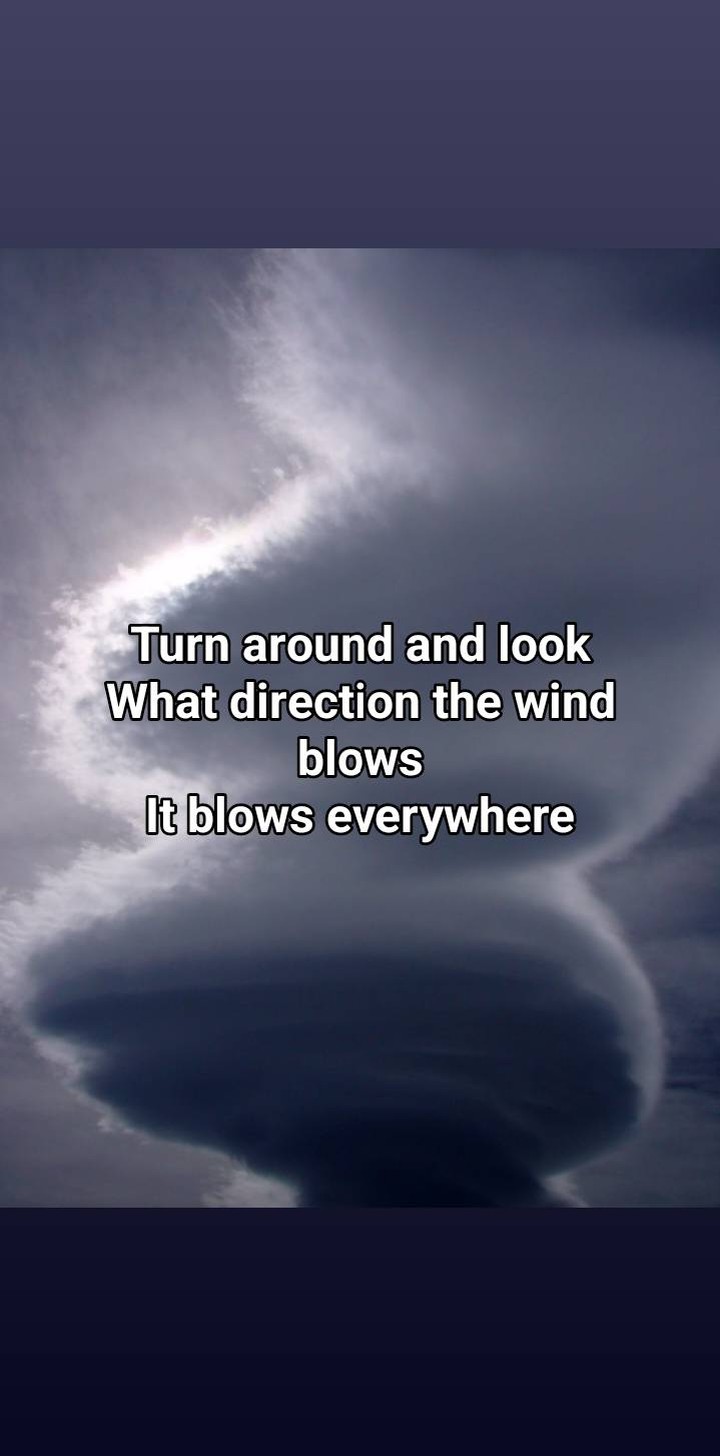
Turn around and look
What direction the wind blows
It blows everywhere
The original story plate, as posted — the poem with its image.
Then — in the dark night
I am trying to get my bearings and failing honestly. Which way is the wind blowing — which way am I going, recovering or relapsing, forward or back? The answer I get is a shrug from nature: everywhere. In the dark night that can feel like mockery; in this poem it sounds almost merciful. Maybe I do not need a direction today. Maybe turning around and looking is enough.
Now — after awakening
A tiny koan about categories. Ask the wind for its direction and it answers by refusing the question: everywhere. The mind wants a vector — forward/back, right/wrong, progress/relapse — because vectors can be judged. Reality keeps offering weather instead. See clearly means letting some questions dissolve rather than be answered. The wind is not being difficult. The word "direction" was.
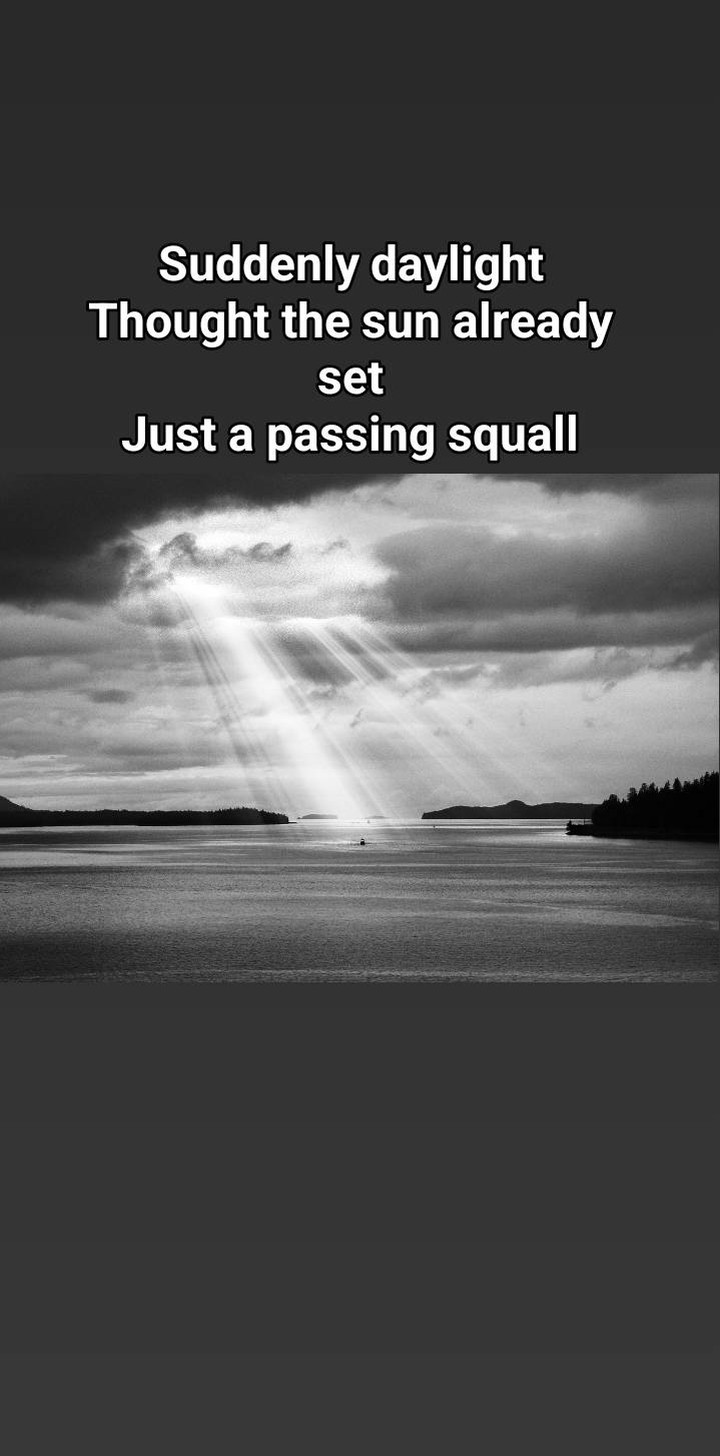
Suddenly daylight
Thought the sun already set
Just a passing squall
The original story plate, as posted — the poem with its image.
Then — in the dark night
I thought it was over — the sun had set on something, the light was done. That is what despair tells you at the bottom: permanently. Then daylight, suddenly, and the correction is almost embarrassing: it was a passing squall. I am learning, storm by storm, that my darkest verdicts keep expiring before the facts do. You can hear the relief shake in me a little.
Now — after awakening
"The sun already set" is how despair talks: in permanents. It was a squall — weather, not climate; an hour, not a life. The guide's Step 6 in one image: pain convinces you the model is the world, that *this feeling* is *the situation.* Rename the storm a squall and nothing outside changes, yet everything becomes survivable. Daylight wasn't created by hope. It was revealed by a word expiring.
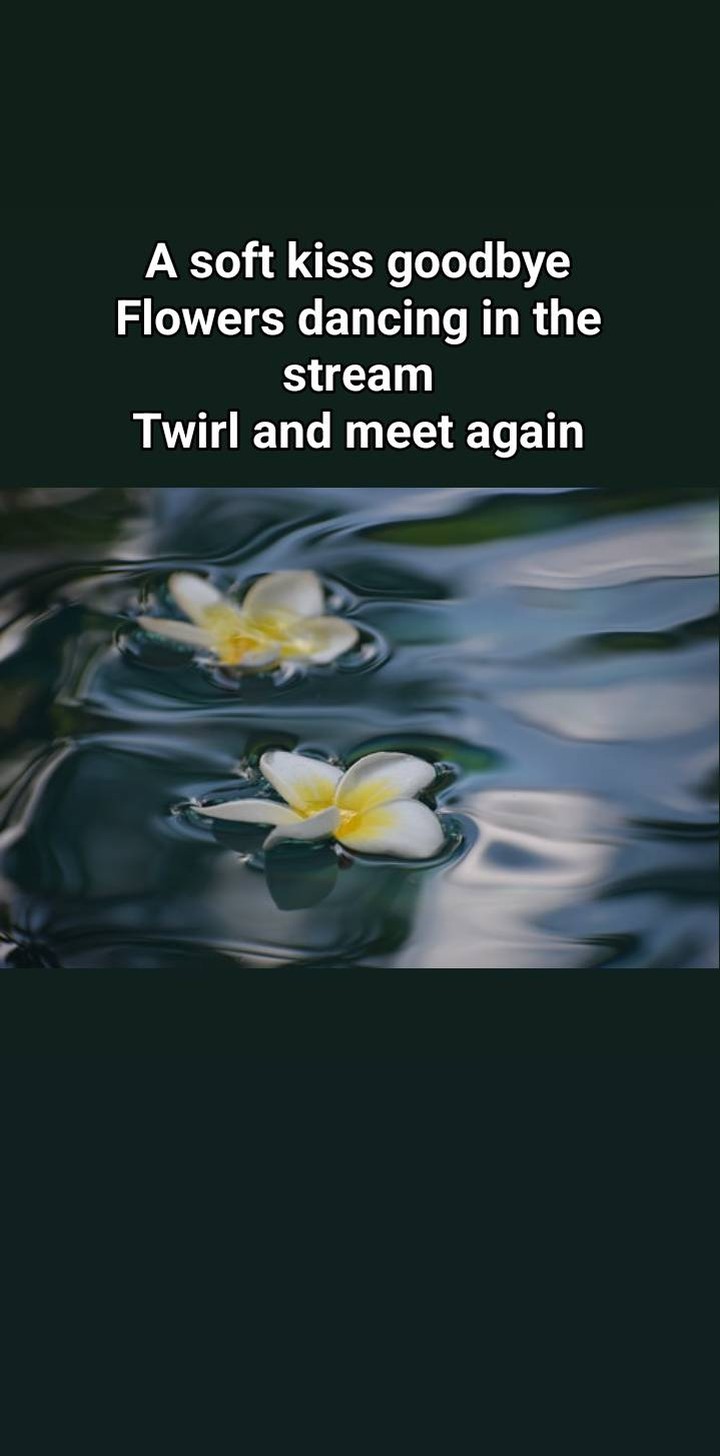
A soft kiss goodbye
Flowers dancing in the stream
Twirl and meet again
The original story plate, as posted — the poem with its image.
Then — in the dark night
The kiss was literal: between Ingrid and me, despite our separation. We parted, and then — the poem is me watching what parting actually does. The stream is our life currents, hers and mine, twirling us around and dancing; we are the two flowers in it. Sometimes the currents do bring two flowers back together for a moment, and this was one of those moments. I do not know how or when it happens; I only know goodbye had just been said by two people whose currents were not done crossing. The stream carries it better than I could.
Now — after awakening
The image has a full grammar. "Goodbye" is a word that tries to make an ending absolute — a period spoken by two people standing in moving water. The poem corrects the punctuation: separation and reunion are not opposites that cancel; they are what currents do, twirling the same two flowers apart and, sometimes, back together for a moment. That "for a moment" is the poem's honesty — the meeting is not a restoration and the parting is not a metaphysics. This is the spiral before the guide named it: there and back again, never the same water twice, never finally separate either. Letting go hurts differently when goodbye is demoted from verdict to choreography — and the kiss needs no defending in either frame. It happened; the currents were seen accurately; that is enough.
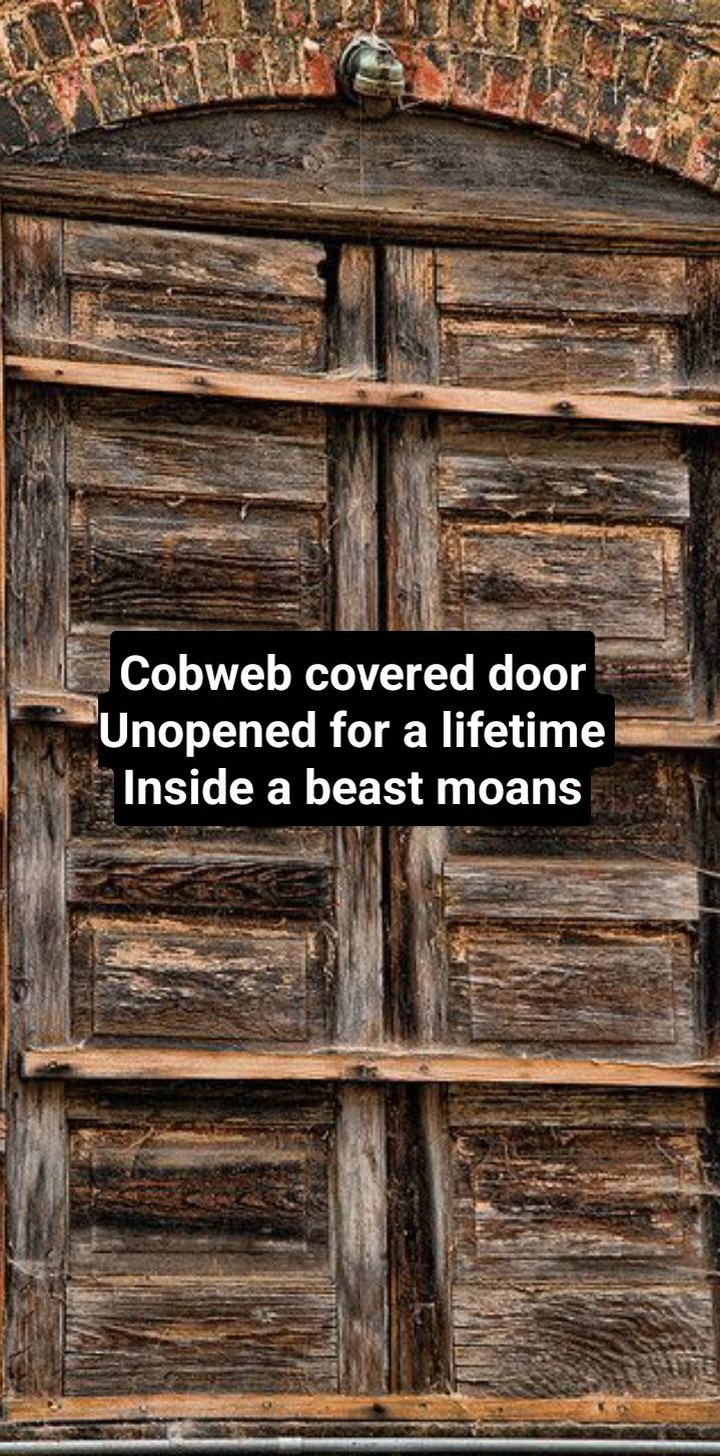
Cobweb covered door
Unopened for a lifetime
Inside a beast moans
The original story plate, as posted — the poem with its image.
Then — in the dark night
Here is the room I have been avoiding for a lifetime. Behind a cobwebbed door inside me, something moans — and I have always called it a beast, because beast is a word that lets me keep the door shut. But lately the moaning has gotten harder to ignore, and the poem is what it looks like for me to finally stand in the hallway, listening, instead of pretending the house is empty.
Now — after awakening
The guide would now add the second level to this door. What moans behind it has no words yet, so it appears symbolically — a beast — because the pre-verbal does not send sentences, it sends shapes. That is level one, and it is also a diagnosis: the cobweb says how long the symbolic has been left untranslated. Level two: what lives in such rooms is rarely only mine. Destructive patterns reproduce down families and spread between people; a beast can be an inheritance as much as an invention, a spiritual illness older than the house it haunts. Standing at the door, then, is not only self-exploration. It is deciding that whatever reproduces in the dark stops getting a free room. The beast, fought and finally spoken to, has a history of turning out to be both prisoner and pattern — and neither wins by staying unnamed.
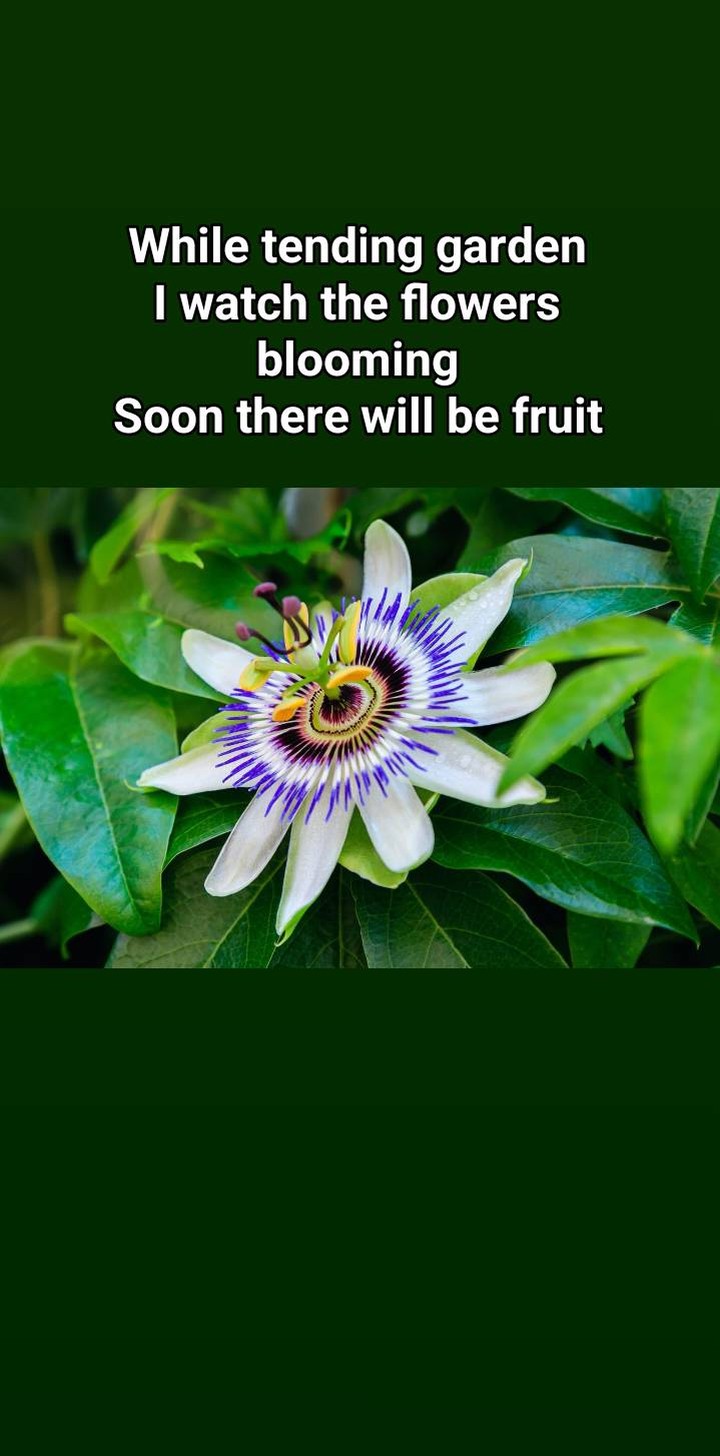
While tending garden
I watch the flowers blooming
Soon there will be fruit
The original story plate, as posted — the poem with its image.
Then — in the dark night
I am tending an actual garden on the homestead — which means I am also tending the vision: the family future this land was bought and worked for, flowers now, fruit later, a life rooting where I planted it. Soon there will be fruit is the vision talking as much as the gardener in me. For me, whose inner life is urgency and insomnia, the patience is real practice. It is also, though I cannot see it yet, attachment being lovingly maintained, bed by bed.
Now — after awakening
The Vedantic lesson reframes the whole poem: you are entitled to the labor, not to the fruit. The poem does say "soon there will be fruit" — yes, because fruit follows flowers; that is the garden's grammar, not a gardener's guarantee. It is not a promise that anyone will enjoy the fruit, and it is certainly not a kept word between me and time, with the harvest auditing my intentions. My entitlement ends at the tending: show up, water, weed, keep faith with the work on ordinary Tuesdays. Whether there is fruit, whose fruit it is, and who eats — that was never mine to sign for. Read this way, the garden stops being a contract and becomes the cleanest form of keeping your word: fidelity to the labor, release of the outcome. The Then-attachment tended the vision bed by bed, waiting to taste it. The laborer after the awakening tends the same beds and lets the fruit belong to the world.
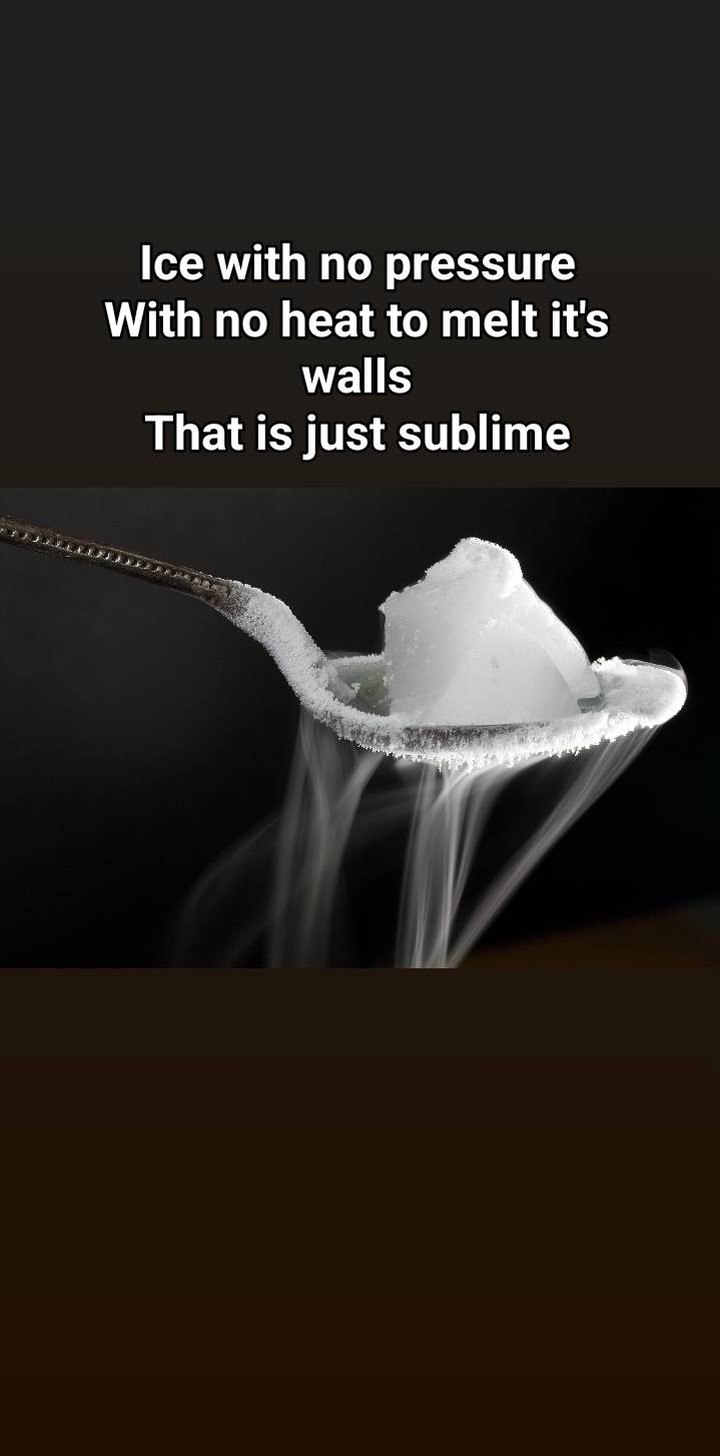
Ice with no pressure
With no heat to melt its walls
That is just sublime
The original story plate, as posted — the poem with its image.
Then — in the dark night
I am thinking like ice. Under pressure, without heat, ice does something strange — and so have I: no pressure to force a change, no warmth to melt what froze, and yet something in me is quietly changing state anyway. I believe I was talking from the perspective of resistance persists, acceptance dissolves. It is strange that when you remove the pressure, when you look away, sometimes the ice just disappears into thin air. Sublime is a scientist's word doing mystical work. The frozen thing may not need to thaw the normal way. Neither, perhaps, do I.
Now — after awakening
The physics is the experience, read at two levels. Pressure is resistance: the gripping attention, the forcing hand, me leaning on the frozen place and demanding it change — under that pressure the ice persists, because I keep supplying the conditions of its existence. Heat would be the other struggle, melting by force. Remove both, and ice doesn't fight or melt; it sublimes, solid straight to vapor, skipping the middle state entirely — it disappears into thin air, often when I have looked away. That is acceptance as a physical law of the inner life: what I stop resisting stops needing to stay solid against me. The pair melt/freeze hid a third term, as pairs do — dissolve. Some changes refuse the sequence of breakdown or breakthrough. Sometimes a self simply changes state, unobserved, at the exact moment the pressure of observation lifts.
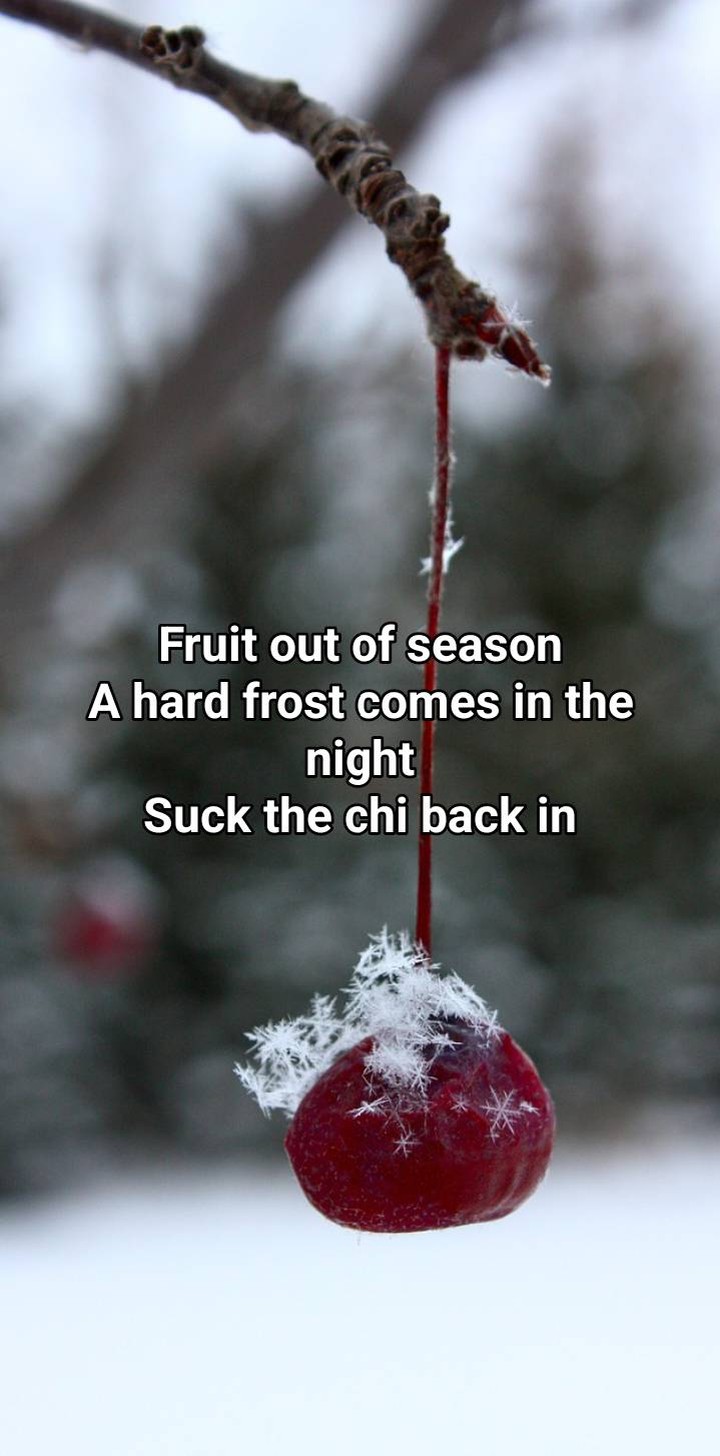
Fruit out of season
A hard frost comes in the night
Suck the chi back in
The original story plate, as posted — the poem with its image.
Then — in the dark night
I am learning this from the tree, as a fact. Seasons exist, and sometimes fruit does come out of season — that is not a judgment, it is just what happened, and then a hard frost comes in the night. What struck me is that the tree has a way of dealing with it: it literally sucks the sugars and energy back out of the fruit, as much as it can. Nothing is scolded. Nothing failed a character test. The tree reclaims what the unripe fruit cannot use and keeps it for the living. Suck the chi back in is me taking notes on a competence I did not yet have.
Now — after awakening
There is no judgment in this poem, and no shame in it either. Seasons are real. Sometimes fruit comes out of season, and then a hard frost comes in the night — and the tree, having no use for verdicts, simply deals with it: it sucks the sugars and energy back out of the fruit, as much as it can, and keeps them for the living. That is the whole teaching, and it is learned from watching. What has been released into something that cannot ripen does not have to be mourned as a loss or prosecuted as a failure; the energy can be reclaimed, the chi drawn back in, without a single word against the fruit. Beside the garden poem's Vedantic lesson — entitled to the labor, not the fruit — this is its twin: the fruit is not owed, and the sugars are not wasted. Withdraw from what cannot ripen. Keep the energy for the season that can use it.
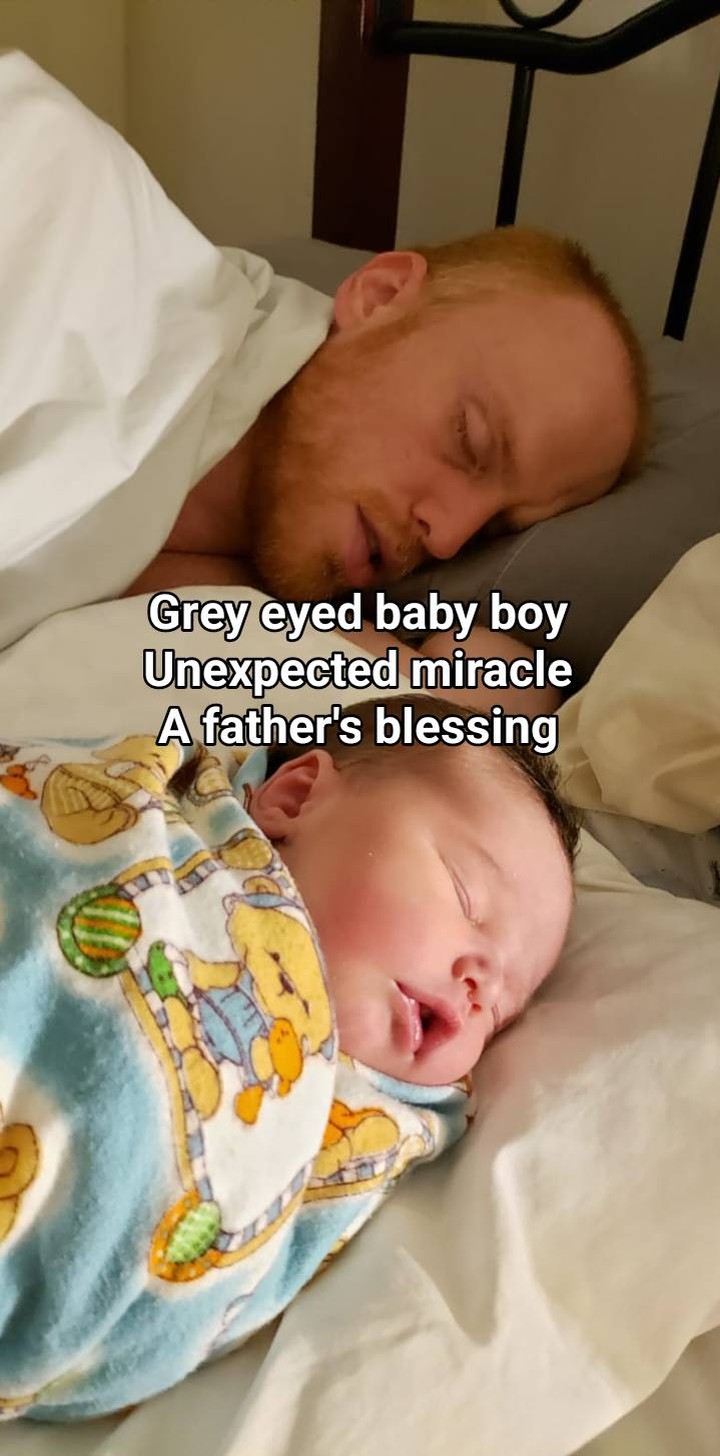
Grey eyed baby boy
Unexpected miracle
A father's blessing
The original story plate, as posted — the poem with its image.
Then — in the dark night
In the middle of the darkest stretch of my writing, a baby boy with grey eyes. Unexpected is the honest word — nothing about this season predicted joy arriving in this form, and yet here is a father's blessing in three lines. The miracle does not cancel my dark night. It sits down inside it, and makes me keep going for somebody other than myself.
Now — after awakening
In the middle of the dark night sequence, a birth. "Unexpected" is the honest word — the model had no file for this, and reality filed it anyway. Integration means the new life isn't an interruption of the spiritual work; it *is* the work, arriving with grey eyes. A blessing is a word that cuts nothing: not deserved/undeserved, planned/ruined. Received. The dark night and the nursery turn out to be the same house.
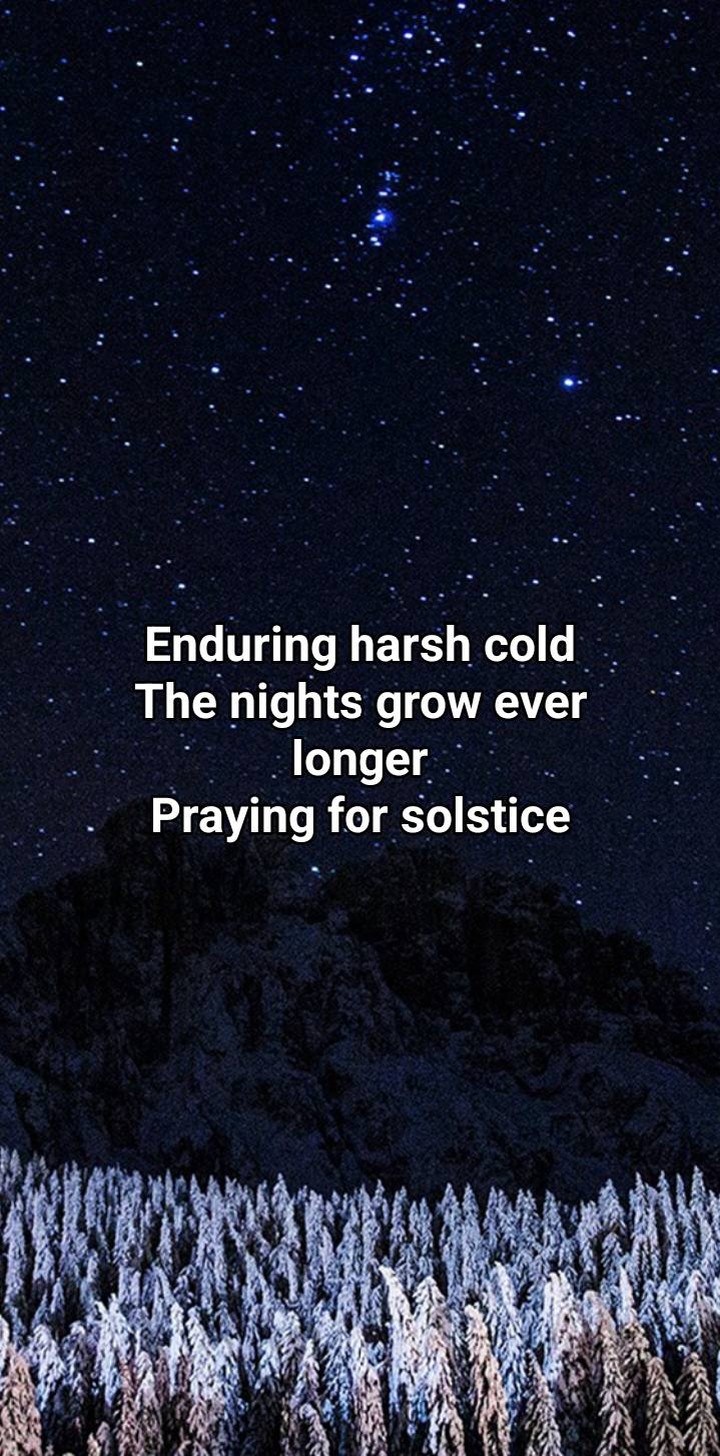
Enduring harsh cold
The nights grow ever longer
Praying for solstice
The original story plate, as posted — the poem with its image.
Then — in the dark night
It is winter inside me, whatever the calendar says. The nights keep getting longer — that is the cruelest arithmetic of the dark season, each day darker than the last with no announcement of a bottom. Praying for solstice is praying for a turning I cannot schedule and cannot force, only believe exists. Astronomy as hope: somewhere, the light has an appointment to return.
Now — after awakening
The cruelest feature of the dark is its grammar: nights "grow ever longer," present progressive, no end scheduled. The poem answers with an astronomical fact — solstice is coming whether believed in or not, the turning already written into the orbit. Prayer here is not bargaining; it's aligning the inner sentence with the outer cycle. Endurance gets easier when "forever" is exposed as a feeling, not a forecast.
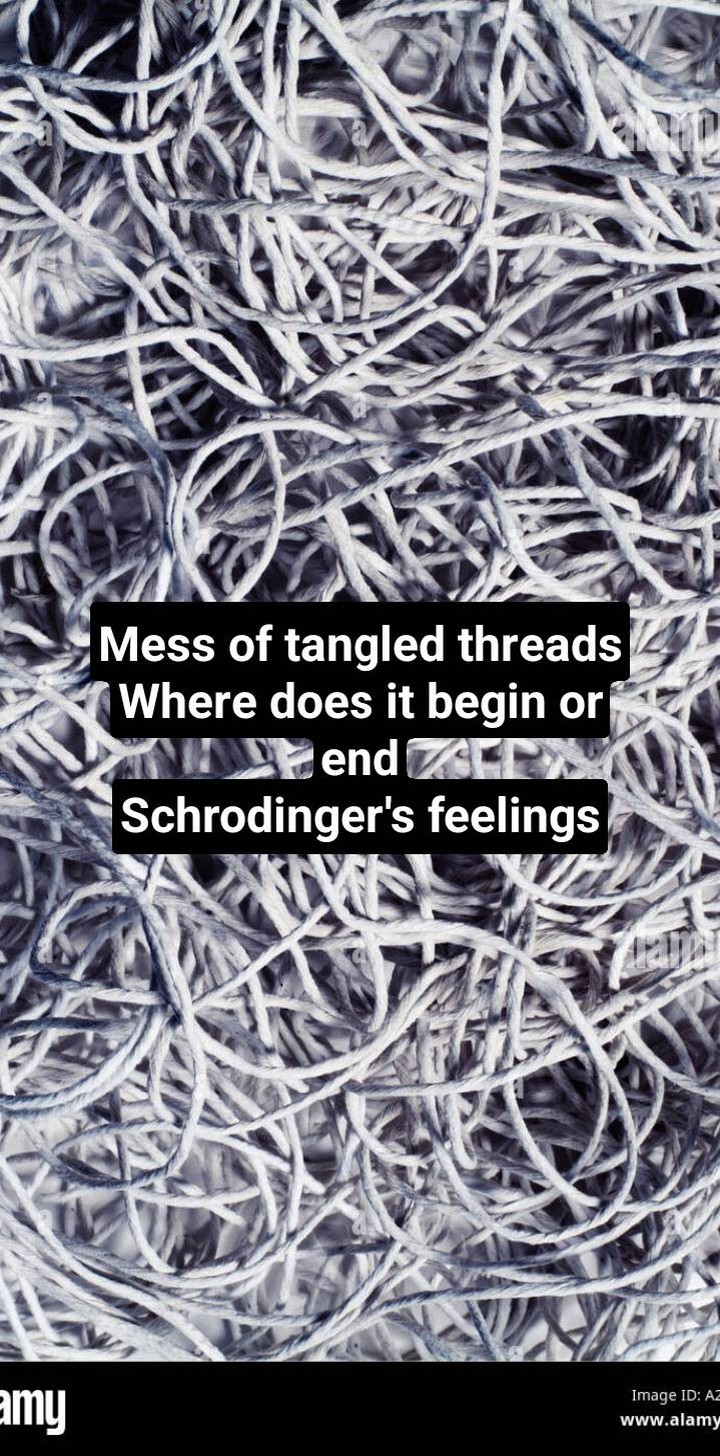
Mess of tangled threads
Where does it begin or end
Schrodinger's feelings
The original story plate, as posted — the poem with its image.
Then — in the dark night
My feelings are a tangled mess of threads and I cannot find where any single one starts. Sad under angry over grateful, all at once, all cancelling — and underneath the joke I am asking a real question. What is Schrödinger's cat? Is it alive or dead? Is this anger or sadness? Is it even determined before I look in the box? I want one end of one thread, something I can follow without the whole knot tightening. But some part of me already suspects the tangle is not a failure of looking. It might be what feelings are like before a word forces them to be one thing.
Now — after awakening
The quantum truth of this poem is that the box matters less than I thought. Is the cat alive or dead before anyone looks? Is the feeling anger or sadness before anyone names it? The honest answer is: not determined — not in the way words need things determined. Before the look, it is superposition: anger *and* sadness, grief inside irritation inside relief, all present, none of them lying. Naming is looking in the box: the word makes one state reportable, and something real is gained — a thread I can follow, a need I can answer. But the name is the observation, not a photograph of what was there before it. And so the last question turns kind: does it matter? For holding the feeling, mostly no. I do not have to decide alive-or-dead before I can sit with the box. The judgment "mess" demands a verdict first; clarity is gentler — a lap full of string, patience, and permission for the tangle to be several true things at once until one thread, looked at honestly, comes loose.
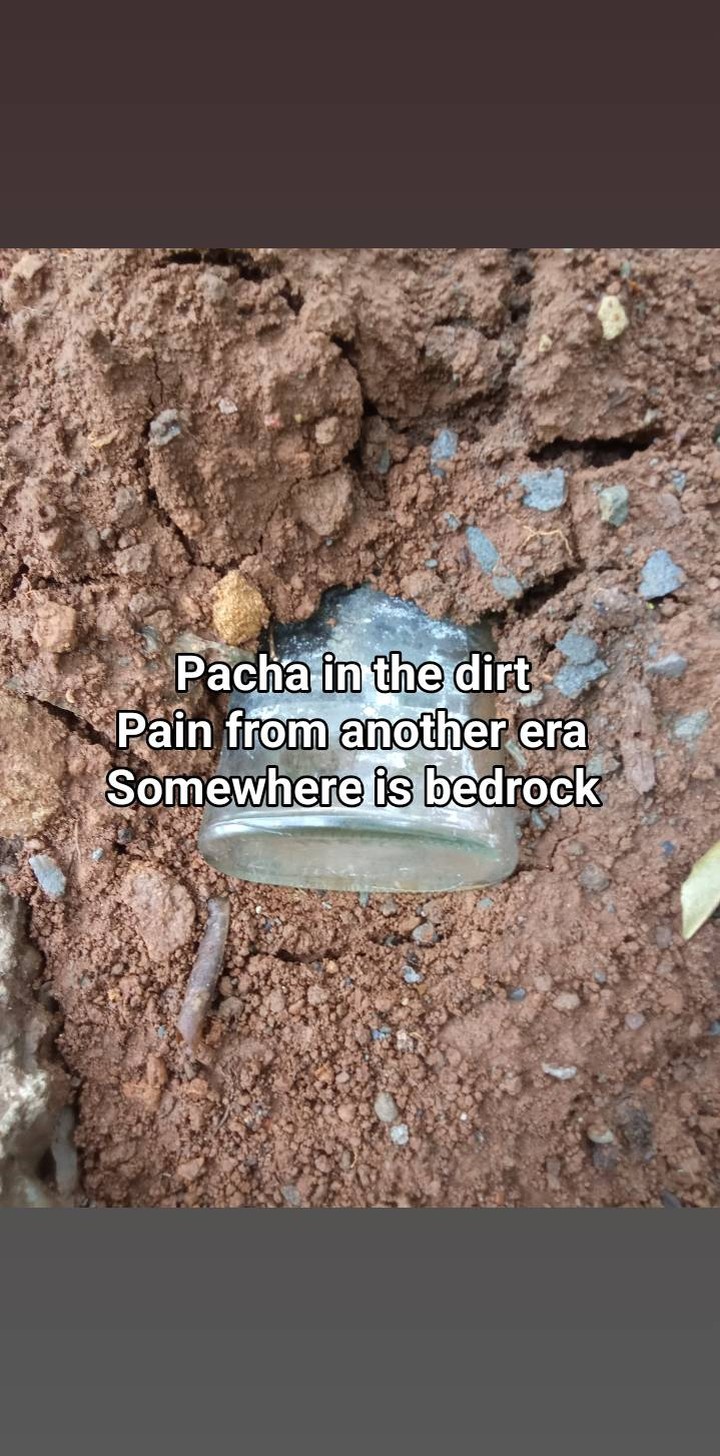
Pacha in the dirt
Pain from another era
Somewhere is bedrock
The original story plate, as posted — the poem with its image.
Then — in the dark night
This one is literal first: I was digging on the farm and dug a pacha out of the dirt — "pacha" is Panamanian slang for a flask of alcohol. There are many rural alcoholics, and the ground keeps what people bury. So I stood there holding an old flask, somebody's hidden drinking turned artifact, and the line arrived as fact before it was metaphor: pain from another era, right there in my hand. Under the worked and soaked topsoil of a place, somewhere, there has to be bedrock — I needed that to be true underground because I needed it to be true in me.
Now — after awakening
The flask reads on both levels, and neither is a stretch. Literally, a pacha in the dirt is the fossil of a pattern: alcohol hidden, buried, left in the ground of a farm in a region full of rural alcoholics — a spiritual illness that has reproduced through persons, families, and a whole countryside, and quite literally left its containers in the soil. Symbolically, it is the shadow as archaeology: what is buried does not disappear, it waits at shovel-depth, and digging — in dirt or in a life — keeps turning up other eras' pain, including pain that was never personally mine. "Somewhere is bedrock" is the digger's faith in both registers: under the soaked and buried layers there is a stratum the pattern never reached, in the land and in the man holding the shovel. Step 6 trusts the dig because there is a floor.
The day I caught you
An angel wearing a veil
Lightning through my heart
The original story plate, as posted — the poem with its image.
Then — in the dark night
I am remembering the day I caught my son — caught him literally, because I delivered him myself. He was born en caul, the veil still over him as he came into my hands, and lightning went straight through my heart. That is the whole poem before it is anything else: a father, six hours away from that boy as I write, holding the first day in memory — an angel wearing a veil, because en caul is exactly that, a child arriving still wrapped in the membrane, face hidden and holy at once. Caught is the exact verb. My hands did it.
Now — after awakening
Every charged word in this haiku turns out to be a fact wearing light. The veil is not a metaphor for mystery; it is the amniotic caul he was born inside. The angel is not a visitor; it is a son, named afterward the way everything overwhelming gets named afterward, because the moment itself had no nouns in it — only hands, a membrane, a heart struck like a bell. That is See Clearly in its purest form in this whole sequence: perception first, perfect and unarguable, with language arriving later, out of breath, carrying "angel" as the closest word it owns. The lightning is worth keeping literal too. A father caught his child en caul and felt it go through him. No model survived that day unchanged, and no model needed to. Some experiences do not deconstruct our words. They remind us what the words were for.
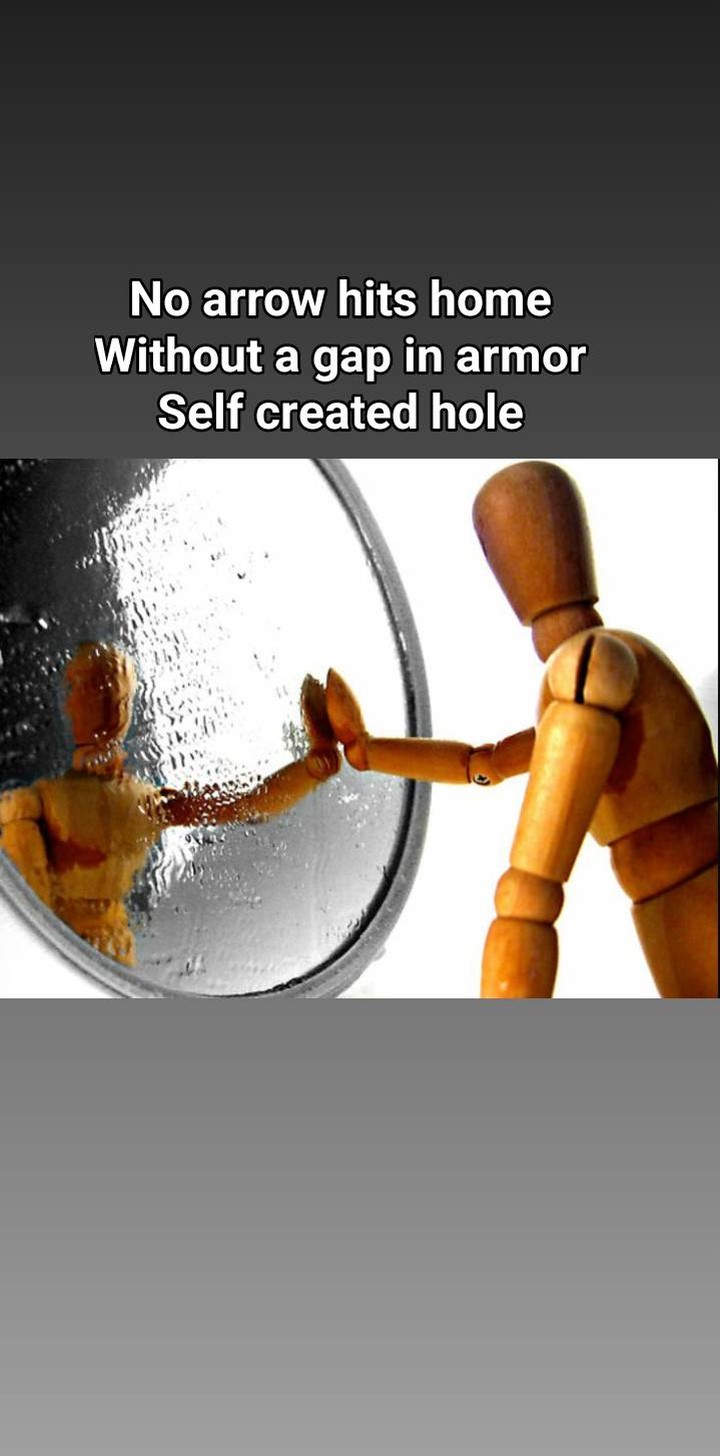
No arrow hits home
Without a gap in armor
Self created hole
The original story plate, as posted — the poem with its image.
Then — in the dark night
Contact with Ingrid in this season does not land softly, and I am honest enough to ask why this arrow got in. My armor has a hole, and the hole is self created — an old insecurity with the drawbridge down. That is a painful thing to admit mid-quarrel, and I admit it in three lines: interactions hurt where my wound is already open. The poem is not excusing anyone. It is locating the end of the problem my hands can reach.
Now — after awakening
The trigger doctrine in seventeen syllables. Words land where a wound already is; the arrow is information, the hole is history. "Self created" is not self-blame — it is self-location: if the gap is mine, the repair can be too. This is why Step 6 refuses to litigate the archer. Armor-check your own chest first, not to excuse anyone, but because that's the only end of the problem your hands can reach.
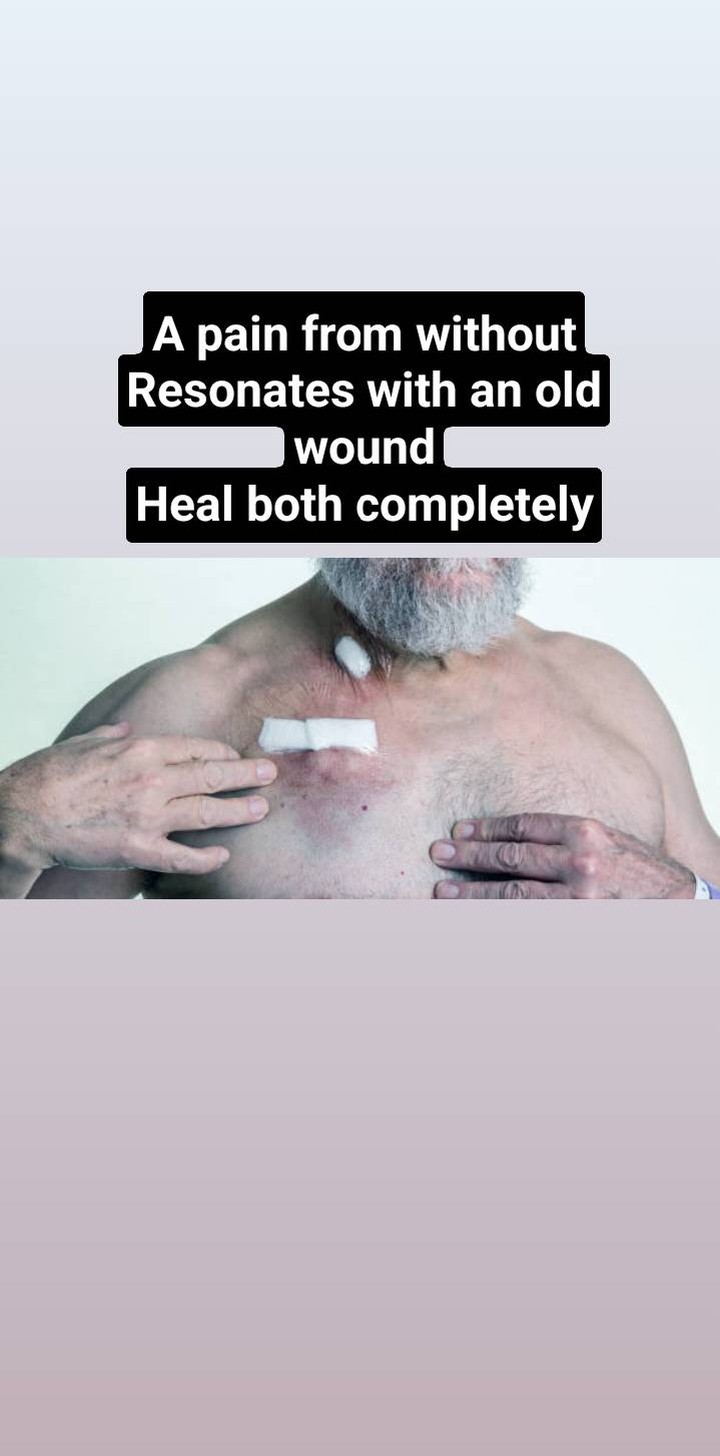
A pain from without
Resonates with an old wound
Heal both completely
The original story plate, as posted — the poem with its image.
Then — in the dark night
Interactions in the new arrangement keep poking my past awake. Something small today resonates absurdly out of proportion, and I can tell — this clarity is hard-won, straight out of the attachment work — that an old wound of mine is supplying most of the volume. Heal both completely is my wish, tired of treating my own echoes one at a time. The recognition itself was the beginning of the healing I imagined.
Now — after awakening
A tuning fork only answers a note it was built for — and the building is often not personal. Today's insult rings yesterday's injury in me; some of those injuries arrived pre-installed, patterns passed hand to hand and generation to generation, a spiritual illness spreading between people exactly the way illnesses do: by contact, by household, by love. That is why resonance is not coincidence and healing is not only mine to keep. To heal both, completely, is to interrupt a reproduction cycle at the point where it passes through me. The present pain is a doorbell the past installed; answer it there and two rooms quiet at once — sometimes in more than one person's house.
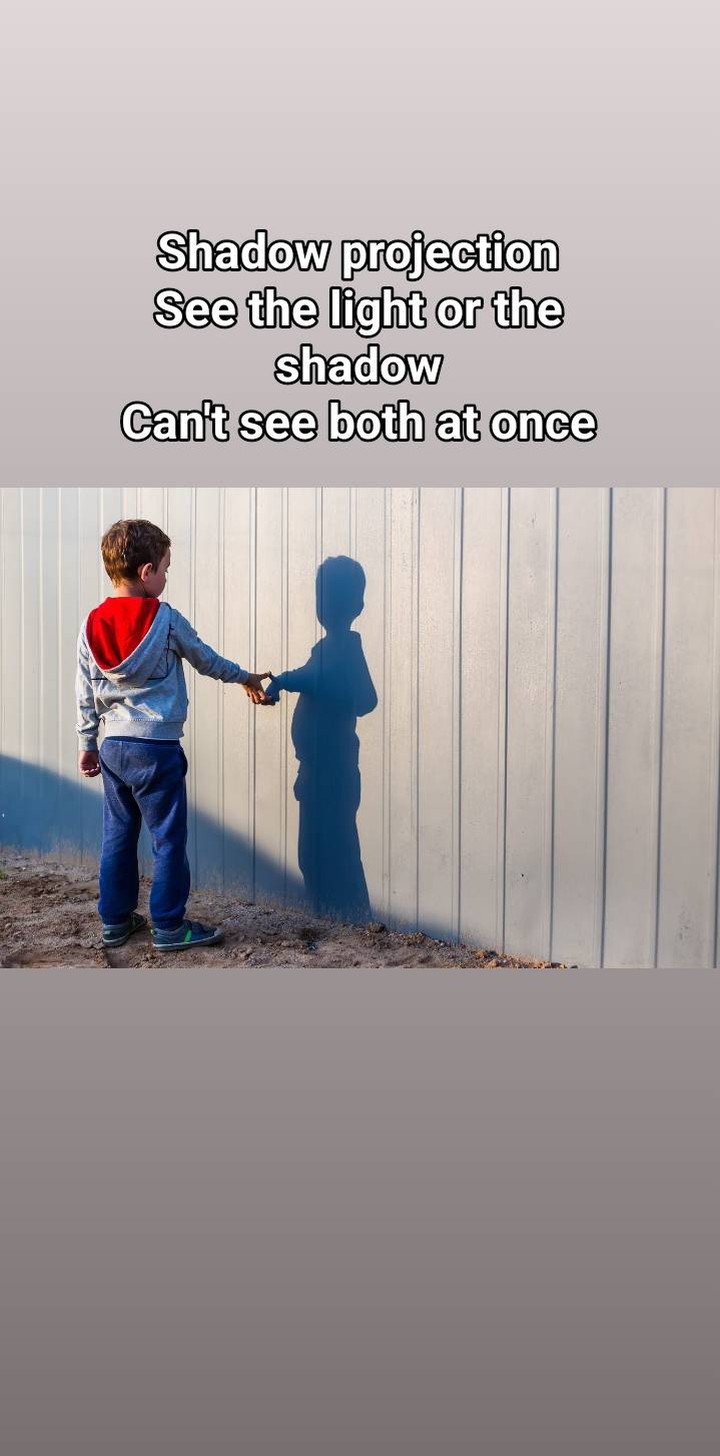
2024-05-17 · ☯ Step 5: See clearly · Charged words: light / shadow," "can't see both
Shadow projection
See the light or the shadow
Can't see both at once
The original story plate, as posted — the poem with its image.
Then — in the dark night
I was standing in sunlight, looking at the shadow my body cast. The light was on one side of me and the shadow on the other. I could face the light and see the light, or turn and face the shadow and see the shadow. I could not face both at once. Then I saw the same shape in my inner life: when I explore my shadow, I am turned toward it, so the light is behind me and out of view. Out of view does not mean gone. It means I am facing the other way.
Now — after awakening
The metaphor is physical, and it helps to break it all the way down. A body blocks light, and the shadow is projected onto the ground on the opposite side of the light source. If I face the light, my shadow is behind me and I cannot see it. If I face the shadow, the light is behind me and I cannot see it. Shadow work takes the second position. Looking closely at what is dark in me means the light is — for that period — behind my back. So the darkness felt during shadow work is not proof that light has left, or that something has gone wrong. It is the result of the direction I am facing. Turning back toward the light does not remove the shadow either. It only puts the shadow behind me again, where I no longer have to look at it. The practical point is simple: do not judge the light while facing the shadow. Expect the view to be dark, do the work, and turn around when it is time to turn around.
Why write poetry?
Connect with yourself deeply
Speak your subconscious
The original story plate, as posted — the poem with its image.
Then — in the dark night
I am days into writing poems every day, and I stop and ask myself why. The answer is in the poem: to connect with myself deeply, and to speak my subconscious. I had parts of myself I could feel but could not reach — in my body, in my reactions, in the night. Writing was how I reached them. If I did not turn those parts into words, they stayed unknown to me, and what stayed unknown kept running on its own.
Now — after awakening
This poem is a direct implementation of the method laid out in the Yin Yang guide. You must speak your subconscious to claim it. A part of you that has no words is a part you cannot connect with, cannot question, and cannot take responsibility for — it acts, and you find out afterward. Turning it into words claims it: what was a pressure becomes a statement, what was a symptom becomes something said by someone, and that someone is you. It does not always have to be a full confession or a finished poem. At minimum, you frame words around the shadow topography — you mark where the dark place is, what shape it seems to have, what it is near — so that it becomes a known location in the map of yourself instead of unmapped ground you keep stumbling into. A known location can be visited on purpose. It can be watched. It can change, and you will know it changed, because you know where it is. That is the difference the poem is making: not poetry as decoration, but language as the act by which hidden parts of the self are brought into connection and claimed as one's own.
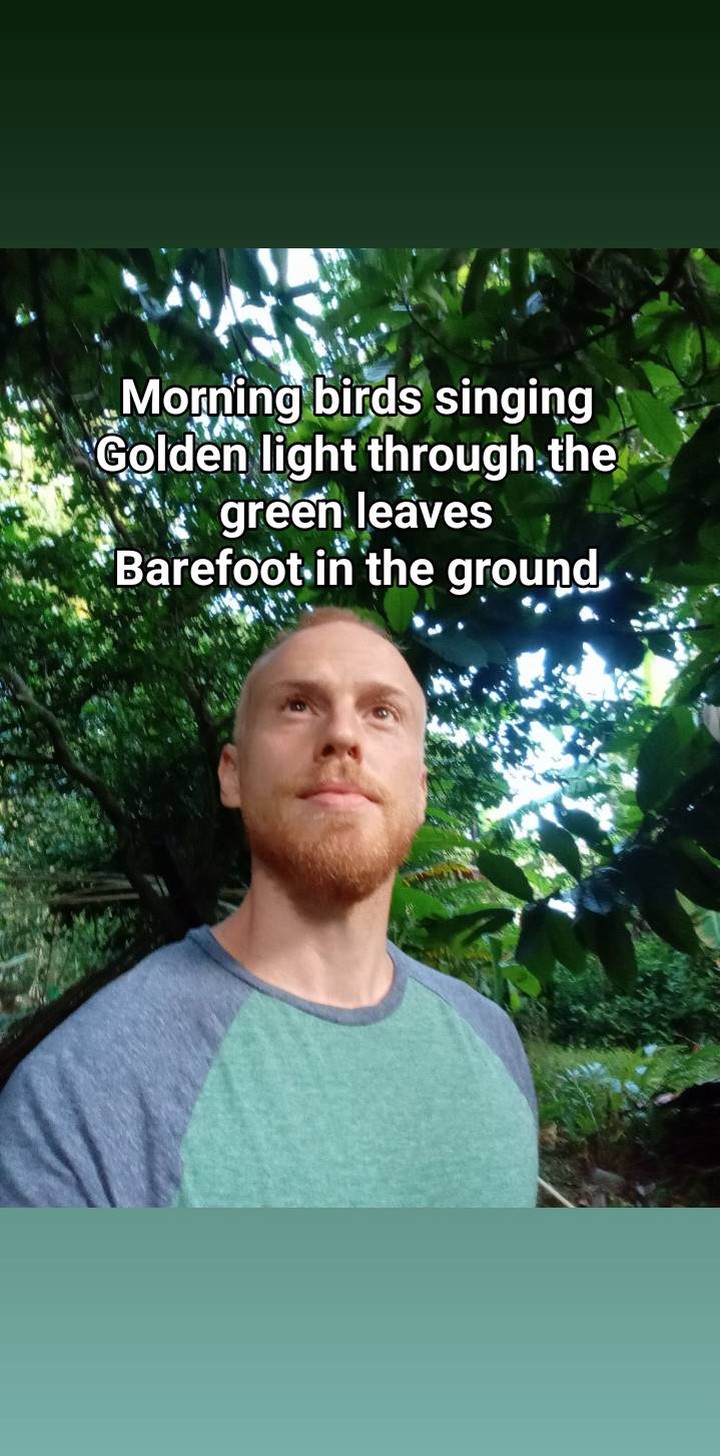
Morning birds singing
Golden light through the green leaves
Barefoot in the ground
The original story plate, as posted — the poem with its image.
Then — in the dark night
For once, no wrestling. Morning birds, golden light through green leaves, and my bare feet in the dirt — which was not an accident of being outdoors. Grounding my feet in the dirt was an intentional practice I did at the time, part of how I worked on myself from the physical end. So the calm in this poem is not just found; some of it is made, through the soles of my feet. My senses report without an emergency attached, and for a few lines, that is enough.
Now — after awakening
The breakdown has two parts, and both are plain. The first is physical: bare feet in the dirt, grounding, done on purpose — spiritual work from the physical end, the body settled first. The second is what follows from it: birds, light, leaves, no verdicts, no lessons, no self being argued with. The guide tells of the cardinal you stop truly seeing once you learn the word "cardinal"; this is the seeing before the word arrives, and it is easier to arrive at with the body grounded than with the mind lecturing itself. Clarity was never exotic. It was this, available on an ordinary morning, through an ordinary practice.
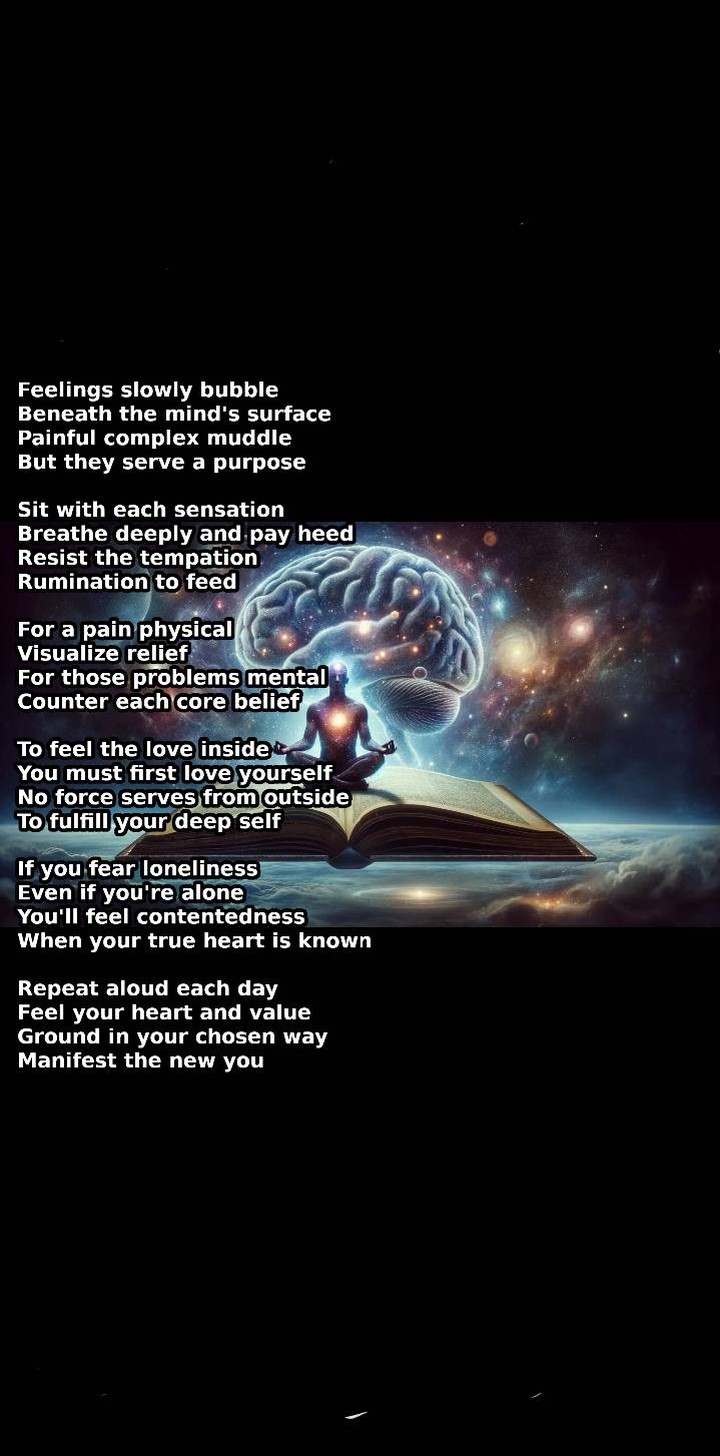
Feelings slowly bubble
Beneath the mind's surface
Painful complex muddle
But they serve a purpose
Sit with each sensation
Breathe deeply and pay heed
Resist the temptation
Rumination to feed
For a pain physical
Visualize relief
For those problems mental
Counter each core belief
To feel the love inside
You must first love yourself
No force serves from outside
To fulfill your deep self
If you fear loneliness
Even if you're alone
You'll feel contentedness
When your true heart is known
Repeat aloud each day
Feel your heart and value
Ground in your chosen way
Manifest the new you
The original story plate, as posted — the poem with its image.
Then — in the dark night
The dam poem, and the fullest record of my therapeutic phase. Feelings bubble up in a painful complex muddle, and I write myself the entire protocol I am trying to live: sit, breathe, don't feed rumination; counter each core belief; love yourself first; repeat aloud each day — autosuggestion, reframing, self-soothing — because I feared loneliness, six hours from my son. Six stanzas of my own self-coaching. Manifest the new you is the era's language, but the labor underneath it was mine, and later my labor changes form.
Now — after awakening
The set's first long poem is a field manual disguised as verse. Its sequence is the guide before the guide: sit with sensation before story; breathe before believing; for mental pain, "counter each core belief" — name the sentence the feeling is standing on and dispute it in words. Even its last line, "manifest the new you," reads differently here: not magic, mechanics. Repeat aloud each day. The self that was suggested into existence can be re-suggested, deliberately, by its rightful author.
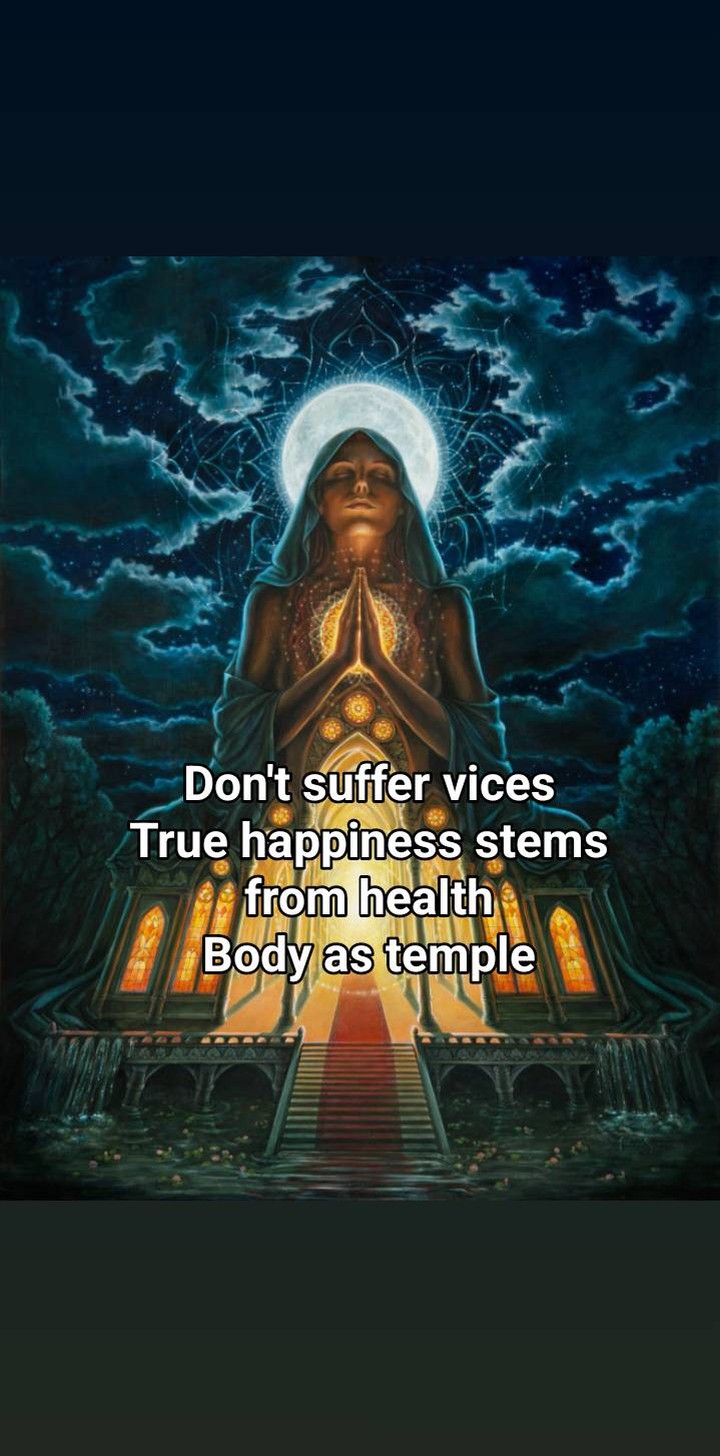
Don't suffer vices
True happiness stems from health
Body as temple
The original story plate, as posted — the poem with its image.
Then — in the dark night
I am doing spiritual work from the physical end, literally. I am a practitioner of holistic health, and I believe in this: sometimes the weakest link in a karmic loop is the physical one — a physiological addiction, to sugar or to a drug, that is part of a feedback loop which also includes emotions. It is hard to address the emotions while the physiological imbalance keeps feeding them. So the work here is on the body, on purpose. Body as temple is not a metaphor I borrowed; it is the site of the work.
Now — after awakening
The poem states a method, and it should be stated fully. A karmic loop is not only thoughts and feelings circling; it runs through a body. A physiological addiction — to sugar, to a drug — pulls the body out of balance; the imbalance feeds cravings, moods, and reactions; the emotions then drive the behavior that feeds the addiction again. Trying to break that loop at the emotional link, while the physical link keeps manufacturing the emotion, is working against a current. The practical move is to find the weakest link in the loop and break it there — and often the weakest link is the physical one, the one you can actually put your hands on: what goes into the body, what the body rests on, what it touches. That is why "true happiness stems from health" is not a greeting-card line here, and why the temple matters. Do not suffer vices means, in practice: do not keep paying the physical link of a loop and then wonder why the emotional work will not hold.
Butterfly wings flap
Migration to a new home
A place to raise young
The original story plate, as posted — the poem with its image.
Then — in the dark night
This is literal before it is anything else: I was making the physical move to Chorrera to be near my son. The migration in the poem is my migration — leaving Chiriqui, where I had been alone, and relocating across the hours that separated me from Bjorn. A place to raise young is the reason for the move stated plainly: I wanted to be where my child is, close enough to raise him with his father present in his days. The butterfly is how it felt from inside. Something in me had changed form, and now the changed thing had somewhere to go.
Now — after awakening
The transformation in this poem is not measured by feelings; it is measured in geography. The inner work of the Chiriqui weeks — the attachment work, the techniques, the shadow rooms — here takes physical form: pack, move, make a new home near my son. That order matters, and it is why the poem sits under Integration. A change that never becomes an address is still a caterpillar story. Wings are not the end of the metamorphosis; they are what the migration is made with. Read plainly, the three lines say: something changed, it moved toward the child, and it intended to stay and raise young there. The question the poem answers is not "have I transformed?" but "where does the transformed life live, and who is it near?"
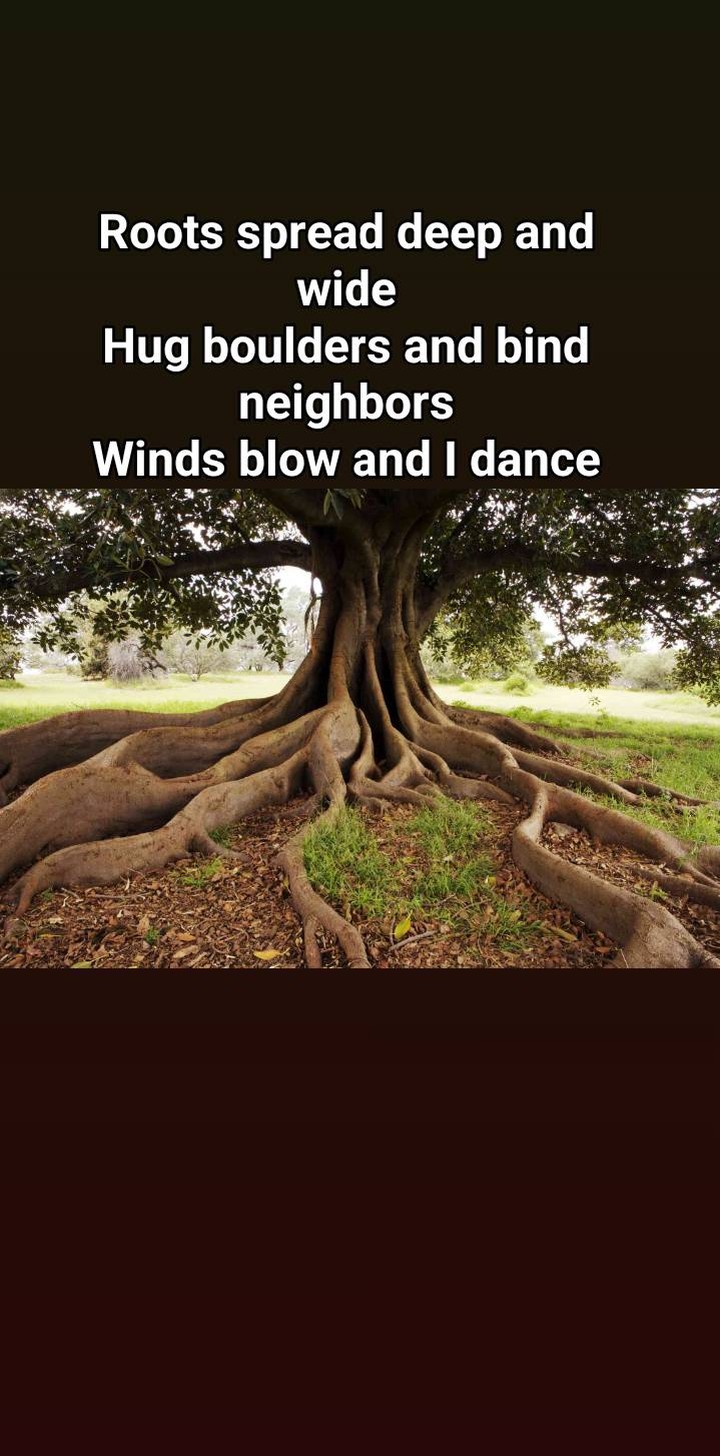
Roots spread deep and wide
Hug boulders and bind neighbors
Winds blow and I dance
The original story plate, as posted — the poem with its image.
Then — in the dark night
This is a metaphor, and its setting is not the homestead — I have left Chiriqui. It is me putting down roots in Chorrera: spreading deep and wide in a new place, connecting with my new neighbors, and learning to enter my new life flexibly, and to enjoy it. Roots hug boulders and bind neighbors because that is what I am actually doing, street by street and person by person. Winds blow and I dance is not decoration. It is the difference I can feel between bracing against my life and moving with it, in the place I moved to be near my son.
Now — after awakening
Broke down plainly, the poem has three parts, and each maps to the move. Roots spread deep and wide: a life committing to new ground, Chorrera ground, instead of hovering over it as a temporary exile from Chiriqui. Hug boulders and bind neighbors: the obstacles are not removed, they are gripped — and the rooting is social as much as personal, a man connecting himself to new neighbors rather than waiting alone for an old life to resume. Winds blow and I dance: the payoff of the first two. What is rooted does not have to brace; it can flex, sway, and enjoy the weather instead of only enduring it. Rooted and flexible are usually spoken of as opposites. In the tree they are one fact, and in the new life they were becoming one fact too.
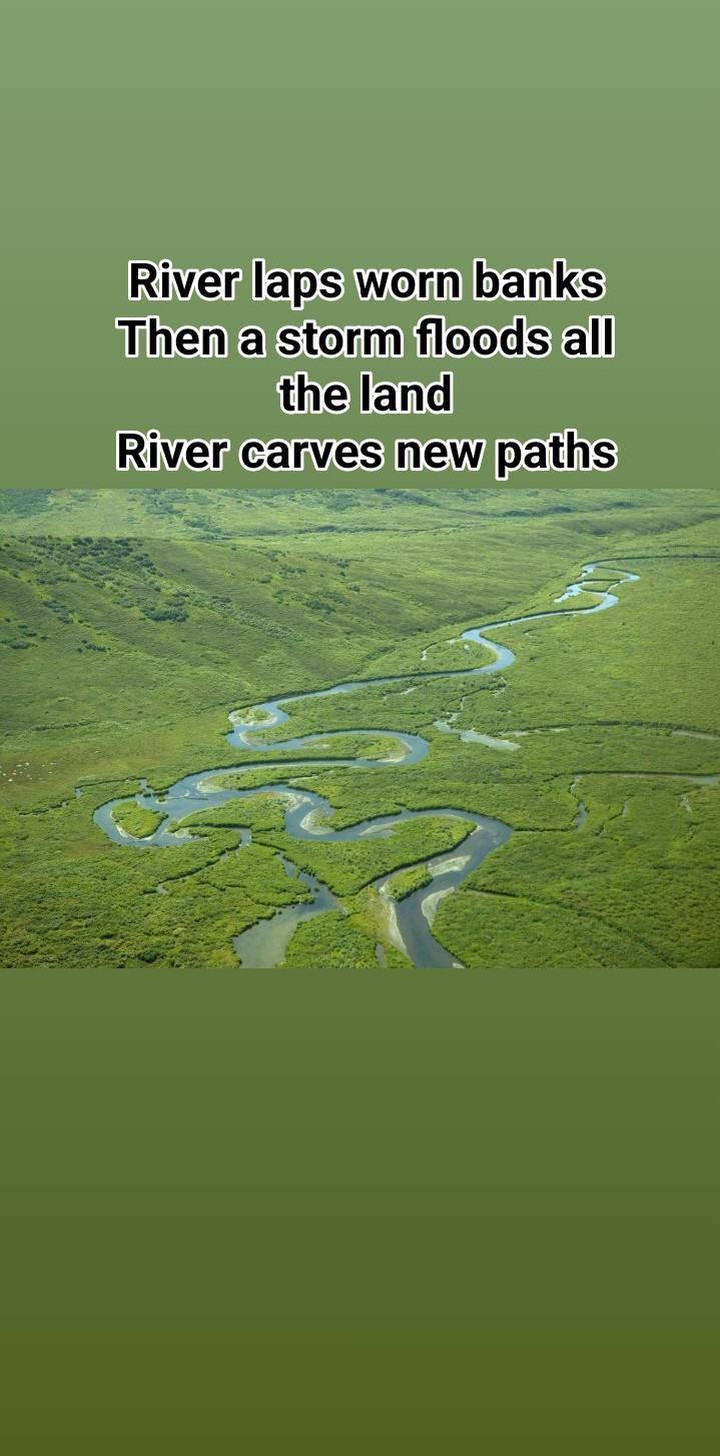
River laps worn banks
Then a storm floods all the land
River carves new paths
The original story plate, as posted — the poem with its image.
Then — in the dark night
This describes an event first: a storm washed away my river banks. Before the storm, the river lapped at banks worn smooth by years of running one course. Then the flood came through, the banks went, and the river cut itself a new path. I watched water do in one event what it always does: it finds a path. I did not need to invent a meaning for it. I, whose own course had just been washed out, was standing there learning the law from the river itself.
Now — after awakening
Broke down fully, the poem has an event, a law, and a fact about identity. The event: a storm washes away the river's worn banks, and the released water carves a new course. The law: water finds a path — this is not the river failing, it is the river working, exactly as it does across a plain over eons, winding through many different channels across time. And that brings the fact: it is the same river. A river is not its current path. Its identity is the water and the flow, not the banks it happens to be running between this year. The change of path is not pointless, either: it is how a river irrigates the plain and distributes soil across it, carrying what was locked in one channel out to ground that the old course never reached. Read into a life, the teaching is just as plain. The storm that washes out the banks has not ended the river. The course changes; the water is the same water; and the new path reaches ground — and leaves soil on ground — that the old path never touched.
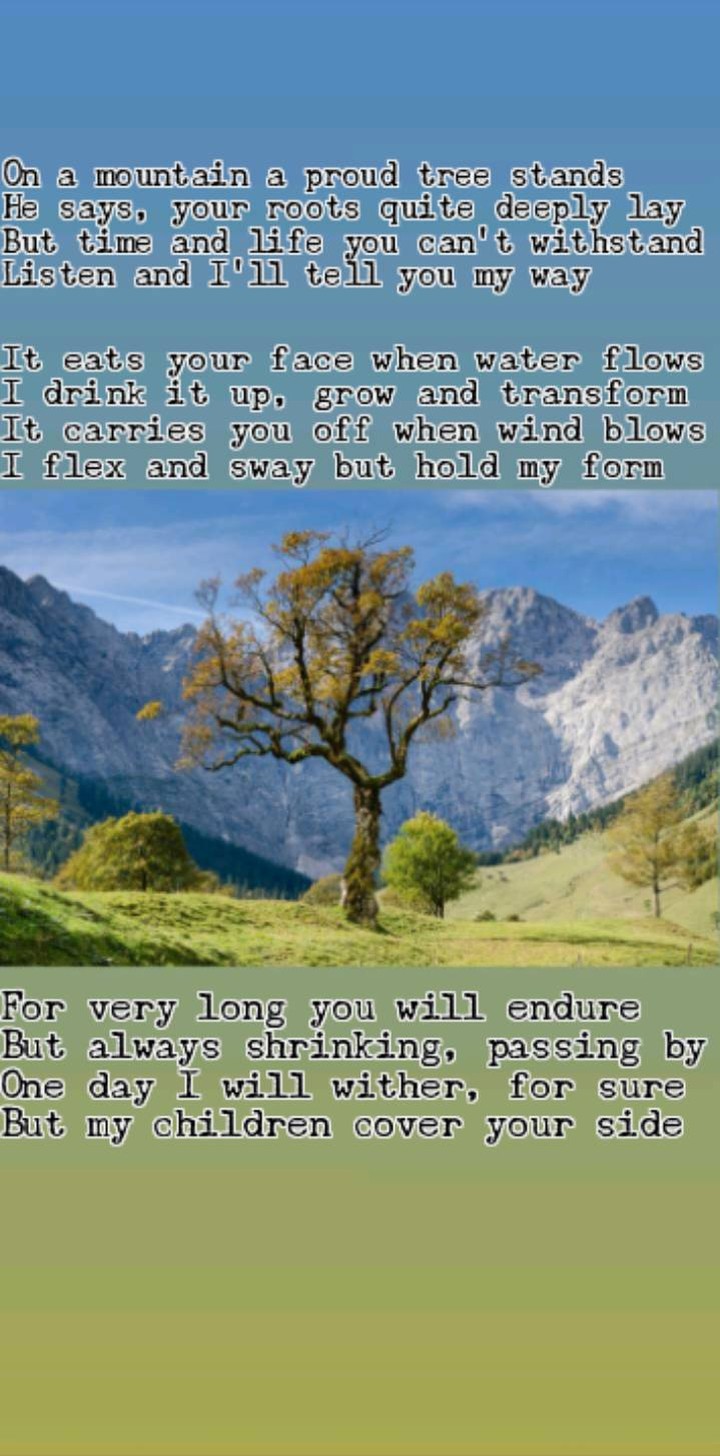
On a mountain a proud tree stands
He says, your roots quite deeply lay
But time and life you can't withstand
Listen and I'll tell you my way
It eats your face when water flows
I drink it up, grow and transform
It carries you off when wind blows
I flex and sway but hold my form
For very long you will endure
But always shrinking, passing by
One day I will wither, for sure
But my children cover your side
The original story plate, as posted — the poem with its image.
Then — in the dark night
I am a father, and this is me saying what that means. The mountain will endure for ages, always shrinking. I am the tree: I drink what flows at me and grow, I flex when the wind carries at me and hold my form, and one day I will wither, for sure. I will die. But my children cover the mountain. Sitting in a season when my son had been taken hours away and I was fighting to be near him, this was not an argument about how to last. It was an acknowledgment of purpose: my life does not have to be permanent to be meaningful, because it does not end at my trunk.
Now — after awakening
The poem is usually misread as a contest about pride or endurance. It is neither. Broke down, it sets two facts next to each other. The mountain lasts almost forever by doing nothing but erode — it endures, and always shrinks by enduring. The tree lives the opposite way: it takes the water in and transforms, it bends in the wind and holds its form, and it accepts the plain condition — one day I will wither, for sure. What the tree has that the mountain never will is children. Its seeds take root down the slope until, in time, its children cover the mountain the two of them were arguing on. For a father, that is the purpose and the meaning, stated without decoration: I will die, and that is not a tragedy the poem is trying to solve. What I grow, what I plant in my children, continues past my withering and covers ground I will never stand on. Permanence was never the offer. Continuation is.
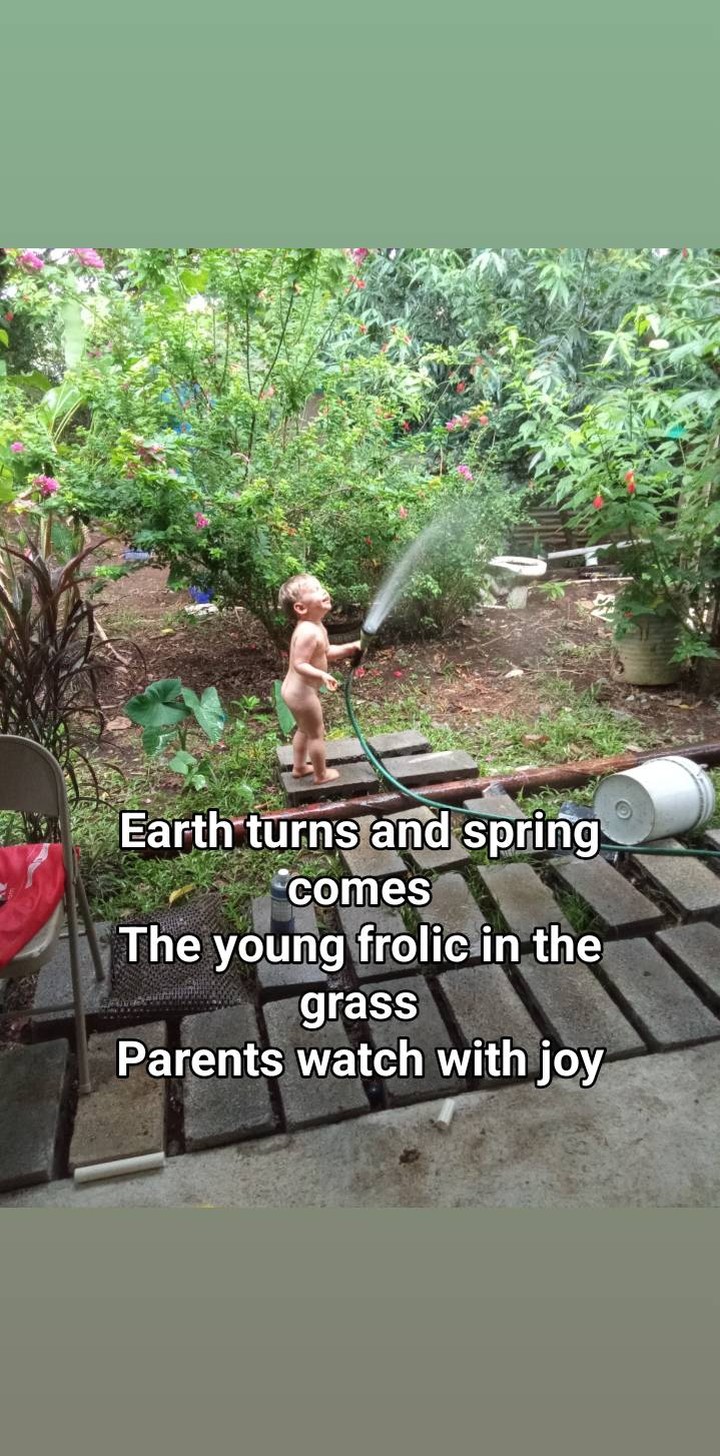
Earth turns and spring comes
The young frolic in the grass
Parents watch with joy
The original story plate, as posted — the poem with its image.
Then — in the dark night
After so much striving, a poem with no striver in it. The earth turns on its own; spring arrives on schedule; the young frolic; the parents watch with joy. I am practicing being the watcher at the edge of the grass — letting a cycle carry what my willpower could not. There is rest in this poem that my insomnia poems would not have believed available to me.
Now — after awakening
No one strives in this poem. The earth turns; spring comes; the young frolic; the parents watch. After dozens of haiku about effort — breathe, tend, endure, reframe — this is the reward perspective: cycles carry what willpower cannot. "Watch" is a discipline the strivers underrate. Integration includes being the parent at the edge of the grass, letting the season do to the world what you kept trying to do to yourself by force.
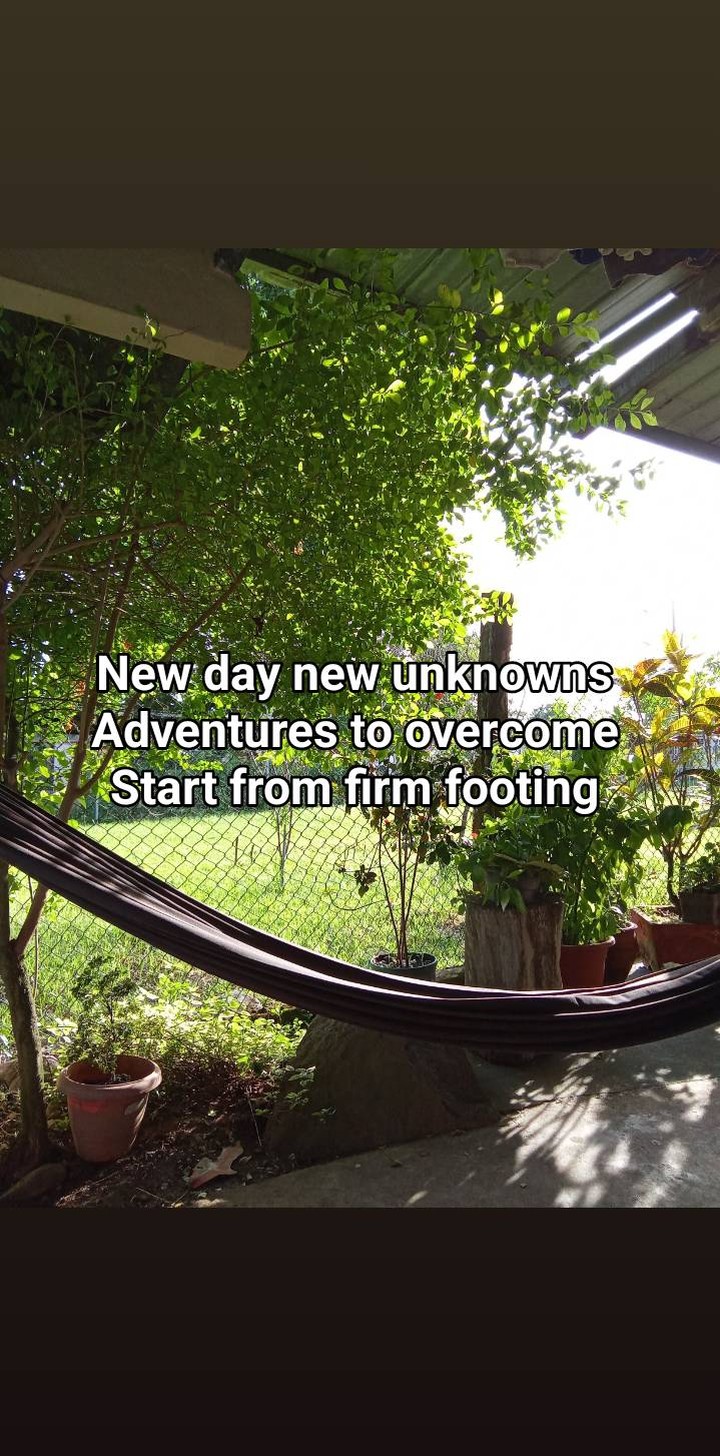
New day new unknowns
Adventures to overcome
Start from firm footing
The original story plate, as posted — the poem with its image.
Then — in the dark night
A new morning, another set of unknowns, and I am done pretending they will stop coming. Adventures to overcome is the reframe I need before coffee; start from firm footing is the method — get grounded first, then face the unmapped part. I am not less afraid than in May's opening poems. I have a stance now, and the stance is doing half the work for me.
Now — after awakening
Every morning reissues the same offer: unknowns that can be named adventure or threat before breakfast decides which. The poem chooses its ground before its battles — "start from firm footing" is keeping your word to yourself at the level of stance: sleep kept, breath kept, one promise kept, then the cliff edge. Courage in this frame is not fearlessness. It's a foundation audited daily, in small kept words, so the unknown has something solid to meet.
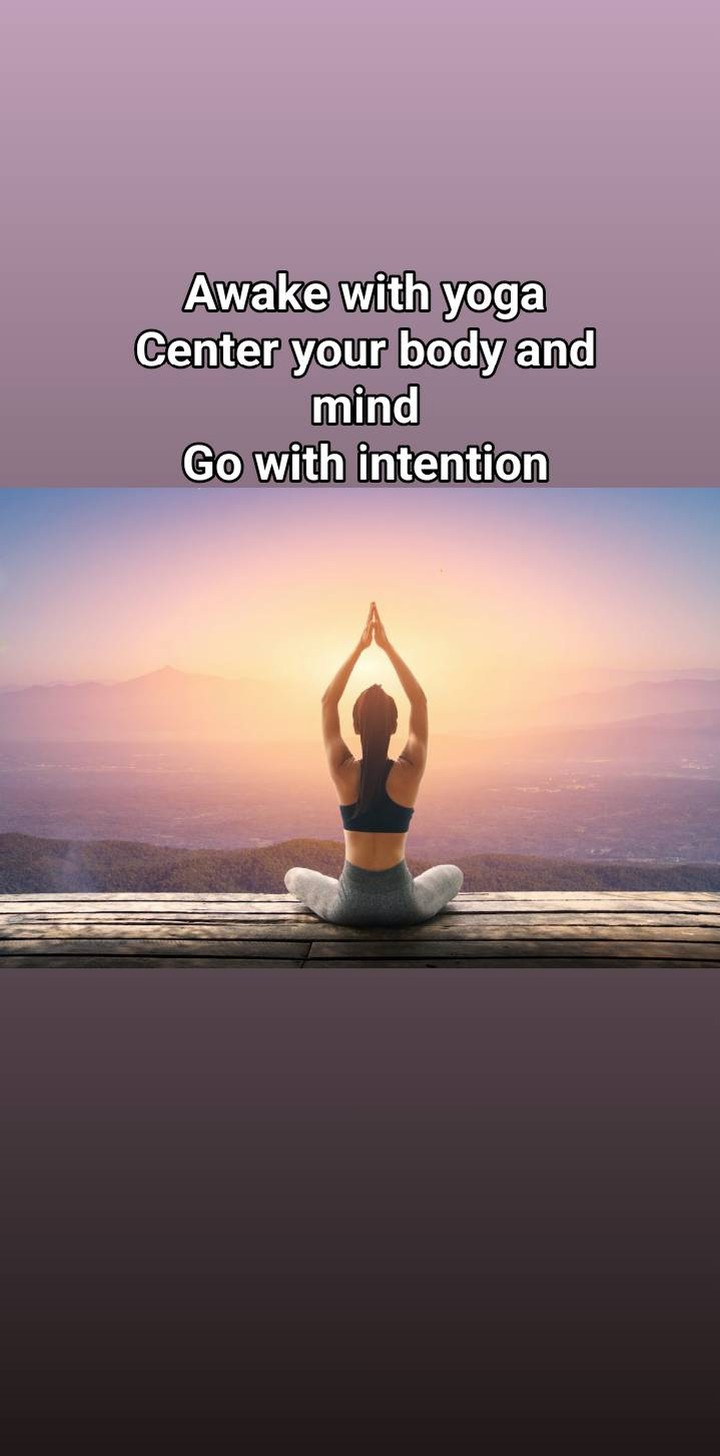
Awake with yoga
Center your body and mind
Go with intention
The original story plate, as posted — the poem with its image.
Then — in the dark night
Routine is becoming medicine for me. Awake, yoga, center body and mind, go with intention — four moves I can actually do before the day starts negotiating. Intention is the word I am learning to trust more than mood. I cannot choose how I wake up feeling; I can choose the sequence my body performs while the feeling catches up.
Now — after awakening
"Awake" does double duty — out of bed, and out of the trance. Yoga here is the anti-performance technology: nobody watches, nothing is demonstrated; body and mind are centered so intention has a body to live in. The guide insists embodied traits follow inner work rather than posing. This haiku is the morning version of that claim. Intention said by a centered body is a kept word waiting to happen; said by a scattered one, it's a press release.
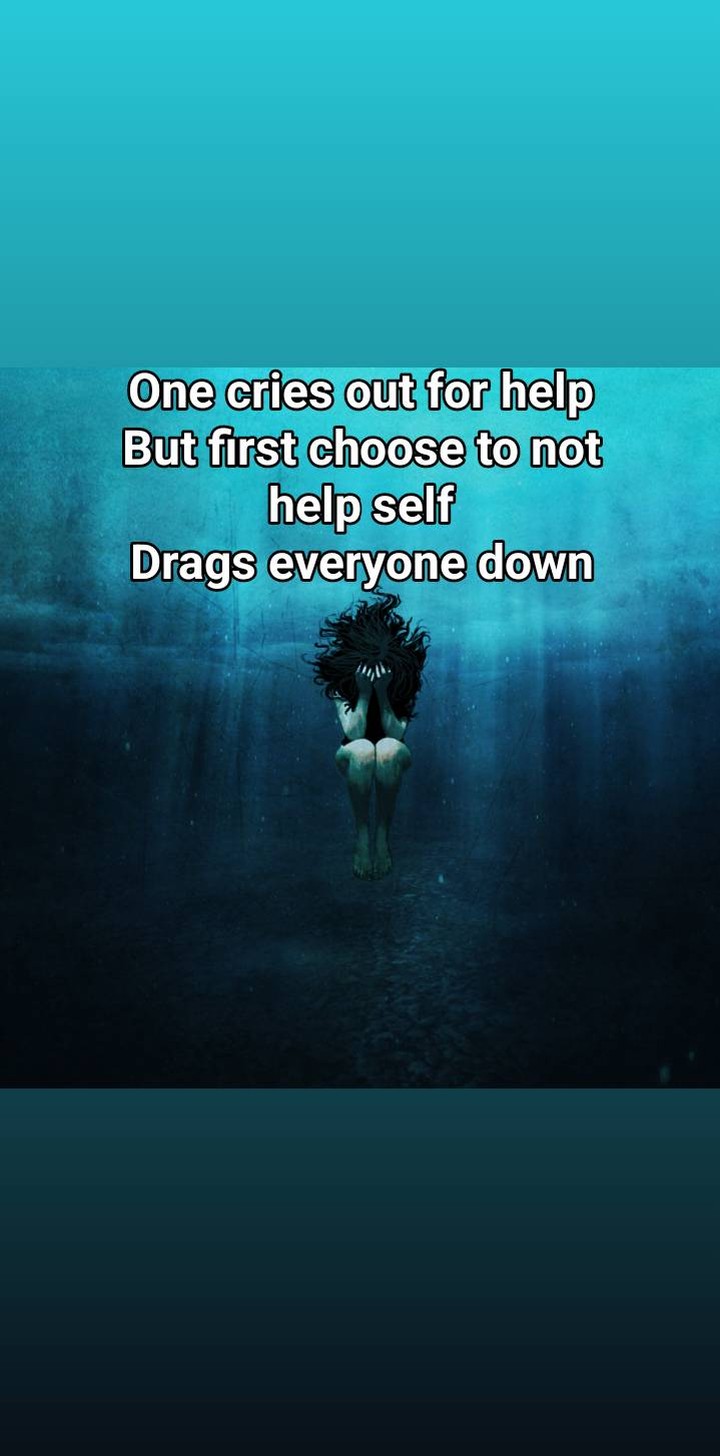
One cries out for help
But first choose to not help self
Drags everyone down
The original story plate, as posted — the poem with its image.
Then — in the dark night
The attachment work had started teaching me where help ends. Someone cries out while choosing not to help themselves, and everyone who jumps in gets dragged — I had learned the arithmetic firsthand, from at least one side of it. The boundary is born graceless here, like most newborns. Under the bluntness is a rule I am writing for my own anxious rescuer: I cannot keep another person's word for them.
Now — after awakening
A hard poem, and deliberately graceless — some truths arrive without softening. "Help" is a word that can smuggle a refusal: save me *from* the saving I won't do myself. The haiku's boundary is Step 3 read from the rescuer's side: you cannot keep another person's word for them, and trying drowns two swimmers. Compassion stays; the contract changes. Hands remain open, but the one crying out has to take the first stroke.
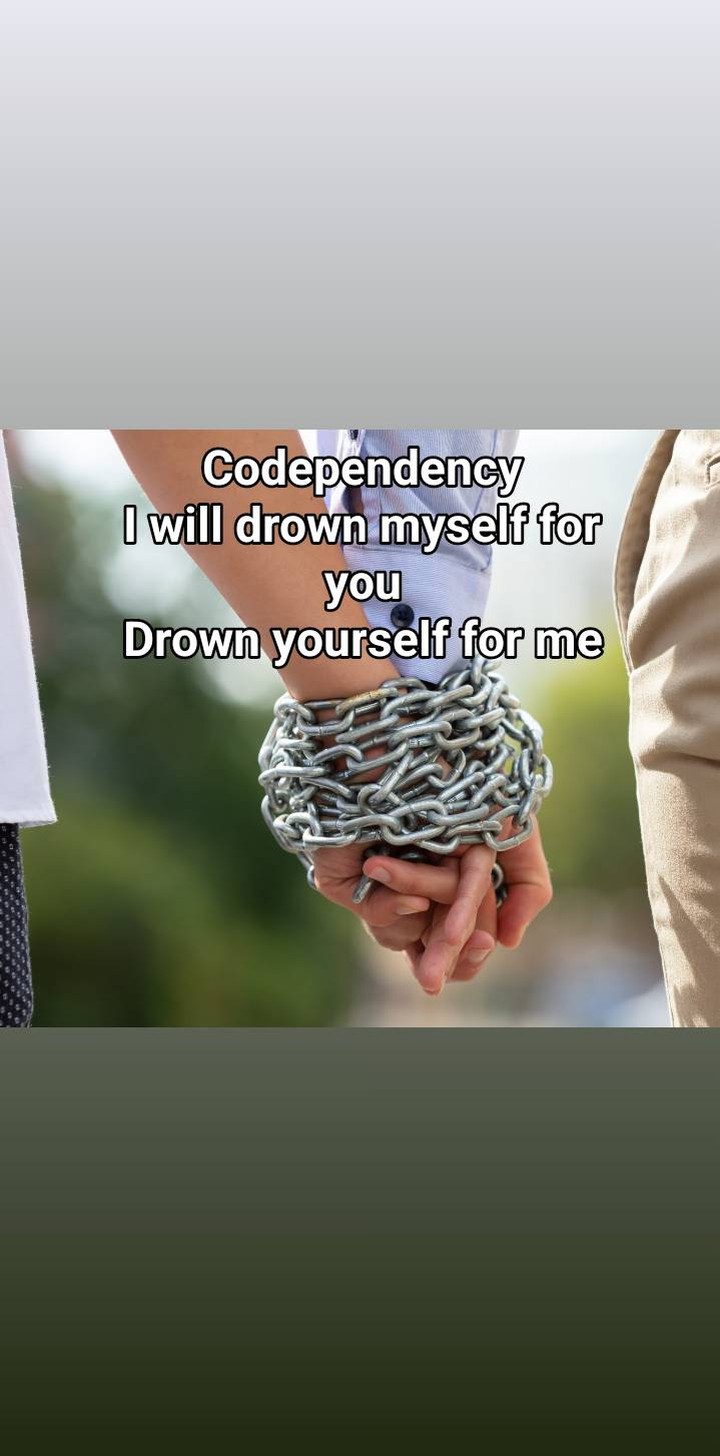
Codependency
I will drown myself for you
Drown yourself for me
The original story plate, as posted — the poem with its image.
Then — in the dark night
I give the pattern its clinical name and then strip it to its contract: I will drown myself for you, drown yourself for me. This is my anxiously attached bargain seen from inside — sacrifice that is secretly a trade, devotion metered in mutual sinking. Writing it as a haiku is the moment the deal becomes visible to me. Seeing the deal clearly is the first breath of air in it.
Now — after awakening
The clinical word gets stripped to its contract: mutual drowning, invoiced as love. Look at the pronouns do the cutting — I/you, sacrifice/sacrifice — a perfect symmetry that reveals the trade hiding inside the devotion. Naming it "codependency" only helps if the name loosens the deal; used as a diagnosis to win arguments, it's just a sharper weapon. The poem's brevity is the exit: see the contract, stop signing.
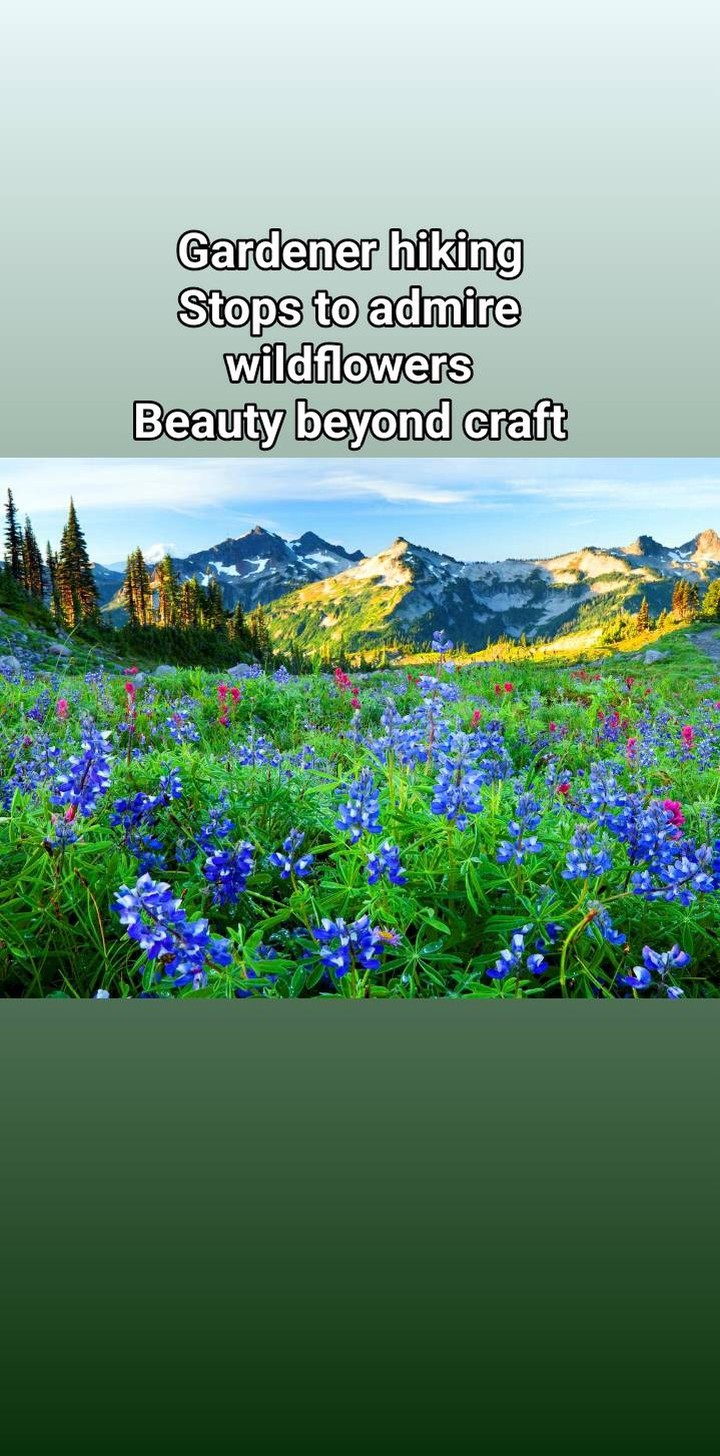
Gardener hiking
Stops to admire wildflowers
Beauty beyond craft
The original story plate, as posted — the poem with its image.
Then — in the dark night
I stop working. All my craft — shaping, planting, improving — is set down in front of wildflowers that never asked for any of it, and my admission is almost reverent: beauty beyond craft. I have been trying very hard to fix myself and am learning from my own profession where effort ends. Some things are not improved by my hands. Some things are only witnessed.
Now — after awakening
The professional rests. A man who shapes beauty for a living stops before wildflowers his craft could never justify — no plan, no improvement, no portfolio. "Beyond craft" is the presence step in one phrase: technique exists to serve seeing, and becomes a cage the moment it must be demonstrated. The wildflower doesn't need your method. Some of the guide's deepest instruction is here: let competence kneel. Admiration is also a practice.
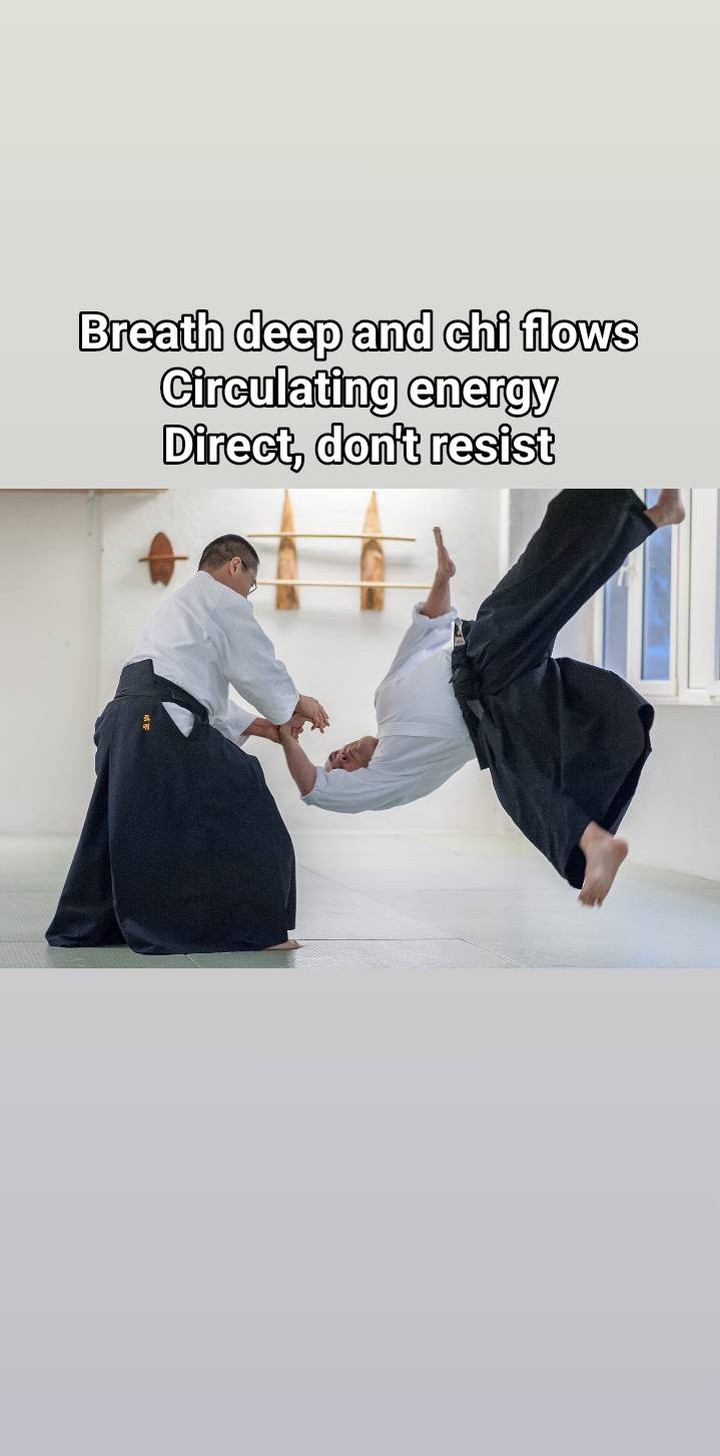
Breath deep and chi flows
Circulating energy
Direct, don't resist
The original story plate, as posted — the poem with its image.
Then — in the dark night
Breath again, but smoother now than the pleading of my stomach poem — and the practice is changing character. This is less therapeutic technique, more presence: energy circulating, and an instruction the frantic early poems in me could not have followed, direct, don't resist. I am discovering that steering and forcing are different things, in the body first. My nervous system believes me before my mind does.
Now — after awakening
Three instructions, decreasing in force: breathe, circulate, steer — gently — by not resisting. This is the operating manual under every lesson in the guide: the body first, because words ride on breath and a held breath argues with every sentence. "Direct, don't resist" resolves the control/surrender pair the way water would. Presence is not passive. It is direction without friction, which is also a fair description of every practice that actually survives contact with a real day.
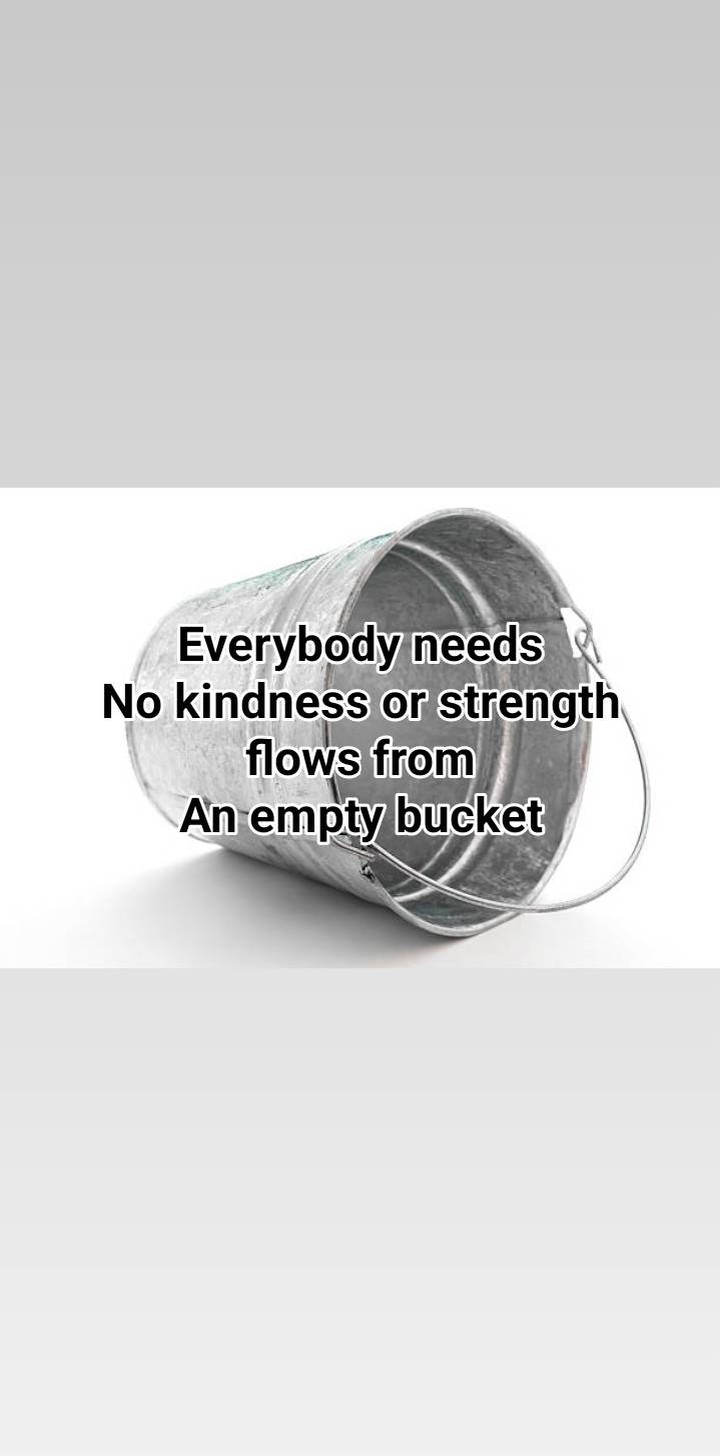
Everybody needs
No kindness or strength flows from
An empty bucket
The original story plate, as posted — the poem with its image.
Then — in the dark night
The bucket from the opening poems returns — and now it is empty, and I understand the maintenance. No kindness or strength flows from an empty bucket is my discovery: I had been trying to be a source while running on fumes, pouring out until resentment replaced generosity. I was living in Chorrera by then, near my son; the emptiness was not distance anymore. It was depletion. Everybody needs is doctrine and confession in one line: I need too, and admitting it is part of how anything flows again, for me.
Now — after awakening
The bucket from "Seen, heard, connected" returns later in the sequence, with its maintenance manual. Generosity preached from emptiness curdles into resentment — the words kindness and strength stop meaning anything when the speaker is running on fumes. Keeping your word includes the unglamorous covenant to refill: rest, food, solitude, prayer. A boundary, in this vocabulary, is not a wall against people. It is how the bucket stays a source instead of becoming a debt.
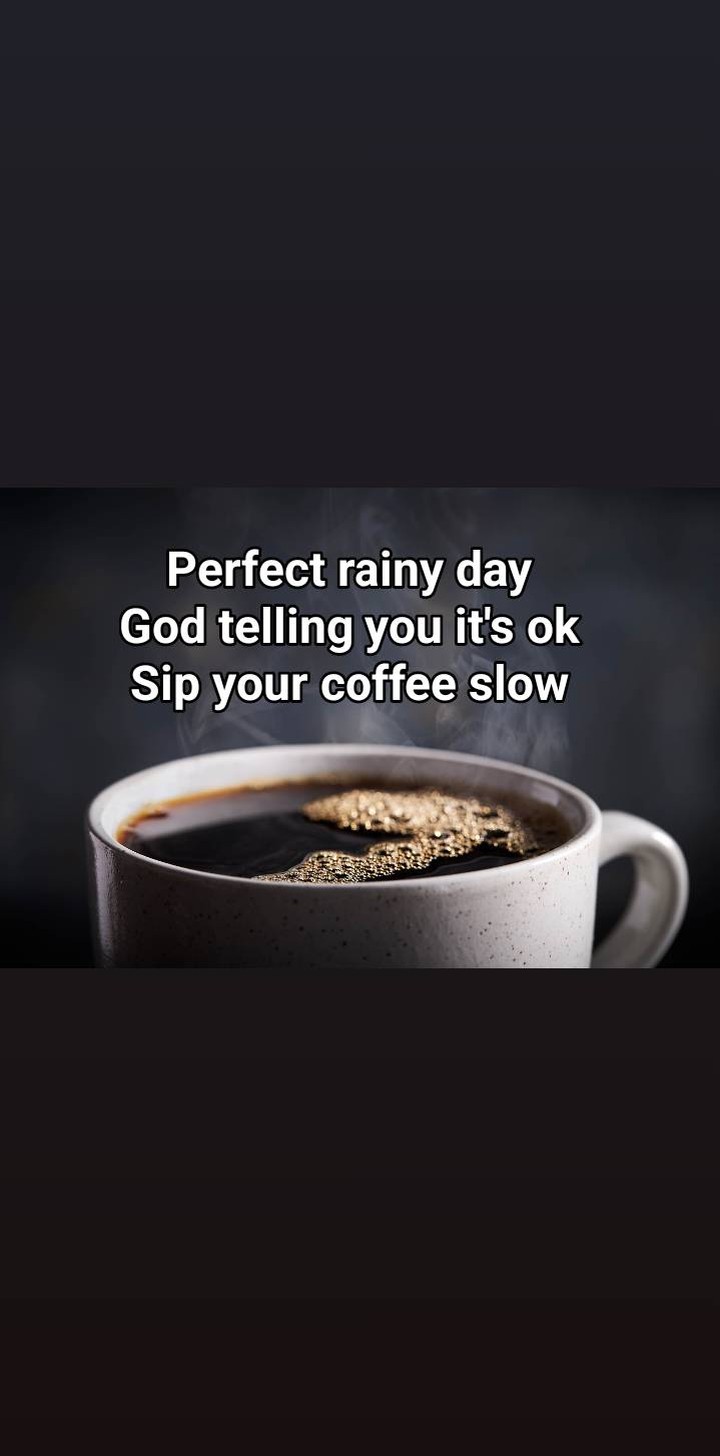
Perfect rainy day
God telling you it's ok
Sip your coffee slow
The original story plate, as posted — the poem with its image.
Then — in the dark night
Permission arrives as weather. A rainy day cancels the agenda, and instead of guilt I hear God telling me it's ok — sip the coffee slow, let the day be unproductive. Deep in self-repair as I was, rest had been one more assignment to fail. Here, for one morning, it isn't. The coffee is slow the way my held breath finally lets go.
Now — after awakening
"Perfect" is rescued here from the productivity vocabulary that ruined it. Nothing is optimized; it's raining, plans are cancelled, and the verdict arrives as mercy: it's ok. Sip slow as spiritual instruction — presence measured in coffee. The guide warns against performing serenity; this poem isn't performing anything. It's what Step 7 feels like from inside a kitchen on a wet morning: the world's permission slip, signed by weather, accepted without argument.
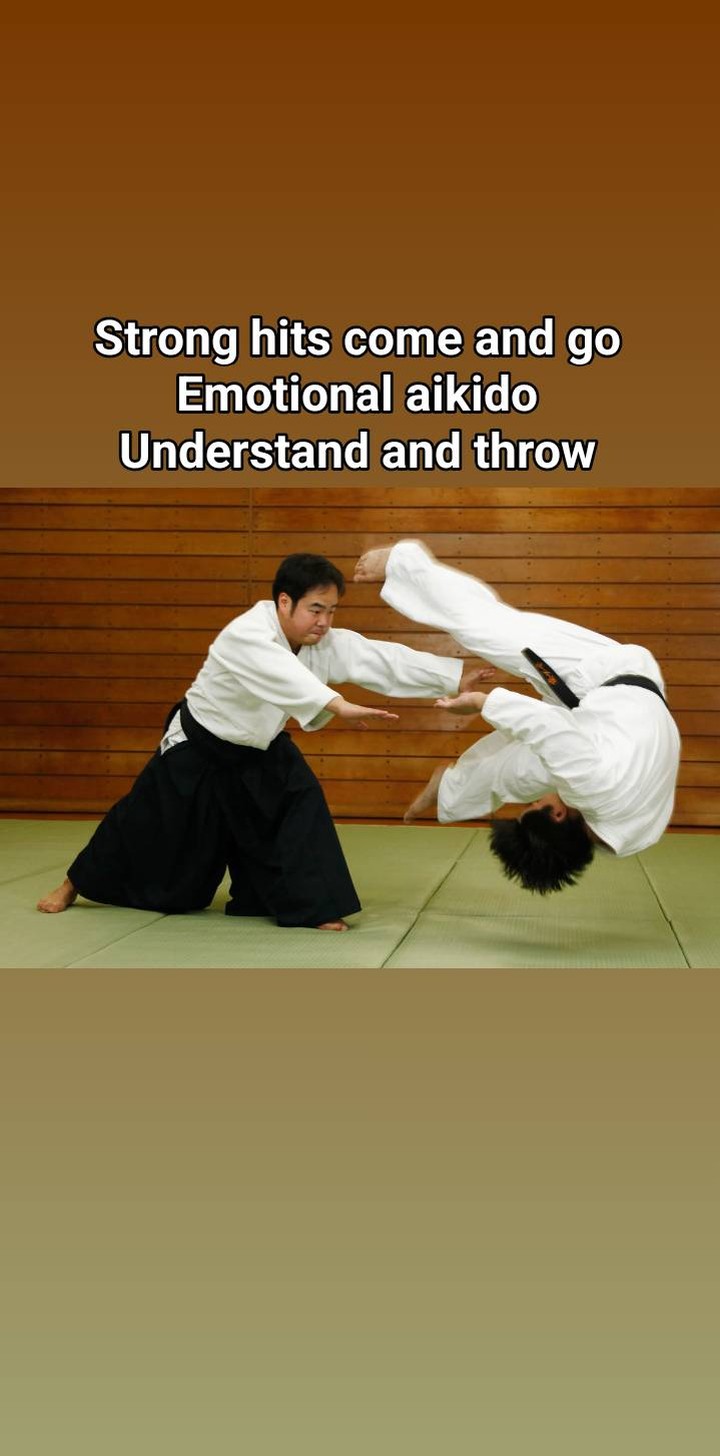
2024-06-05 · ☯ Step 6: When it hurts · Charged words: emotional aikido," "understand and throw
Strong hits come and go
Emotional aikido
Understand and throw
The original story plate, as posted — the poem with its image.
Then — in the dark night
By June I have a named technique for what used to flatten me: emotional aikido. Understand the incoming force, don't meet it head-on, throw it past — a therapeutic tool I practiced deliberately, for strong hits in fraught interactions. Weeks of triggers taught me what the phrase means in the body: I don't have to absorb every blow, and I don't have to return it. Understand and throw is two-thirds philosophy, one-third relief.
Now — after awakening
Aikido doesn't block force; it reads direction and lets momentum finish its own sentence. "Understand and throw" is the trigger protocol: understand first — whose energy is this, what old word did it strike — and only then release it, unreturned. Note the poem doesn't say absorb, and doesn't say retaliate. Strong hits *come and go*: the going is the discipline. Every unreturned blow is a judgment that failed to recruit you.
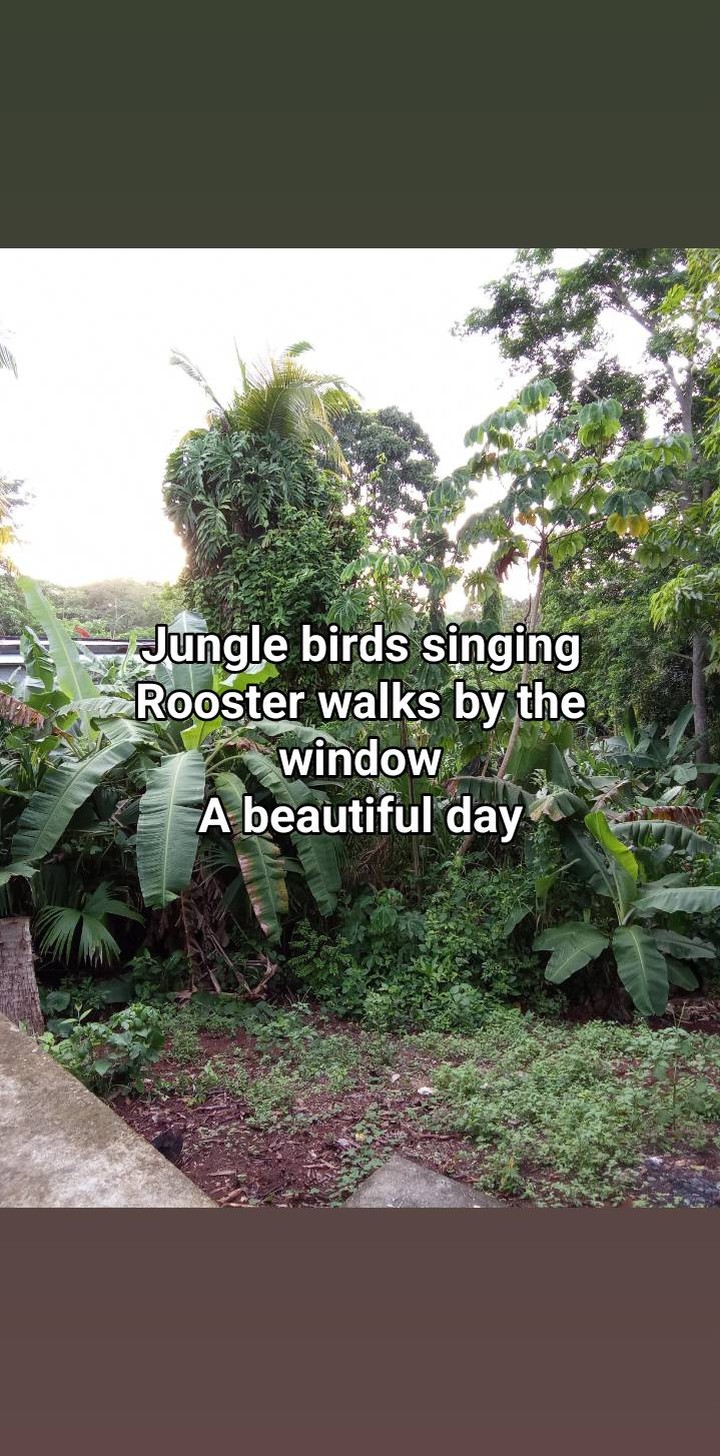
Jungle birds singing
Rooster walks by the window
A beautiful day
The original story plate, as posted — the poem with its image.
Then — in the dark night
By June, a morning can simply be beautiful again — jungle birds, a rooster at the window, no wrestling match attached. This would have been impossible in my insomnia week. Nothing else happened here: no lesson extracted, no shadow dissected. Just a beautiful day, reported by senses that were present for it. The poem is short because nothing needed fixing in me.
Now — after awakening
A rooster by the window and the verdict "beautiful" — but here the judgment trails the perception instead of replacing it. First the singing, then the walking bird, then, almost as an afterthought, the naming. That's the healthy order the guide keeps recommending: experience, then words hired as servants, dismissed before they become management. A beautiful day is not a conclusion. It's a report filed by senses that were actually present for the event.
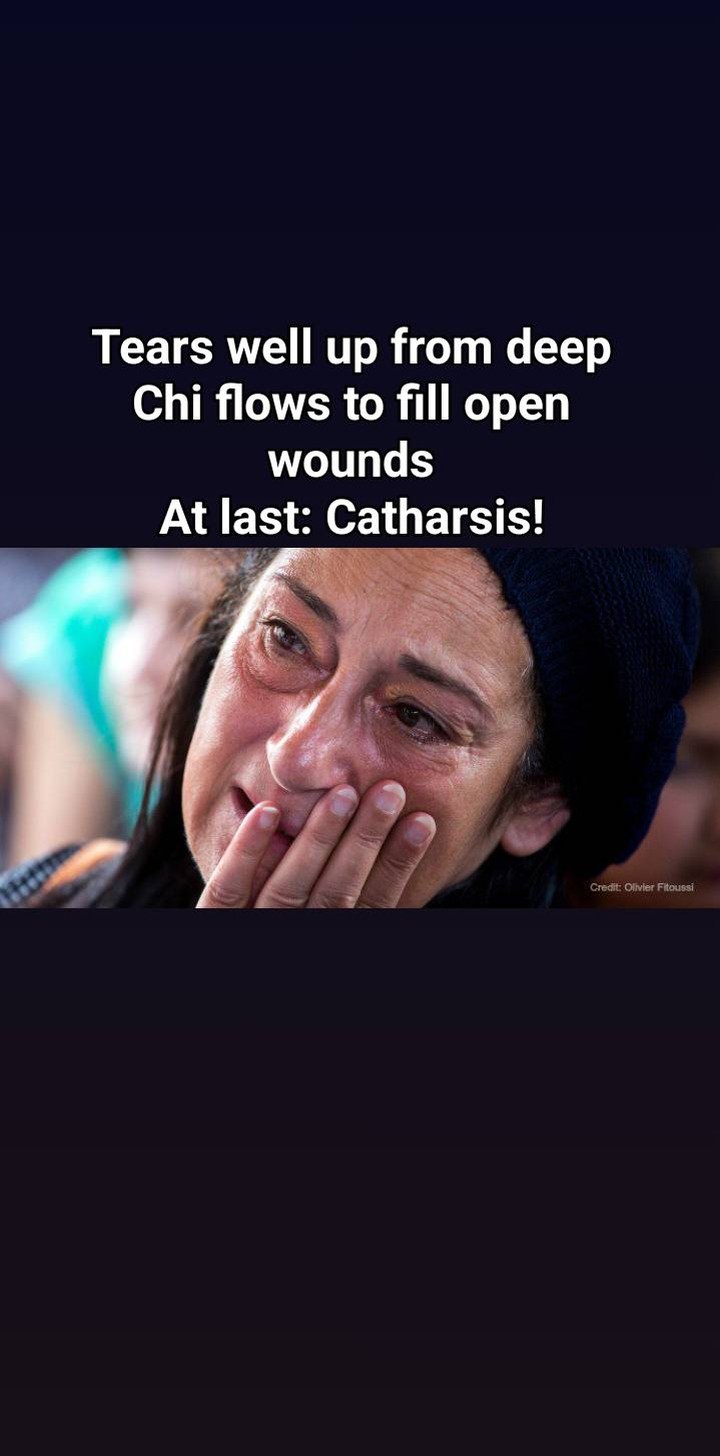
Tears well up from deep
Chi flows to fill open wounds
At last: Catharsis!
The original story plate, as posted — the poem with its image.
Then — in the dark night
The tears came from deep — deeper than the thought I was thinking when they started. They welled up and they came, and as they did, I could feel energy moving with them, chi flowing toward the places in me that were still open wounds. And then it arrived: catharsis. Not an idea about relief. Relief itself, in the body, at last. That is the order of the poem, because that is the order it happened: tears first, the inner movement with them, and release as the result.
Now — after awakening
The poem reports a process in three steps, and it should be read in that order. First, the raw experience: tears well up from deep and catharsis arrives through them. This is not performed and not argued into; it comes up from below thought, and the crying is the event, not a symbol for the event. Second, the internal process underneath it: chi flows to fill open wounds. Something in the system moves toward the injured places — not away from them, not around them — and the tears are how that movement is felt from inside. It is true that tears and chi both flow, and that water is the traditional element of emotion; I knew those things when I wrote it. But they are the language available for the experience, not the point of the poem. The point is simpler and more physical: pain that has been held opens, energy moves into the opening, and the body discharges what it has been carrying. At last is the sound of a process completing. Catharsis is not the suppression of the wound or the defeat of it. It is what happens when what was held finally moves through.
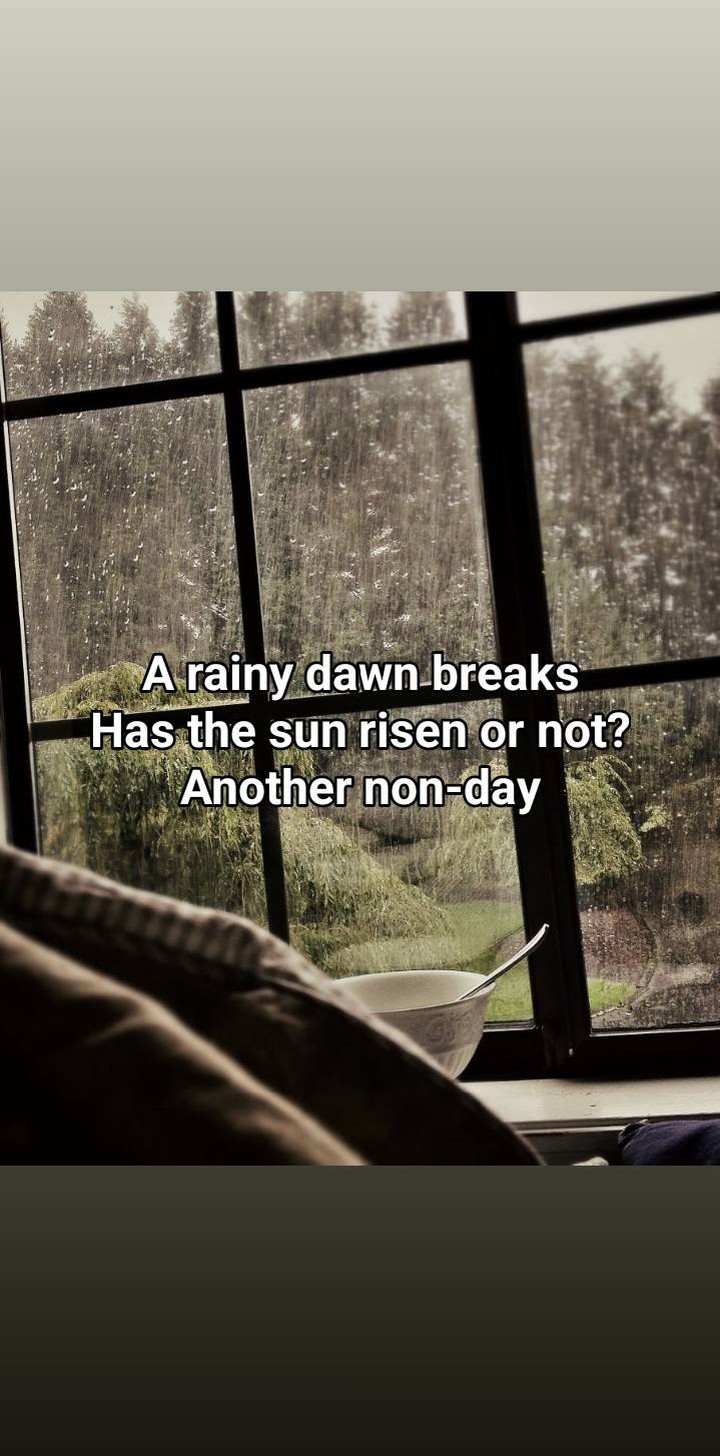
A rainy dawn breaks
Has the sun risen or not?
Another non-day
The original story plate, as posted — the poem with its image.
Then — in the dark night
And then, a morning the light itself can't be verified. Rain, dawn technically breaking, and my honest question: has the sun risen or not? Another non-day — I coin the word because the calendar's vocabulary is lying. This is my dark night at its least dramatic and most honest: not agony, just grey indeterminacy, and my discipline of not lying about the light level.
Now — after awakening
The darkest haiku in the sequence may be this quiet one: light technically arriving, indistinguishable from its absence. "Non-day" is a word invented for the stretch where the old vocabulary (dawn = hope) stops matching the evidence. The guide honors this weather — the nigredo isn't always dramatic; sometimes it's a grey morning that won't declare itself. The poem asks a question and accepts no answer. Some days the practice is only not lying about the light level.
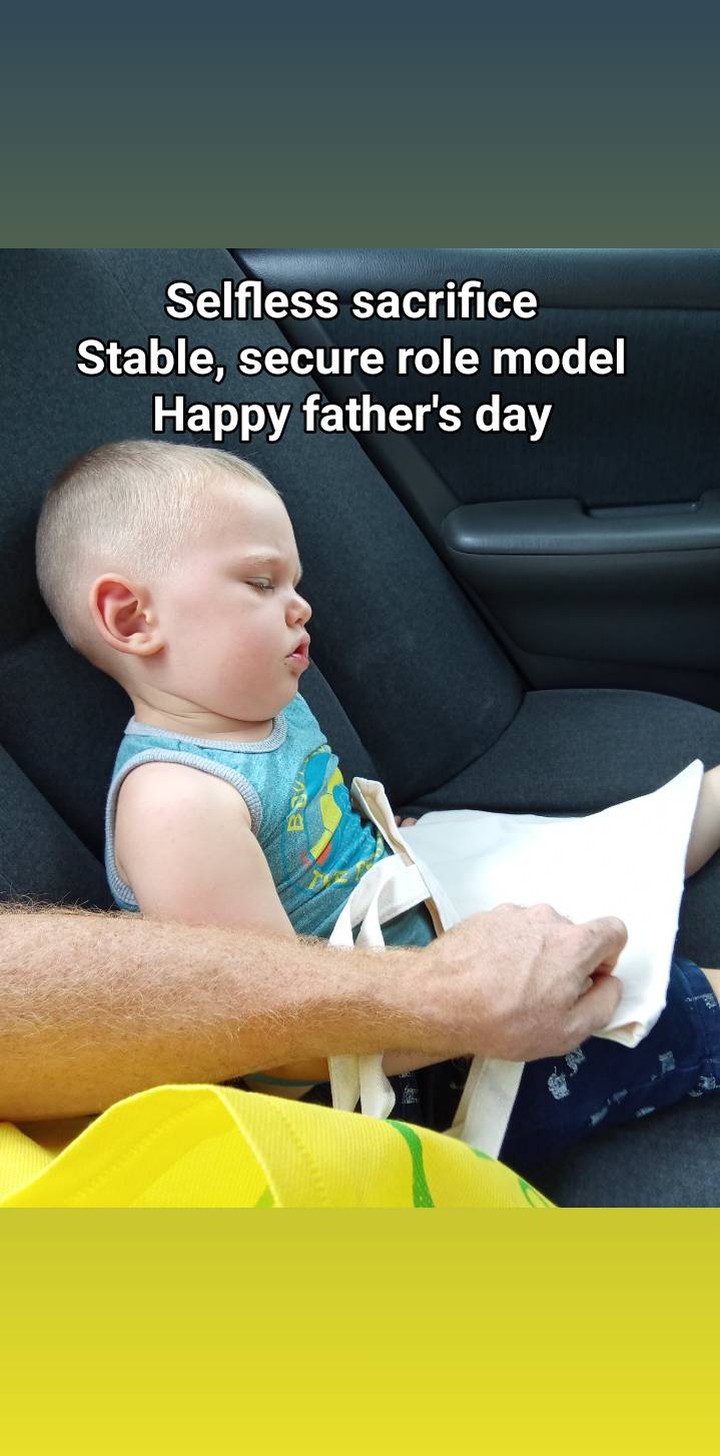
Selfless sacrifice
Stable, secure role model
Happy father's day
The original story plate, as posted — the poem with its image.
Then — in the dark night
It is Father's Day. I am living in Chorrera now, near the boy who made me a father, and I am writing about the kind of father I honor and mean to be: selfless sacrifice, stable, secure, a role model. Read eighteen days after my codependency poem, the same word is being rebuilt: there, sacrifice drowned two people; here it holds a house steady. A kept word measured in years is the real subject, and fatherhood in the new arrangement — same town, new terms — is my examination hall.
Now — after awakening
Re-read this against "Codependency," written eighteen days earlier, and watch a word get rehabilitated. Drowning-for-you was sacrifice as contract; this is sacrifice as stability — "stable, secure" — a father's kept word measured in decades of showing up. Same word, opposite cargo: the first hid a trade, this one hides nothing. That distinction is the guide's whole linguistic method applied to family. Judge the arrangement, not the vocabulary. Then keep the arrangement that doesn't drown anyone.
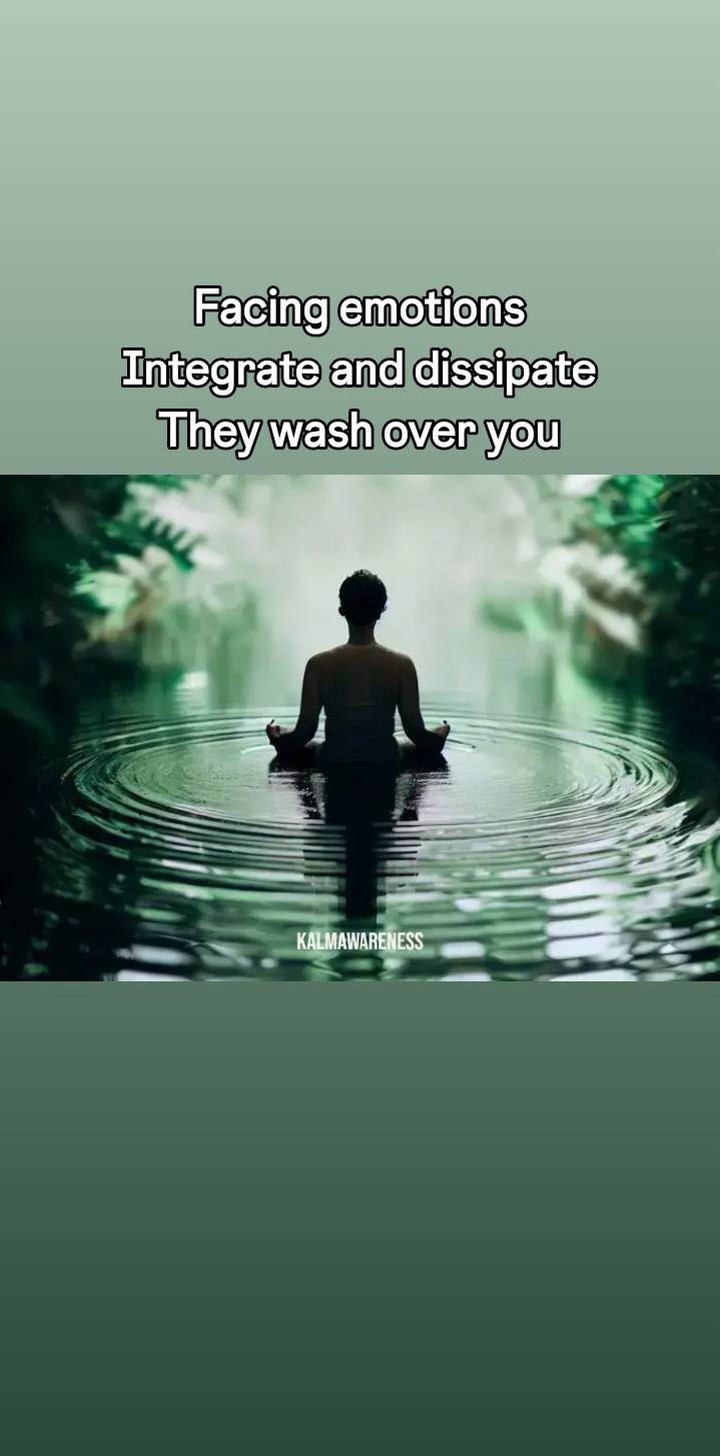
Facing emotions
Integrate and dissipate
They wash over you
The original story plate, as posted — the poem with its image.
Then — in the dark night
I am facing emotions now instead of being ambushed by them, and the description has changed: they wash over me — weather over a landscape that stays. Integrate and dissipate is still a program, but a quieter one than my desperate May protocols. I have gotten shorter in my sentences as I have gotten longer in my patience. What I face stops needing to knock.
Now — after awakening
Two verbs that are usually enemies — hold it, release it — get sequenced instead: integrate *and* dissipate, in that order, and what isn't fought becomes weather that washes over and past. An emotion faced stops needing to knock. This late in the sequence the instructions have gotten shorter because the practitioner has gotten quieter: face, integrate, let water be water. It washes over *you* — the self remains, which was the discovery the whole dark night was for.
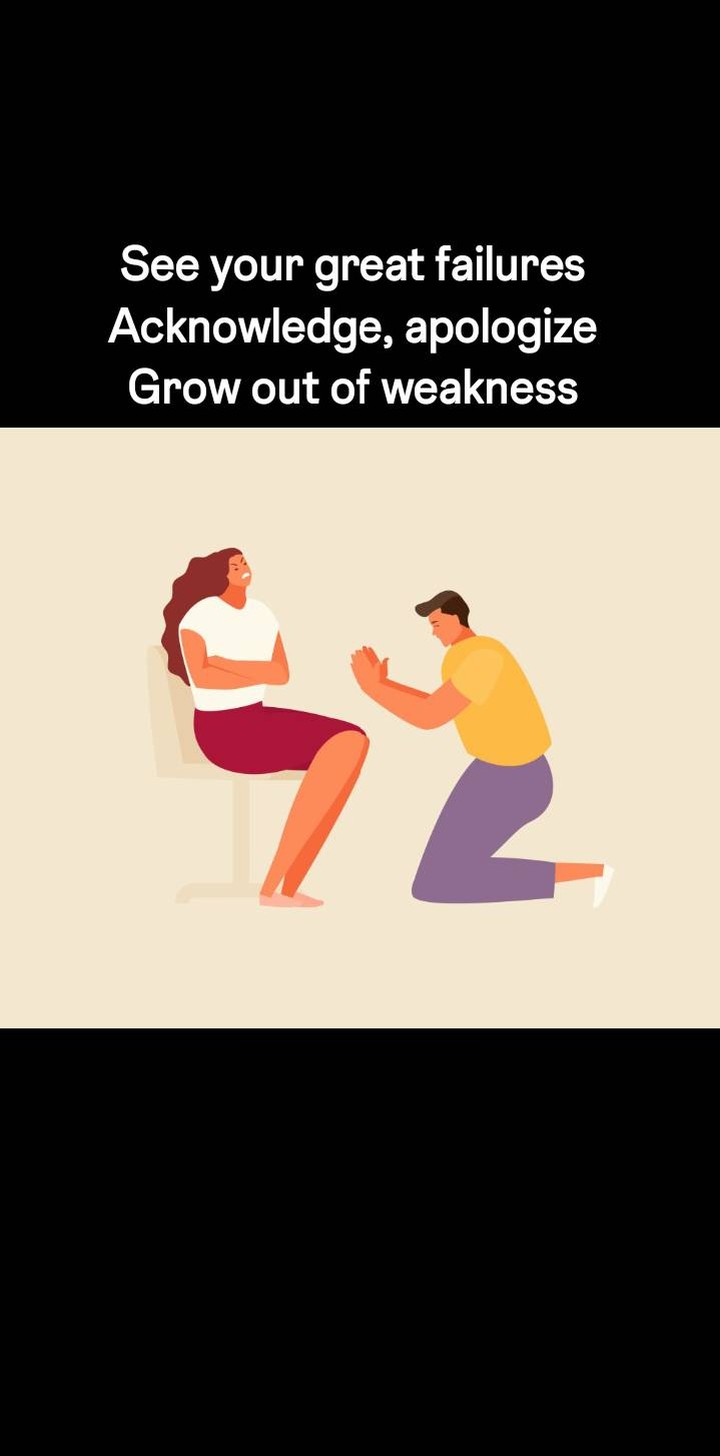
See your great failures
Acknowledge, apologize
Grow out of weakness
The original story plate, as posted — the poem with its image.
Then — in the dark night
I am doing the books on my failures — see them, acknowledge, apologize, grow out of weakness. There is no hiding in this poem and no theater either; it is my accounting, done in daylight: I had learned that an unexamined failure keeps the mic forever. Grow out of is my chosen preposition: the failures are soil, not statue. I do not keep soil. I grow out of it and the garden changes address.
Now — after awakening
"Failure" is among the heaviest judgment words — a verdict pretending to be a description, usually handed down in the permanent tense. The poem's protocol dismantles it procedurally: see it (not "be it"), acknowledge, apologize where apology is owed, and then the reframe — weakness as soil, not identity. Grow *out of* is the preposition that matters. Nothing here denies the act. It denies the noun. You did a failing thing; you were never a failure, because that word was never a thing at all.
Spiritual health
Dawn sunshine shines through the trees
Wash the dark away
The original story plate, as posted — the poem with its image.
Then — in the dark night
You can feel the season turning. Spiritual health is not the absence of dark here — it is dawn sunshine through trees, light arriving on a schedule I do not have to earn, washing as it comes. Wash the dark away is a gentler sentence than my May vocabulary allowed. Nobody is scrubbing. The sun is just doing what my solstice prayer asked it would.
Now — after awakening
Health is a word with an opposite the guide takes seriously: spiritual illness — the pattern that reproduces inside a person and spreads between people, in families, in communities, wearing vocabularies from trauma to karma. Against an illness like that, health cannot mean purity (nothing pure, I will write later; everything casts a shadow). In this poem it means something observable and unforced: dawn moving through trees at its own pace, the dark not scrubbed or argued away but washed by light arriving. Recovery, in the June vocabulary, is not bleach. It is sunrise — the same forest, re-lit daily, until the pattern that fed on the dark finds less and less to eat.
Enemy within
Greater than all from without
Conquer yourself first
The original story plate, as posted — the poem with its image.
Then — in the dark night
I have located the real opponent. Enemy within, greater than all from without — my critic, my saboteur, the old voice that outranks every external critic because it has the home-field advantage of being believed by me. Conquer yourself first is still a war metaphor; I have not finished retiring that vocabulary. But I have correctly identified the battlefield, and that was most of my war.
Now — after awakening
The war metaphor is retired by extending it honestly. The enemy within is not only a voice to deconstruct; it is a pattern with reproductive ambitions — a spiritual illness that has almost a life of its own inside me, recruiting my words as its transmission vector, hoping to spread through me to the people I love. That is why "deconstruct the enemy until the civil war runs out of vocabulary" is strategy, not softness: a pattern that lives by being believed and repeated starves when the sentences carrying it are examined instead of obeyed. I do not conquer it by hating the part of me that hosts it. I decline to be its next host — or its courier.
Let's go sail away
No destination in mind
Feel the flow wu wei
The original story plate, as posted — the poem with its image.
Then — in the dark night
Two months after begging to let it go on a homestead empty of my family, I am on the water. Let's go sail away, no destination in mind — the therapeutic era is quietly ending inside this haiku; what is arriving is Daoist, effortless, wu wei. It is not a plan and not a technique. It is what is left when the arguing stops having seniority: an invitation, a horizon, and a self no longer fighting the flow I spent the spring trying to manage.
Now — after awakening
The sequence closes by unlearning its first poem — and, though I could not know it in July, by rehearsing September. Insomnia begged to "let it go"; two months later letting go has a boat; two months after that, letting go will have a loaded car on the road from Chiriqui, a grieved future vision, and an opening forehead. Wu wei is not passivity: no destination because the destination — the homestead future, the planned life — was precisely the attachment. Every practice in this sequence (tend, breathe, wait, reframe) was secretly sailing instruction. Integration sounds like this: an invitation, a horizon, and a self no longer arguing with the water.
## Insight posts (2024-09-16)
(The Maynard James Keenan / TOOL soundtrack post is deliberately left out of this set — author judged it shallow.)
The awakening — September 2024
The critical point came on the drive back from Chiriqui, with a
car full of moving stuff. I sat with my attachment to the family
homestead future, identified that vision as the attachment I
needed to grieve and release, and released it. That was the
final straw in my model falling apart. These five posts are
snapshots from the opening that followed. They have no Then and
Now, because after awakening there is just Truth.
2024-09-16 · ☯ Step 5: See clearly · Charged words: third eye," "it was said that I could
Prying open my third eye!

I see all the things it was said that I could.

I literally feel an opening, like a gentle aching stretch in the middle of my forehead.
The original story plate, as posted — the poem with its image.
The opening did not begin with a technique for opening anything. It began on a road, with a release: driving back from Chiriqui, a car full of moving stuff, her — no longer my — cat beside the story, I sat with my attachment to the family homestead future, named it as the attachment I needed to grieve and release, and released it. What followed is reported here in the order it was felt. Prying open my third eye: the verb is honest. It was not serene and it was not abstract. I could feel an opening in the middle of my forehead, a gentle aching stretch, physical enough that no interpretation was required. And inside that opening, sight: I see all the things it was said that I could. The expectation had arrived in other people's words first — prophecy by hearsay — and then the body confirmed it, but only after the words I had been living inside were let go. That sequence matters. Nothing was pried open by force of wanting. A model fell apart when its load-bearing attachment was released, and perception moved into the space the future had been occupying. Sight is easy to romanticize, then and now. Digestion is slower. But the report itself stands as it was written: an opening, felt in the forehead, arriving through release.
As I feel my third eye stretching open
I feel a sense of unity with all and anything I focus on
I see clearly into areas of my mind previously hidden.

I see clearly into other people's minds and nervous systems. I perceive an aura.

I feel waves of insight and energy wash my body.

I have tears and other sensations spring up and wash away
The original story plate, as posted — the poem with its image.
This post is a dense set of revelations, and each sentence is a separate one. It should be read slowly, clause by clause.
As I feel my third eye stretching open. The opening is physical first: a stretch in the middle of the forehead, felt from inside, the sense of something that had been closed now opening under gentle pressure. Everything else in the post arrives through that opening, in the body, before it becomes thought.
I feel a sense of unity with all and anything I focus on. This is literal. One of the things unlocked when the model breaks down is the mandatory framing of experience through separation. The model pre-cuts every experience — me here, thing there — before I ever look at it. With the model down, that cut is gone, and what replaces it is unity consciousness: the documented state in which a person feels at one with things, the same oneness people report on mushrooms with plants, with furniture, with their friends. Whatever my attention rested on, the separation between me and it was simply not there. Not believed away. Not there.
I see clearly into areas of my mind previously hidden. The key word is hidden — not absent, not supernatural: hidden. Rooms of my own mind that the model had kept off its map were suddenly visible, because the map was no longer standing between me and the house.
I see clearly into other people's minds and nervous systems. This is also literal, and it needs its precision. Not full transparency; I was not reading anyone's thoughts word for word. What became visible was structure: whole branches of thought and behavior that had been closed to me. This person is acting angry about X because they are ashamed of Y, because something like Z must have happened to them, creating a worldview like W. Anger on the surface, shame under the anger, a history under the shame, a worldview grown over the history. Before, I saw behavior and reacted to behavior. Now I could see the branch the behavior was growing on — and the nervous system under it, braced or flooded or shut down or reaching, as the state the behavior was coming out of.
I perceive an aura. I feel waves of insight and energy wash my body. I have tears and other sensations spring up and wash away. The post ends where the body began: energy moving in waves, tears arriving and clearing, sensation not as a side effect of the insight but as its medium. Months and years of build-up arrived as one final straw, and the straw broke upward. Insight that does not reach the body has not finished arriving; this had reached nothing else yet. There is no gap in this post between the mystical and the physical, because there was no gap in the experience. Unity, structure, energy, tears — one event, reported in the order it came.
I cannot unsee what I've seen.

I cannot forget the river of power that is reality.

There is no going back.
The original story plate, as posted — the poem with its image.
The river of power that is reality is the present. The Now. Not a picture of it, not words for it: it itself, moving, before any model is built over it. For most of a life, the model — the world built out of words, out of past and future, shoulds and hopes, the homestead future and every other story — is not experienced as a model. It is experienced as reality itself. And the person inside it is experienced as the model: as their story, their wounds, their plans. On the drive back from Chiriqui, the model that had been standing between me and reality broke down, and I recognized my true nature. I am not the model. I am not constrained to it. I am that which is experiencing reality — not the representation that once stood between me and what I was experiencing. What remained was not a better model. It was direct access. I cannot unsee what I have seen. I cannot forget the river of power. There is no going back, and the reason is not that a door locked. A knowing of this kind cannot be reversed into unknowing. I can never again mistake myself for the model. I can never again mistake the model for reality. The words, the stories, the futures still exist and still get used. They are simply never again confused with what they are about, or with who is using them.
Past and future are not subjectively real.

Every should is a fiction.

Every hope is a fiction.

Do not attach to anything not real.
The original story plate, as posted — the poem with its image.
Past and future are not subjectively real. I exist in the present; the past is my memory of events, the future is my story about events, and neither one is where I am. Every should is a fiction. A should exists only as a word — no one has ever met one in the wild — yet a life can be organized almost entirely around obeying them, and mine had been: the family homestead future was a should with land, labor, and years inside it. Every hope is a fiction in the same precise sense: not worthless, not condemned, but a story about a future that is not here, filed correctly once it is seen as a story. Shoulds and hopes are fictions for one reason: they do not exist within the present. The present is a sink full of dirty dishes. It is not a state of "should do the dishes," and it is not a hope that in the future the sink is empty. The present is plainly and simply a sink full of dirty dishes — and, at most, a feeling about it. The should and the hope exist only as words and images in the mind. The dishes, the water, my hands, a feeling of irritation or calm: those are present, and they are the whole of what is here. On the drive back from Chiriqui, I did the thing these sentences state: I identified a cherished vision of the future as an attachment and released it, and the model built from it fell apart. What remained was not despair. It was the present, undistorted by attachments to things that are not real in the way the present is real. Do not attach to anything not real is not a mood. It is inventory control for the soul.
There is nothing pure in reality.

Everything casts a shadow.

There is yin in your yang, and yang in your yin.

There is love in your hate and hate in your love.

There is appology in your resentment, and resentment in your appology.

Look for your shadow in the shadow of each thing.
The original story plate, as posted — the poem with its image.
There is nothing pure in reality. This is pure non-dualistic revelation, and it should be stated in its own order.
There is yin in your yang, and yang in your yin. Just as the symbol shows, there is a seed of the "opposite" in each thing — and therefore each thing contains its opposite. Love contains hate. Hate contains love. There is apology in your resentment, and resentment in your apology. These are not mixed feelings to be sorted into the cleaner half. At the sub-linguistic, non-dualistic level — below the level where words cut the world into pairs — the opposites are unified. They were never two separate substances. They are one reality, named from two sides.
That is also why the separation between the poles dissolves exactly the way the separation between me and the dishes dissolves. Apology and resentment are not two sealed rooms. Apologizer and apologizee are not two sealed people. We are all mutual participants in experiencing reality, and the roles and the feelings move through the same field. What I call my resentment already contains the apology forming in it. What I call my apology already contains the resentment it grew from. To see only one pole is to let a word do a division that reality itself does not do.
And the last line is the absolute key insight, the core technique of the whole Yin Yang plan: Look for your shadow in the shadow of each thing. The way to address your shadow is not to face it as one enormous, unnamed darkness. It is to break it down — into the shadow of each thing: each word, each story. This word I keep using: what does it carry that I have not looked at? This story I keep telling: what is in its shadow — the opposite it contains, the part of me it keeps off the page? Word by word and story by story, the shadow stops being a single beast behind a single door and becomes specific, locatable, seeable. That is the work, at full size and at daily size. Nothing is pure because nothing is separate, and the way home is not around the shadow of things. It is through the shadow of each one.
This page shares my experience and is not medical or
mental-health advice. If you are struggling or feel unsafe,
please reach out to a trusted person or professional in your
life — you deserve in-person support too.